
Vandaag of morgen in huis

Kwaliteit gegarandeerd

Welkomstaanbiedingen ontgrendelen: GRATIS bezorging | Tot 80% korting | Gratis 30 dagen JoyPlus-proefperiode
Download de app
An ergonomic baby carrier can be useful during a walk, a trip to the supermarket or a journey on public transport. You can keep your hands free while keeping your baby close. However, a carrier can sometimes disappoint in practice. This is usually not down to its appearance, but to an unsuitable fit, unclear age limits or straps that are difficult to adjust.
The following points will help you choose a baby carrier that suits your child, body shape and everyday use.
A baby carrier suitable for, for example, 3 to 20 kg will not automatically grow with your baby properly from birth. Also check:
Product descriptions may use different age indications. If in doubt, follow the user manual. A carrier for newborns must also have been specifically designed for that stage; a model for babies and toddlers is not automatically suitable for a newborn.
The term ergonomic tells you very little on its own. Look for features that can be checked, such as an adjustable seat, wide straps, padded leg openings and lumbar support. A carrier with an M-position should be adjusted so that the knees are higher than the bottom, without restricting the legs.
According to Momcozy’s product description, the C-shaped back support and M-shaped leg position are part of the design. This is a claim made in the brand’s product information, not a guarantee of a particular result. Correct adjustment and following the safety instructions remain essential.
A lightweight baby carrier reduces the weight of the carrier itself, but carrying comfort also depends on the shoulder straps, waist belt and how the weight is distributed. A thin model may be comfortable for short periods, while a carrier with lumbar support may be more practical for longer walks.
Choose a model whose weight range clearly covers your child’s weight. According to the product details, the Momcozy Baby Carrier is intended for approximately 3.18 to 19.96 kg and for front carrying. The description states a period of use of approximately 3 to 24 months, but also says that the carrier must not be used with babies who cannot yet support their head independently.
Also pay attention to the carrying direction. “Front carry” does not automatically mean that forward-facing carrying is permitted. Always check the instructions and product labels before using another position.
An adjustable baby carrier should fit different caregivers. Look for:
An X-shaped or crossed back strap can distribute pressure differently. Whether this feels comfortable depends on your body shape and how you adjust the carrier. Adjust the straps while standing upright, then check all the buckles again.
A cotton baby carrier feels soft to many parents and may be suitable for everyday use. Check whether the material is machine washable, what temperature it can be washed at and how quickly it dries. According to the product information, a 771-gram carrier is relatively easy to take with you, but it still contributes to the total weight you are carrying.
Also look out for signs of wear. Being washable is practical, but it does not replace checking the carrier before every use. Look for:
Stop using the product if any load-bearing component is damaged.
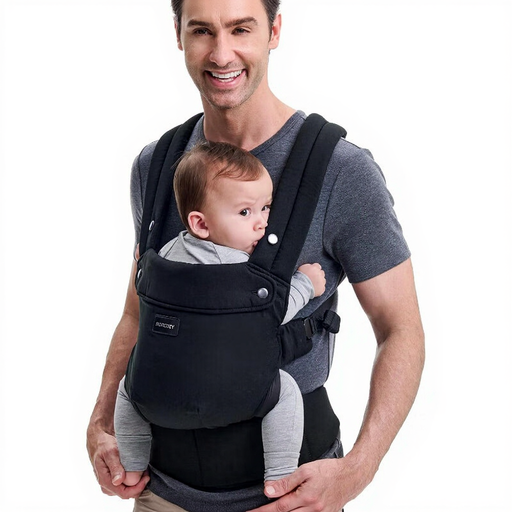
Why it suits this profile: This model is suitable for parents looking for a straightforward front carrier for everyday use, without batteries or complicated installation.
The product specifications state a range of approximately 3.18 to 19.96 kg, adjustable straps and padded leg openings. However, check the manual for the exact minimum age.
100% cotton, machine washable, approximately 771 grams and fitted with an adjustable X-back strap according to the product description.
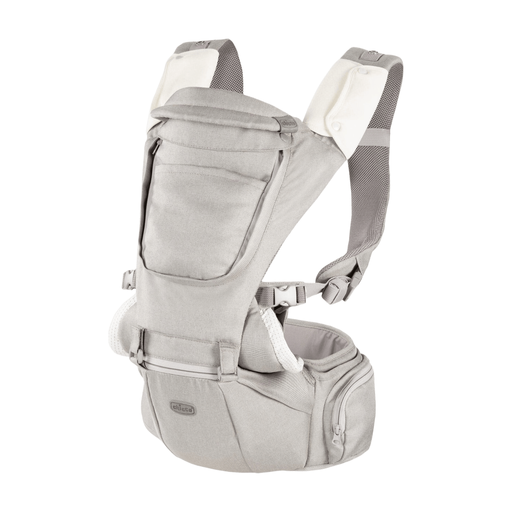
Why it suits this profile: The combination of a hip seat and carrier is suitable for parents who want to use different configurations during outings.
According to the product details, the system consists of a detachable base and carrier. This allows you to adapt the configuration instead of using one fixed carrying position.
3-in-1 use, mesh material, a hip seat and several described carrying positions. Check the permitted age for each position in the manual.
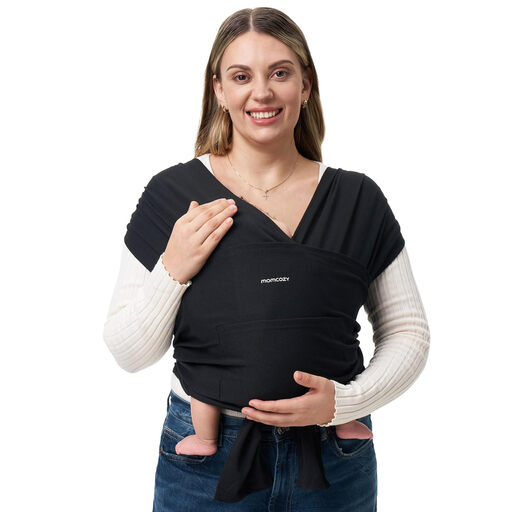
Why it suits this profile: This sling is designed for parents looking for a compact carrying solution for short journeys, use at home and travel.
According to the product description, the double-ring closure can be adjusted without tying knots. Before use, check that the rings are securely fastened and that the fabric lies evenly across your shoulder.
Machine washable at 30 °C, approximately 660 grams, a carrying range of 3.6 to 15 kg and a storage bag included.
A baby carrier is not protective equipment against a fall or road accident. Do not use it while cycling, running, cooking over an open flame or during other activities involving a risk of falling or burns.
Before every carrying session, check:
Stop immediately if you or your baby experiences pain, breathing difficulties or obvious discomfort. Always follow the manufacturer’s specific instructions and stay within the stated weight range.
We have put together a complete, up-to-date list of products that fully meet these strict selection criteria and the applicable European safety regulations.
This varies by model. Some carriers are designed for use from birth, while others are only suitable from around 3 months or once your baby can support their head independently. Always check the combination of age, weight and carrying position in the manual.
Its lifespan depends on use, washing and storage. Check the carrier before every use and replace it if you find fraying, damaged buckles, stretched straps or torn seams. A model with a higher maximum weight may remain usable for longer, but only while your child stays within the stated limits and the fit remains suitable.
A carrier with lumbar support can help distribute the weight, but comfort varies from person to person. Adjust the waist belt and shoulder straps carefully, and gradually increase the length of time you carry your baby. If you experience pain or pressure points, a different adjustment or another model may be the better choice.
