
Vandaag of morgen in huis

Kwaliteit gegarandeerd

Welkomstaanbiedingen ontgrendelen: GRATIS bezorging | Tot 80% korting | Gratis 30 dagen JoyPlus-proefperiode
Download de app
An ergonomic baby carrier can be useful during a walk, on public transport or whenever you want to keep your hands free at home. However, not every baby carrier proves equally suitable in everyday use. A wide waist belt, soft fabric or the label “ergonomic” does not tell you enough on its own.
As a Joybuy Product Recommendation Officer, I filter product information based on verifiable features. Below, you’ll learn what to look for, which marketing pitfalls to watch out for and which type of carrier best suits your needs.
A carrier with a range of 3 to 20 kg may appear suitable for long-term use. However, that does not automatically mean the model is suitable from birth. Young babies need sufficient support around the head and neck. According to some product descriptions, certain models are intended for babies from around 3 months of age.
Always check:
Do not use a carrier outside the stated weight range or if your baby does not yet have sufficient head control, unless the instructions explicitly allow it.
A breathable baby carrier with Air Mesh can be comfortable on warm days. However, ventilation also depends on the fit, the clothing worn by both parent and baby, and the amount of fabric around the back and neck. A cotton carrier may feel soft, but it is not necessarily cooler than mesh.
Look for specific material information:
Check regularly that your baby is not becoming too warm, and always keep their face visible.
A baby carrier with lumbar support can help distribute weight differently across your body. Its effectiveness and comfort vary according to body shape and adjustment. According to Momcozy’s product information, some models feature an EVA panel, cross straps or an X-shaped back construction for weight distribution. This is a product specification, not a guarantee that back pain will disappear.
Adjust the shoulder straps, waist belt and back strap carefully. If you experience pain or pressure, stop carrying your baby and check the fit.
For babies and toddlers from approximately 3 to 24 months, an adjustable baby carrier can be a practical choice. Several Momcozy models in this selection state a carrying range of approximately 3.18 to 19.96 kg and are designed for front carrying.
Compare the following:
The product information for the selected models mentions an M-position for the legs, with the knees positioned higher than the bottom. According to the manufacturer, this is the preferred carrying position. Treat this as information from the product description and always follow the complete instructions for use.
Basic checks every time you carry your baby:
A baby carrier is not protective equipment in the event of a fall or accident. Do not use one while cycling, running, cooking over an open flame or engaging in other activities involving a risk of falling or burns.
A lightweight carrier in this selection weighs approximately 760 to 771 grams. The difference may seem small, but it can become noticeable during extended use. Also check the care instructions: several models are machine washable. Check the temperature setting, fasteners and washing instructions before cleaning the carrier.
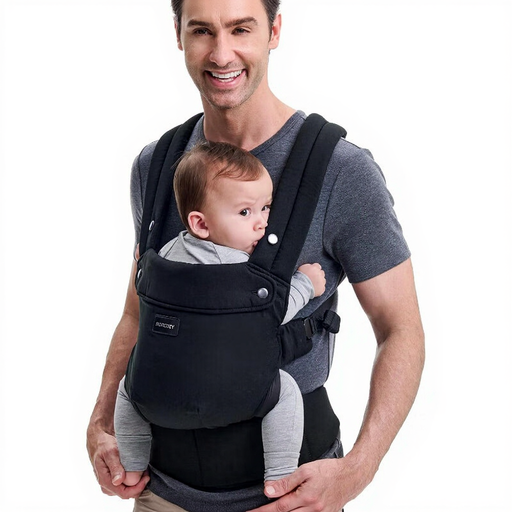
Why it’s a good fit: A practical cotton carrier for parents looking for one adjustable front-carrying model for everyday use, from approximately 3.18 to 19.96 kg.
The product information lists the weight, adjustable straps, EVA panel and padded neck support separately. This allows you to verify the features instead of relying solely on the word ergonomic.
100% cotton, machine washable, front carrying and a stated range of approximately 3.18–19.96 kg.
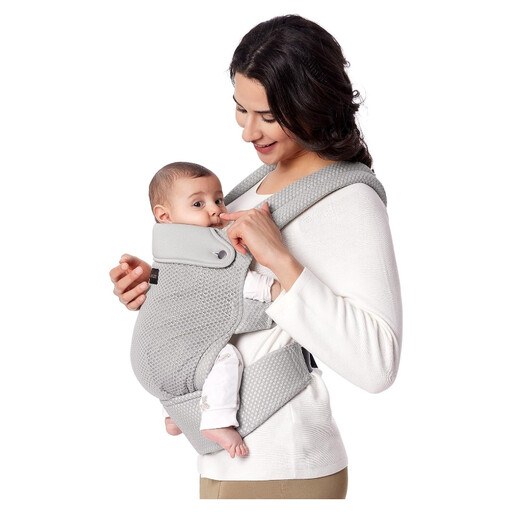
Why it’s a good fit: For parents who frequently walk or travel, or who want a carrier for warmer days indoors or outdoors.
The model uses Air Mesh panels and cooling fabric around the neck, rather than making only a general claim about breathable comfort.
Approximately 771 grams, machine washable, three adjustment positions and an EVA lumbar support according to the product description.
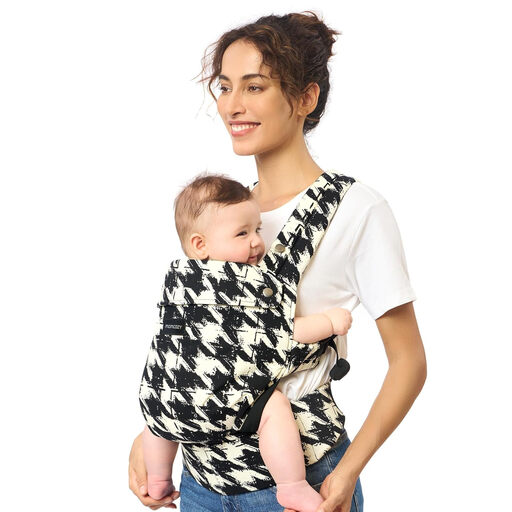
Why it’s a good fit: Suitable for parents who want an adjustable model with cross straps and lumbar support for everyday errands, walks and outings.
The specifications state the material, strap type, front-carrying direction and maximum weight of 20 kg. Also check the fasteners before every use.
100% cotton, cross straps, adjustable buckles and a stated carrying range of approximately 3.18 to 20 kg.
Discover a current selection of baby products and gift ideas, including practical essentials for new parents.
Not every carrier is suitable from birth. Check the minimum weight, age recommendation and head and neck support. The Momcozy carriers mentioned are primarily associated with babies from approximately 3 months of age in the product information. Always follow the instructions for the specific model.
The service life depends on the maximum weight, wear and maintenance. A model with a capacity of up to approximately 20 kg can grow with your child from babyhood through the toddler years, but regularly inspect the buckles, seams, straps and fabric. Replace the carrier if it is damaged or if any components no longer fasten securely.
A lower weight can be beneficial, but comfort also depends on the waist belt, shoulder straps, fit and weight distribution. Adjust the carrier to your body and check that your baby is upright, visible and properly supported. This will help you make a more informed choice than focusing on the carrier’s weight alone.
