
Vandaag of morgen in huis

Kwaliteit gegarandeerd

Welkomstaanbiedingen ontgrendelen: GRATIS bezorging | Tot 80% korting | Gratis 30 dagen JoyPlus-proefperiode
Download de app
As a new parent, you want to keep your baby close while having your hands free. An ergonomic baby carrier seems like the perfect solution. But the market is flooded with options, all promising comfort and safety. Unfortunately, many of these promises lead to regrettable purchases that are uncomfortable for both you and your baby. Before you make a choice, it's crucial to recognise the common pitfalls.
To avoid a bad buy, it helps to know which specifications truly make a difference. Pay attention to the following three points when choosing a comfortable baby carrier.
The most important feature of an ergonomic baby carrier is its support for the M-position. This means your baby's knees are higher than their bottom, and their legs are spread apart. This posture supports the healthy development of the hip joints, especially in a carrier for a newborn. A good front carrier ensures the seat panel is wide enough to support your child's thighs from one knee pit to the other.
For your own comfort, weight distribution is essential. A carrier with back support, often in the form of a wide, reinforced hip belt, shifts a large portion of the weight from your shoulders to your hips. This significantly reduces the strain on your back. Also, pay attention to the shoulder straps: wide, padded straps that can be crossed (forming an X on your back) distribute pressure more evenly and prevent them from digging into your neck or shoulders.
A lightweight baby carrier is nice, but the material is just as important. Breathable fabrics like mesh are ideal for warmer months or for active parents, while 100% cotton is soft and comfortable for a baby's sensitive skin. Also, ensure the carrier is adjustable at multiple points. This not only guarantees a secure and snug fit for your growing baby but also allows you to tailor the fit to your own body.
Based on these objective criteria, we have selected a number of products that suit the different needs of parents.
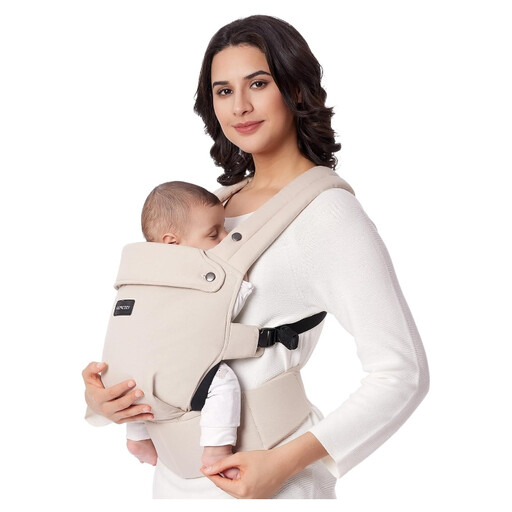
Why This Fits Their Persona: Ideal for new parents seeking a reliable and affordable all-rounder. This carrier is designed for daily use, from a quick errand to a walk in the park.
The wide seat guarantees the M-position, and the reinforced hip belt addresses the back-pain trap by distributing weight effectively.
Adjustable: Grows with your child (3-20 kg) thanks to three size positions. Wearer Comfort: EVA lumbar support and crossable back straps.
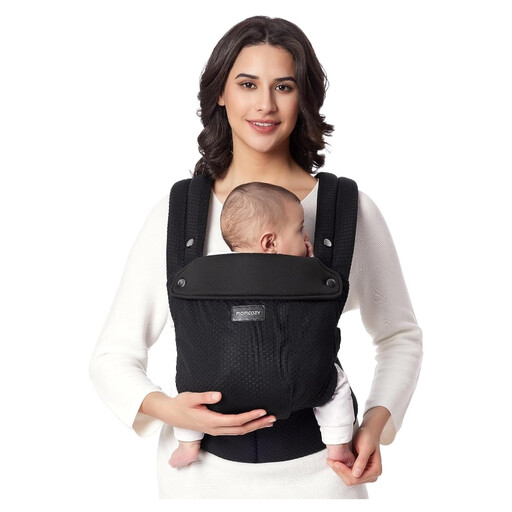
Why This Fits Their Persona: Perfect for parents who are always on the go or live in a warmer climate. The breathable mesh material keeps both parent and baby cool during walks or while travelling.
Offers the same ergonomic M-position and back support as cotton models but prevents overheating, an often-forgotten comfort factor.
Breathable material: Air Mesh panel and cooling fabric in the neck zone. Lightweight: Weighs only 760 grams, ideal for extended wear.
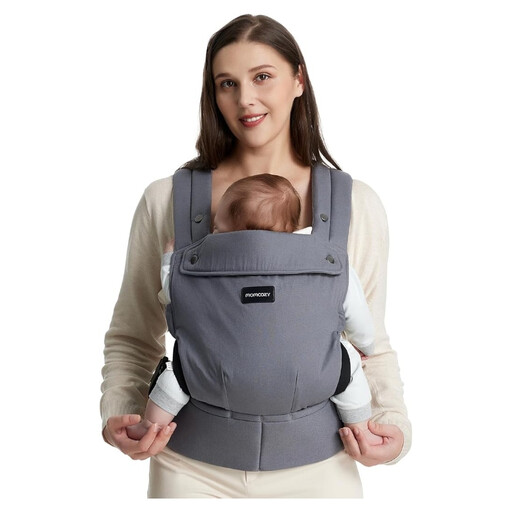
Why This Fits Their Persona: For parents who want to carry their baby for extended periods and seek maximum comfort for themselves. The focus is on superior lower back support.
This Momcozy baby carrier tackles the back-pain trap head-on with a specially designed EVA panel that minimises pressure on the lumbar region.
Tri-point support: Distributes weight across the hips, waist, and shoulders. Soft cotton: 100% cotton is gentle on the baby's skin and breathable.
We have compiled a complete, up-to-date list of products that fully meet these strict selection criteria and safety regulations.
Most ergonomic carriers are suitable for babies from around 3 to 3.5 kg (approx. 6.6 to 7.7 lbs), provided they offer good head and neck support. For newborns, it is crucial that the carrier supports the natural C-shape of the spine and guarantees the M-position of the hips. Always read the manufacturer's specifications, as the minimum weight and recommended age can vary by model.
Check that your baby's knees are higher than their bottom. The back panel of the carrier should support the legs from one knee pit to the other, preventing the legs from hanging straight down. The baby should sit high enough on your chest for you to easily give them a kiss on their head. This is also known as 'kissable height'.
Yes, most fabric carriers made of cotton or mesh can be machine washed. However, it is advisable to follow the manufacturer's instructions. Use a mild detergent and a delicate wash cycle. Close all buckles before putting the carrier in the machine to prevent damage. Air-dry the carrier instead of putting it in the dryer to preserve the fabric and its shape.
