
Vandaag of morgen in huis

Kwaliteit gegarandeerd

Welkomstaanbiedingen ontgrendelen: GRATIS bezorging | Tot 80% korting | Gratis 30 dagen JoyPlus-proefperiode
Download de app
An ergonomic baby carrier can be useful during a walk, a train journey or a busy morning at home. You have your hands free while keeping your baby close. However, a carrier can sometimes disappoint in practice. The wrong size, insufficient adjustability or unclear safety information can lead to discomfort and unsafe use.
The Joybuy Product Recommendation Officer therefore selects products based on verifiable features, such as carrying weight, material, fastenings and adjustment options. Marketing terms alone do not tell you much. Pay particular attention to what is actually stated in the product specifications.
A baby carrier with a carrying capacity of up to, for example, 20 kg may appear suitable for a long period. That does not automatically mean the same model will fit properly from birth. Always check the minimum weight, recommended age and whether a separate insert for newborns is required.
A baby carrier for newborns must also fit securely without the baby slipping down. If it only says “for babies and toddlers” but does not state a clear lower weight limit, extra caution is needed.
The word ergonomic is not a substitute for clear instructions. A good baby carrier must be adjusted correctly to suit both the baby’s and the wearer’s body shape. The Momcozy product description mentions an ergonomic M-position, in which the knees are positioned higher than the hips, along with C-shaped back support. These are manufacturer descriptions; they do not guarantee that every baby will be comfortable without correct adjustment.
Also pay attention to visibility of the baby’s face and unobstructed airways. Always use a baby carrier under the direct supervision of an adult.
Soft fabric is pleasant, but it says little about carrying comfort over longer periods. Check whether the shoulder straps are adjustable and whether a baby carrier with lumbar support is available. A wide waistband can distribute the weight more effectively, but it must be adjusted correctly.
For everyday use, a range of approximately 3 to 20 kg is practical, provided the manufacturer states this clearly. According to the product specifications, the Momcozy Baby Carrier is suitable for approximately 3.18 to 19.96 kg, or 7 to 44 lb, and for around 3 to 24 months. The lower limit is important: this model is not intended for babies weighing less than 3.18 kg.
Looking to buy a baby carrier for newborns? Check that your baby falls within the minimum weight range and follow the instructions. A baby carrier recommended from 3.18 kg is not automatically suitable from birth.
Look for:
The Momcozy lists adjustable straps, a foldable neck-support cushion, padded leg openings and a tri-point support system with an EVA panel. According to the manufacturer, the model is intended for front carrying. This may be suitable for everyday walks, but less convenient if you specifically want to carry your baby on your back.
A lightweight baby carrier is not necessarily more comfortable, but a lower carrier weight can be helpful on longer walks. According to the product information, the Momcozy weighs approximately 771 grams and is made from 100% cotton. Cotton feels familiar and is practical for many families in everyday use.
Also check the washing instructions. A machine-washable baby carrier is useful when dealing with milk, food or outdoor stains. According to the product specifications, this model is machine washable. Follow the manufacturer’s instructions and check the buckles, seams and straps after washing.
The cards below all refer to the same available baby carrier model, but link it to different usage scenarios. This makes it easier to assess whether its features suit your daily routine.
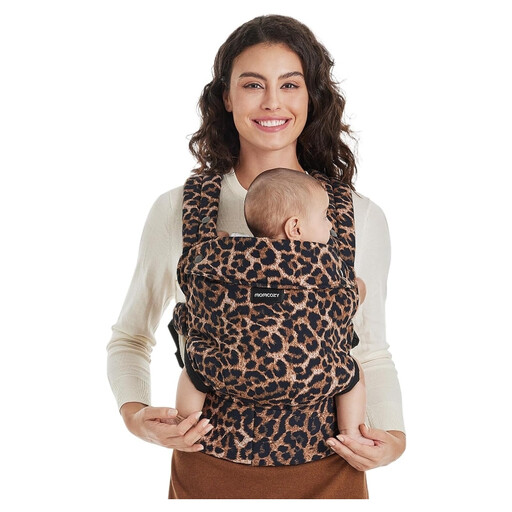
Why it suits this profile: This model combines a clearly defined carrying range with adjustable components and machine-washable cotton. That makes it a straightforward choice for parents looking for their first baby carrier.
The minimum and maximum weights are stated: approximately 3.18 to 19.96 kg. This means you do not have to rely solely on a general age claim.
100% cotton, machine washable, adjustable straps and a stated carrying range for babies and toddlers.
Why it suits this profile: For parents who regularly go on longer walks or journeys, weight distribution and adjustability are important considerations. The product description mentions enhanced lumbar support and a tri-point support system.
The carrier does not simply mention “comfort”; it specifies adjustable straps, an EVA panel and additional lumbar support. The fit still depends on correct adjustment.
Adjustable support, neck-support cushion, padded leg openings and a carrier weight of approximately 771 grams.
Why it suits this profile: This model is designed for front carrying and is suitable for shopping, travelling and short or longer walks when you want to keep your hands free.
The manufacturer gives clear warnings: check the buckles and straps before every use, keep the baby’s face visible and do not use the model during activities involving a risk of falling.
Front carrying, machine-washable material, adjustable straps and suitability for approximately 3.18 to 19.96 kg according to the product information.
We have put together a complete, up-to-date list of products that fully meet these strict selection criteria and the applicable European safety regulations.
This varies by model. The Momcozy Baby Carrier states a minimum weight of 3.18 kg and a maximum weight of 19.96 kg. Always check the current product specifications before buying and follow the instructions for use.
A manufacturer may describe an M-position as a design feature, but the correct fit depends on the baby’s age, size and adjustment. According to Momcozy’s product description, the knees should be positioned higher than the hips. While carrying your baby, check that they are properly supported and that their face remains visible.
Its lifespan depends on use, load and care. Wash it according to the instructions, avoid unnecessary wear on the buckles and inspect the carrier regularly. Replace it if you notice fraying, damaged straps, loose seams or fastenings that no longer hold securely.
