
Vandaag of morgen in huis

Kwaliteit gegarandeerd

Welkomstaanbiedingen ontgrendelen: GRATIS bezorging | Tot 80% korting | Gratis 30 dagen JoyPlus-proefperiode
Download de app
An ergonomic baby carrier can be useful during a walk, a family visit or a journey on public transport. Your hands remain free while your baby stays close to you. However, not every baby carrier is suitable for everyday use. Soft fabric or a broad weight range alone says little about fit, support and safe use.
As a Joybuy Product Recommendation Officer, I filter product information based on verifiable features. This helps you avoid paying solely for a marketing promise.
A carrier with a minimum weight of around 3.2 kg may appear suitable for a newborn. However, this does not automatically mean that every baby can be carried safely in the model from birth. Always check:
According to the product description, the Momcozy carriers in this selection are recommended for children from approximately 3 to 24 months. They are therefore not automatically a newborn baby carrier. Use the carrier only when the instructions and your child’s development make it appropriate.
The term ergonomic does not automatically describe how the carrier will fit every parent and baby. According to Momcozy’s product description, the models are designed for an ergonomic M-position, with the knees positioned higher than the bottom. Correct adjustment remains essential.
While carrying your baby, check that:
A baby carrier is not protective equipment in the event of a fall or accident. Do not use it while cycling, running, cooking over an open flame or carrying out other activities involving a risk of falling or burns.
A lightweight baby carrier may feel comfortable when trying it on, but the construction also affects how the weight is distributed. Pay attention to the shoulder straps, waist belt and back design. A baby carrier with lumbar support may be more comfortable for some users, particularly when carrying a child for longer periods. Stop carrying if you experience pain or discomfort and readjust the straps.
For use over several months, a broad but realistic weight range is practical. According to the product information, the Momcozy models in this article have a recommended range of approximately 3.18 to 19.96 kg. Multiple adjustment settings can help adapt the seat as your child grows.
Bear in mind that a higher maximum weight does not mean the carrier will remain equally comfortable for every parent. Fit, body shape and the way the straps are adjusted all play an important role.
A breathable baby carrier with Air Mesh panels can be appealing for hot summer days, travel or homes where you tend to get warm quickly. According to the product specifications, the Momcozy mesh variants weigh approximately 760 to 771 grams and are machine washable.
A cotton baby carrier feels familiar and comfortable to many users. According to the product description, the models mentioned are made from 100% cotton and can also be machine washed. Cotton may provide a different moisture and temperature experience compared with mesh. Choose based on the season, your clothing and how long you plan to use it—not simply because a product is described as “soft”.
The models mentioned are intended for front carrying, with your baby facing you. Check whether the carrier has an adjustable head or neck support and whether the leg openings are padded. An X-shaped back design, EVA lumbar support and adjustable shoulder straps are listed in the product descriptions as features intended to distribute weight. These are product features, not a guarantee that discomfort or back pain will disappear.
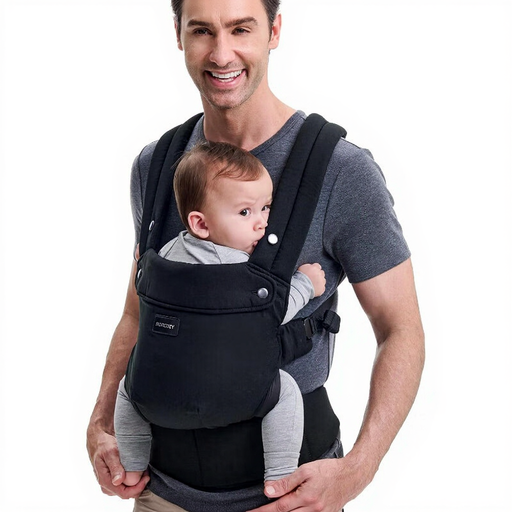
Why it’s a good match: A practical choice for parents who want to carry hands-free at home, on short walks or while doing everyday shopping.
The product information specifies a minimum weight of 3.18 kg, a maximum of 19.96 kg and three adjustment settings. Always check your baby’s age and head control.
100% cotton, machine washable, front carrying and an EVA panel for lumbar support according to the product description.
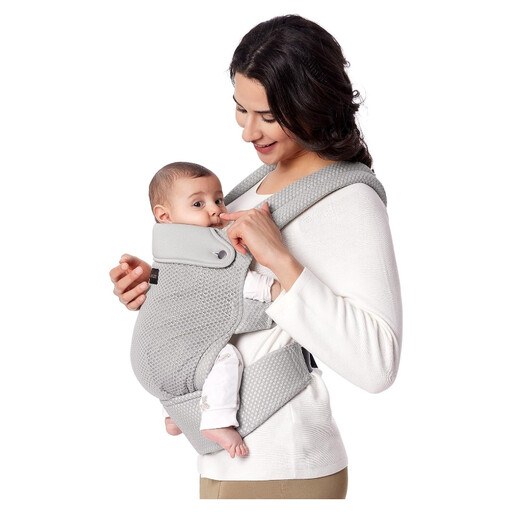
Why it’s a good match: Worth considering for summer outings, travel and parents who prefer less heat around their body.
Air Mesh and cooling neck fabric are specific materials named in the product information. They do not replace proper adjustment or guarantee a particular body temperature.
According to the product information, this model weighs approximately 771 grams, is machine washable and suitable for around 3.18 to 19.96 kg.
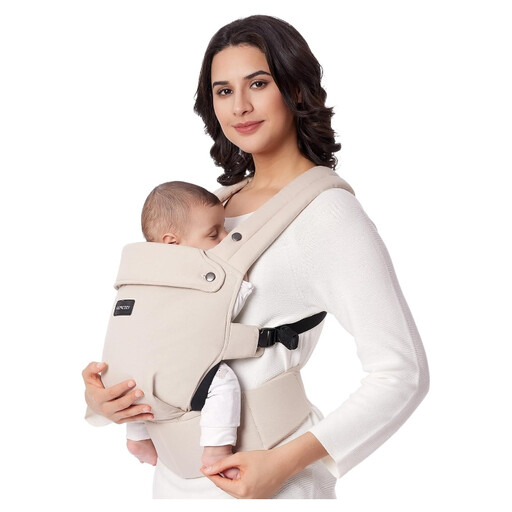
Why it’s a good match: An appealing option for parents looking for a model that, according to the description, grows with their child from babyhood to toddlerhood for everyday activities and travel.
The X-shaped back, padded straps and EVA lumbar support are verifiable components. Readjust the carrier as your child grows.
According to the product information, the model offers three adjustment settings, front carrying and a recommended carrying weight of approximately 3.18 to 19.96 kg.
Explore a current selection of products and accessories for parents and babies, with specifications that make it easy to compare models.
Before every use, inspect the seams, straps and buckles. A damaged or worn carrier should no longer be used. Wash it according to the care label and allow all components to dry thoroughly. Machine washability is convenient, but repeated washing can affect materials; inspect the carrier regularly.
Start with short carrying sessions. This allows you to check whether the straps are positioned correctly and whether your baby remains calm and visible. A carrier for toddlers and babies does not always require the same adjustment.
Not automatically. Check the minimum age, weight and required head control. According to the product information, the Momcozy models mentioned are intended for approximately 3 to 24 months and should not be used for children who cannot yet support their head independently.
This depends on usage, washing, load and storage. Regularly inspect the buckles, stitching and straps. The stated maximum weight of approximately 20 kg is a usage limit, not a guarantee of the material’s lifespan.
That depends on how you plan to use it. Mesh can be practical in warm weather, while cotton may appeal to those who prefer a natural fabric and a straightforward care routine. Alongside the price, compare the carrying weight, adjustability, maintenance requirements and the level of support that suits your body.
