
Vandaag of morgen in huis

Kwaliteit gegarandeerd

Welkomstaanbiedingen ontgrendelen: GRATIS bezorging | Tot 80% korting | Gratis 30 dagen JoyPlus-proefperiode
Download de app
Buying an energy drink seems straightforward until you have to choose from dozens of brands, flavours and pack sizes. Brightly coloured packaging tells you little about what you’re actually buying. Pay particular attention to the caffeine and sugar content, can size and number of cans in a multipack.
For adults, an energy drink can be an option during a long working day, while studying, on a long drive or when you fancy something cold and fizzy. It’s no substitute for sleep, water or a varied diet. Use the checks below to avoid buying something that doesn’t suit your needs.
An energy drink multipack with 12 or 24 cans can bring down the price per can. But you’ll lose that advantage if you quickly tire of the flavour or can’t finish the pack in time. So compare more than just the total price:
If you’d like to try a brand first, it’s better to start with a smaller pack, such as a 3-pack or 6-pack.
A sugar-free energy drink will usually still contain caffeine. For example, Red Bull Sugar-Free product information lists 32 mg of caffeine per 100 ml. In a 250 ml can, that works out at around 80 mg. Monster Ultra White is sold as a sugar-free option in 500 ml cans; always check the label on the pack in question for the exact caffeine content.
So, sugar-free mainly tells you about sugar and calories. It doesn’t mean the drink is suitable for children, pregnant women, breastfeeding women or people who are sensitive to caffeine.
Fruity energy drinks with cherry, peach, watermelon or berry flavours stand out, but they aren’t always available for long. If you want to drink a particular flavour regularly, check whether it comes in a multipack and whether the product information is clear enough.
“Limited edition” or “special edition” doesn’t indicate a different caffeine concentration. Check the nutrition table and ingredients list for that.
Caffeine content is usually listed per 100 ml on Dutch and European packaging. Calculate the amount for the whole can. An energy drink containing 32 mg of caffeine per 100 ml has:
Carabao Mixed Berry product information lists 106 mg of caffeine per 330 ml. So the same amount of caffeine per 100 ml can add up to a significantly higher total intake in a larger can. Remember to include caffeine from coffee, tea, cola and food supplements. The European Food Safety Authority generally gives a limit of 400 mg of caffeine per day from all sources for healthy adults; individual sensitivity varies.
In the EU, energy drinks containing more than 150 mg of caffeine per litre must carry a high-caffeine warning. Always follow the warnings and instructions on the label too.
A regular 250 ml Red Bull Energy Drink lists 11 g of sugar per 100 ml, or around 27.5 g per can. Slammers lists 11.4 g of sugar per 100 g. A sugar-free version contains sweeteners instead, such as sucralose, acesulfame K or other permitted sweeteners.
So compare these details on the label:
A 250 ml energy drink is compact and convenient for a short break or when you’re out and about. A 500 ml energy drink contains twice as much liquid, but not necessarily a lower caffeine concentration. A large multipack can be handy for a long working day or to keep in the cupboard; for occasional use, a smaller pack is often easier to manage.
Store unopened cans in a cool place, away from direct sunlight. Once opened, keep the can chilled and drink it within the time stated on the packaging.
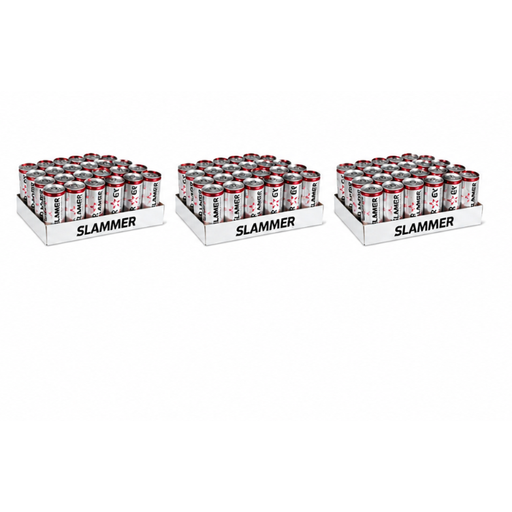
Why it suits this shopper: A 3-pack is a good choice if you’d like to try a new fruity energy drink before ordering a larger quantity.
You won’t be left with 12 or 24 cans straight away. The product information lists 11.4 g of sugar per 100 g and 0.032% caffeine; check the current packaging to confirm.
A small pack of three cans and a standard ingredients list featuring caffeine, taurine and B vitamins.
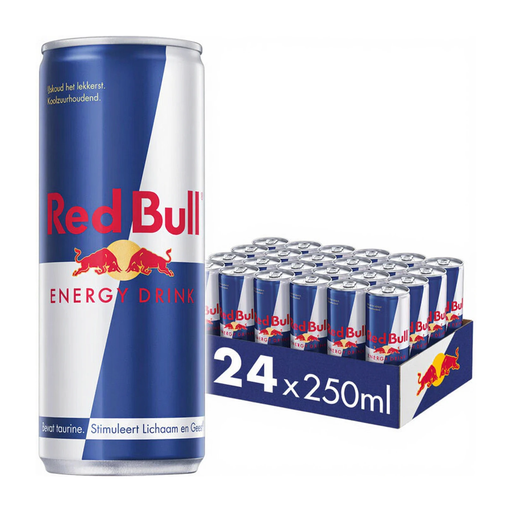
Why it suits this shopper: A reliable choice if you’re looking for a familiar brand, a consistent can size and a supply to keep at work, for studying or for when you’re out and about.
The pack contains 24 identical 250 ml cans, so you won’t accidentally buy a larger can size with more caffeine per serving.
24 cans of 250 ml, with 32 mg of caffeine and 11 g of sugar per 100 ml according to the product information.
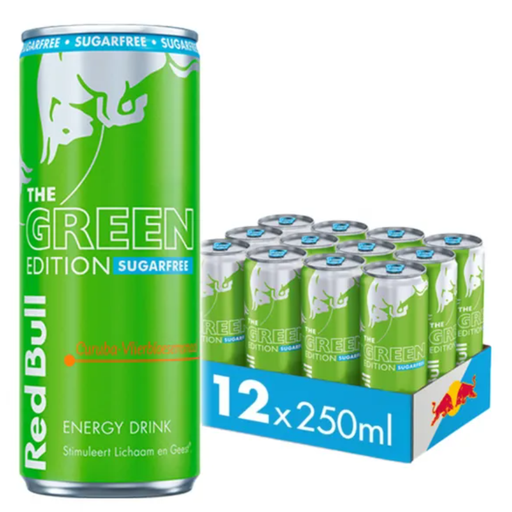
Why it suits this shopper: The curuba and elderflower flavour is a good option if you’re after a fruity variety and want to avoid sugar in your diet.
The product information lists 0 g of sugar and 3 kcal per 100 ml. The drink does contain caffeine and sweeteners, so compare both.
Sugar-free formula, 12 cans of 250 ml and a distinctive fruity flavour.
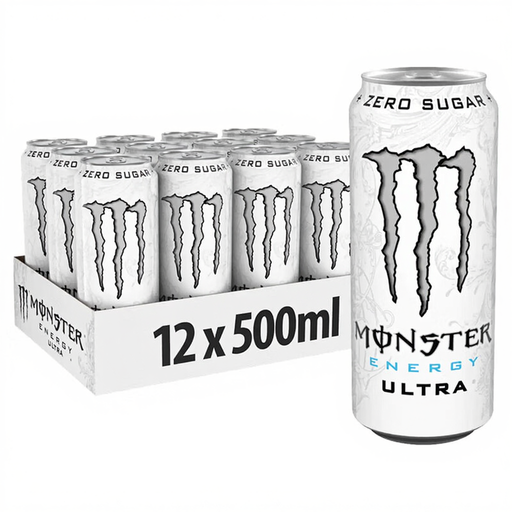
Why it suits this shopper: The large can size and 12-can pack are a good fit if you regularly drink sugar-free energy drinks and have room to store them.
The product page lists 0 g of sugar per 100 ml and makes the pack size clear: 12 x 500 ml. Check the current caffeine content on the can before ordering.
Sugar-free, with a citrus flavour profile and 6 litres in total per multipack.
We’ve put together a complete, up-to-date list of products that meet these strict selection criteria and comply with the applicable European safety regulations.
A 250 ml can is compact and makes it easy to keep track of how much you’re drinking per can. A 330 ml can sits between the two. A 500 ml can contains more liquid and may therefore also contain more caffeine, depending on the concentration. Always compare the caffeine content per can, not just per 100 ml.
According to the product information, a sugar-free version contains no sugar or very little sugar, but it usually still contains sweeteners and caffeine. So “lighter” doesn’t automatically mean it has less caffeine. Check the ingredients and nutritional information before placing an order.
Unopened cans keep until the date shown on the packaging, as long as they’re stored in a cool place away from direct sunlight. Once opened, the drink should be kept chilled and consumed within the stated time. When ordering online, check the number of cans too, so you don’t buy more than you can reasonably use in a short time.
