
Vandaag of morgen in huis

Kwaliteit gegarandeerd

Welkomstaanbiedingen ontgrendelen: GRATIS bezorging | Tot 80% korting | Gratis 30 dagen JoyPlus-proefperiode
Download de app
An enamelled cast-iron Dutch oven can last for decades, but only if its size, heat-source compatibility and finish suit the way you cook. A heavy pot in an attractive colour is not automatically practical for everyday use. Look beyond the product image and pay particular attention to capacity, weight, lid design, and oven and induction compatibility.
For Dutch home cooks, three common buying mistakes stand out:
Below, you’ll find the specifications that genuinely make a difference, along with popular options suited to different cooking needs.
Diameter does not tell the whole story. The capacity in litres determines how much soup, sauce or stew you can prepare comfortably. You should also leave enough room to stir ingredients without spilling.
As a general guide:
A 24 cm Dutch oven often has a capacity of around four litres. This size is versatile for braised meat, chilli, soup and bread. Always check the stated capacity, as two pots with the same diameter can still differ in shape and volume.
An induction-compatible Dutch oven must have a flat base that responds magnetically. Induction compatibility is often listed for enamelled cast iron, but verify it for each product. Also check the maximum oven temperature and whether both the lid and knob are oven-safe.
A stainless-steel knob may be suitable for oven use according to the product description, but the exact temperature limit still matters. With a glass lid, the pot itself may be oven-safe while the lid has separate restrictions.
Pay attention to the dimensions of your hob as well. A heavy pot that is larger than the cooking zone may heat less evenly. Lift a cast-iron casserole carefully rather than sliding it across a glass induction hob.
Enamel covers the cast iron and makes the pot easier to clean than untreated cast iron. However, the finish is not indestructible. Use wooden or silicone utensils and avoid harsh cleaning products and abrasive sponges.
Cast iron retains heat for a long time, but it also heats up slowly. Start on a low to medium setting and bring the pot up to temperature gradually. Leaving an empty pot over high heat for an extended period can place unnecessary stress on the finish.
A pot weighing just over four kilograms, excluding ingredients, is normal for a 24 cm model. Check that the handles are large enough for oven gloves and that you have sufficient space to lift the pot safely from the oven.
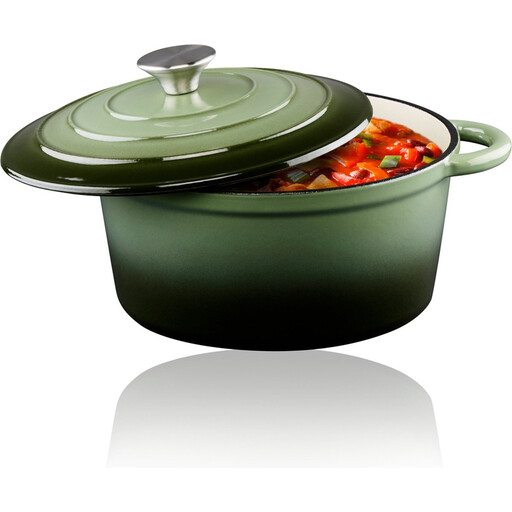
Why it suits this profile: The capacity is well suited to everyday soups and stews for a small family. According to the product description, the pot is compatible with induction, gas, ceramic and electric hobs, as well as oven use.
The specifications state both the 24 cm diameter and the 3.8-litre capacity. You therefore do not have to estimate the volume based on diameter alone.
24 cm diameter, 3.8-litre capacity, lid included and dishwasher-safe according to the product information.
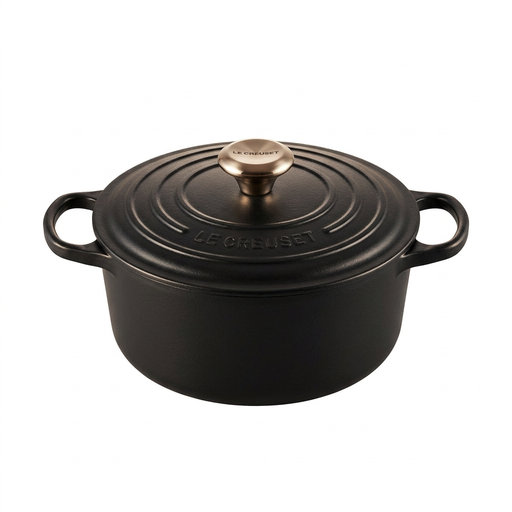
Why it suits this profile: The stated 4.2-litre capacity provides ample room for family meals. According to the product description, this model is suitable for all heat sources, including induction and oven use.
The capacity, diameter, 4.305 kg weight and included lid are all clearly specified. This makes comparison easier than relying on broad quality claims.
4.2-litre capacity, 24 cm diameter, cast-iron lid and a minimum two-year statutory warranty according to the listed product information.
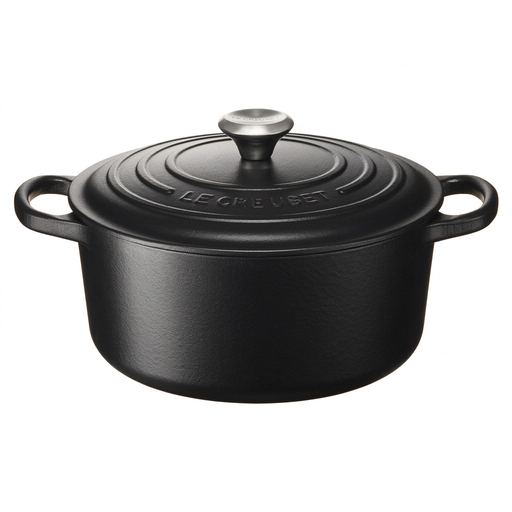
Why it suits this profile: With a 3.3-litre capacity, this compact cast-iron pot is well suited to soups and stews, one-pot meals and roasting, without the footprint of a 24 cm model.
The capacity is clearly specified, preventing a relatively wide pot from offering too little usable space in practice.
22 cm diameter, 3.3-litre capacity, induction- and oven-compatible according to the product description, with large handles.
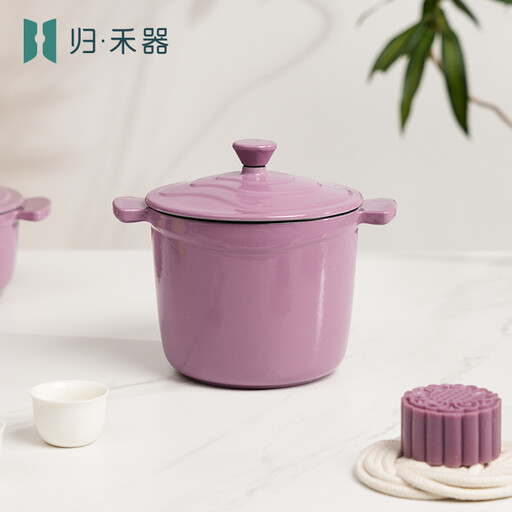
Why it suits this profile: This pot is designed for small portions, porridge, soup or a single-serving meal. According to the product name, it is suitable for induction hobs.
The compact format makes its intended use clear. Do not expect family-sized capacity: 1.3 litres is primarily practical for one person.
14 cm diameter, 1.3-litre capacity and a design intended for induction cooking and small portions.
Explore a current selection of enamelled cast-iron Dutch ovens and compare size, capacity, colour and heat-source compatibility before ordering.
Many models are induction-compatible, but this must be stated explicitly in the product information. Also check that the base is flat and that the diameter suits your cooking zone.
A pot with a capacity of approximately 3.8 to 4.2 litres is often practical for three to four people. A 24 cm Dutch oven frequently falls within this range, but capacity and shape vary by model.
The pot itself does not consume energy beyond what the hob uses. Because cast iron retains heat, you can often continue cooking on a lower setting once the pot has heated up. Actual energy consumption depends on cooking time, the recipe, the heat source and whether the lid is used.
