
Vandaag of morgen in huis

Kwaliteit gegarandeerd

Welkomstaanbiedingen ontgrendelen: GRATIS bezorging | Tot 80% korting | Gratis 30 dagen JoyPlus-proefperiode
Download de app
An electric toothbrush can be a practical upgrade from manual brushing, but not every model suits every user. Marketing copy often focuses on thousands of brushing movements, smart apps or a battery that lasts for months. Meanwhile, important details can be overlooked: the available intensity levels, the price of replacement brush heads and whether a travel case or charging solution really fits your routine.
With this buying guide, you can compare a sonic electric toothbrush based on verifiable specifications. That way, you avoid paying for features you will not use.
A higher number of movements per minute may sound appealing, but it does not determine the results on its own. The brush head, intensity control and your brushing technique also play a part. A model with several settings may be more suitable if you want to alternate between gentle and more intensive brushing.
Also look out for conflicting product information. Some models list different numbers of movements in the description and specifications. For that reason, always check the official product specifications on the product page first.
A smart electric toothbrush may include an app, LED display or brushing map. This can be useful if you like receiving feedback about brushing time and coverage. For others, a simple timer is enough. An app may also require additional installation, Bluetooth pairing and maintenance of a smartphone app.
A battery that lasts for several months is convenient when travelling, but also check:
Brush heads are usually replaced approximately every three months, or sooner if the bristles become worn. The running costs therefore include more than just the purchase price of the handle.
An electric toothbrush for adults often has one or more programmes. Common options include Daily Clean, Sensitive and White. An electric toothbrush for sensitive teeth is particularly practical when you can select a gentle mode and several intensity levels. The soft brush head is at least as important as the name of the brushing mode.
You should not regard a programme labelled White as a guarantee of whiter teeth. According to a brand’s own research, certain brush heads or modes may help remove surface stains, but this is not a guaranteed result for every user.
A toothbrush with a pressure sensor usually provides a vibration, light signal or other warning when you apply too much pressure. This helps you brush more mindfully, but it does not replace good brushing technique.
An electric toothbrush with a timer often runs for a total of two minutes, with short signals telling you when to move to another area of your mouth. Some models use three minutes. Choose a timer that suits your routine and check whether the toothbrush stops automatically or only provides a signal.
For everyday use, battery life of around two to three weeks is generally practical. If you travel frequently, it is worth looking for an electric toothbrush with long battery life, USB-C charging and a sturdy case. An electric toothbrush with a travel case prevents the brush head from being left loose in your wash bag.
Water resistance does not mean you can submerge the device indefinitely. Never charge a toothbrush when the connection is wet, and follow the manufacturer’s instructions. The statutory guarantee in the EU is generally at least two years for consumers; additional rights may apply under Dutch consumer law.
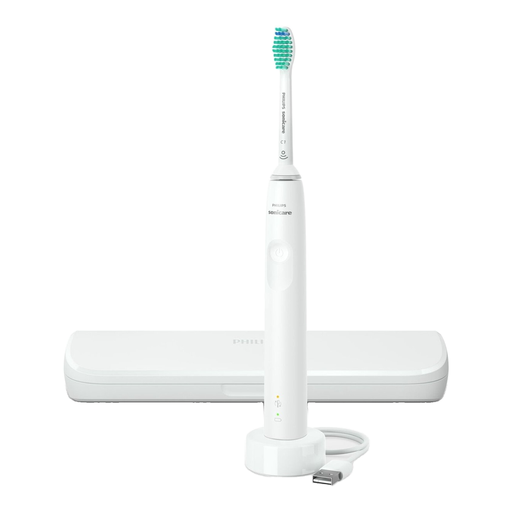
Why it suits this profile: A straightforward model with a two-minute timer, 30-second interval and battery life of up to 14 days.
The key features are clearly described, without making you pay for extensive app functions.
31,000 movements per minute according to the specifications, pressure sensor, USB charging station and BrushSync replacement reminder.
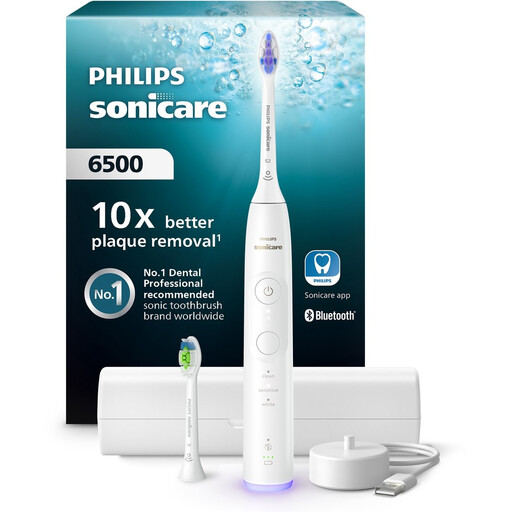
Why it suits this profile: The combination of Sensitive and Optimal White brush heads gives you flexibility to suit different preferences within one routine.
You are not limited to one firmness or one use case; the included heads make the choice more practical.
Three intensities, three brushing modes, pressure sensor, Sonicare app and a smart travel case according to the product description.
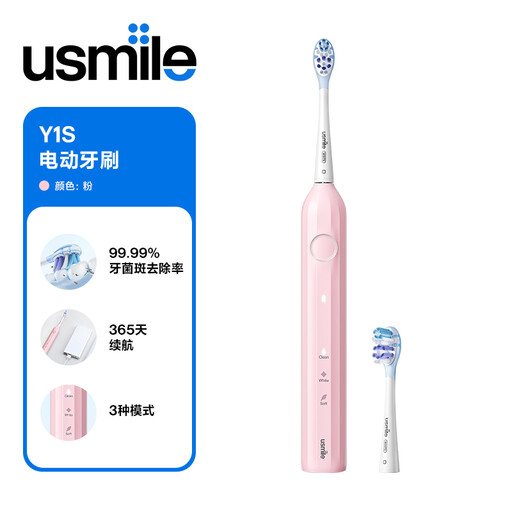
Why it suits this profile: The stated battery life of up to six months and USB-C connection are practical for frequent travellers.
The travel case and USB-C charging reduce the need for separate accessories, while the Soft mode offers a gentler option.
Three modes, 30-second interval, automatic shut-off after two minutes and IPX7 rating according to the product details.
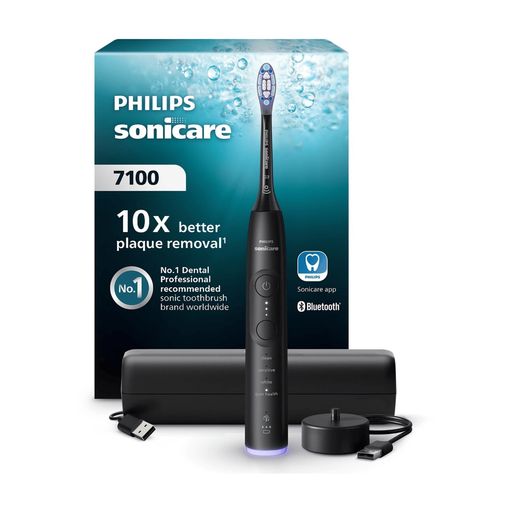
Why it suits this profile: For users who genuinely want to use brushing modes and digital guidance as part of their daily routine.
The extra cost is clearly reflected in four modes, three intensities, a pressure sensor and app support, rather than simply a high number of movements.
Premium Gum Care brush head, four brushing modes, three intensities, BrushSync and an app with brushing guidance according to Philips.
We have put together a complete, up-to-date list of products that fully meet these strict selection criteria and the applicable European safety requirements.
Rinse the brush head after every brushing session and leave it to dry upright. Do not keep an electric toothbrush sealed away for long periods when the head is still wet. Check the bristles regularly and replace the head according to the manufacturer’s instructions, often after approximately three months.
If you have sensitive teeth or gums, use a lower intensity and a suitable soft brush head. If discomfort persists, you have recently had treatment or you are unsure how to use the toothbrush, it is advisable to consult a dentist. An electric toothbrush is a tool for oral care and not a substitute for professional advice.
Its lifespan depends on the battery, charging habits and the availability of replacement brush heads. A handle can last for several years, but battery capacity decreases over time. Therefore, do not look only at battery life per charge; also consider the guarantee, charging type and spare parts.
It can be, provided the model has a gentle mode, low intensity and a suitable brush head. Start gently and apply very little pressure. A pressure sensor is a useful control feature, but the right choice depends on your personal circumstances.
As well as the device itself, you pay for replacement brush heads and possibly a new charging cable or travel case. Multiply the price of one set of brush heads by the recommended number of replacements per year. This gives you a fairer comparison of the total cost than looking at the shop price alone.
