
Vandaag of morgen in huis

Kwaliteit gegarandeerd

Welkomstaanbiedingen ontgrendelen: GRATIS bezorging | Tot 80% korting | Gratis 30 dagen JoyPlus-proefperiode
Download de app
An electric toothbrush can be a convenient upgrade if you want to brush for longer, more evenly or with fewer hand movements. However, you may sometimes be paying mainly for features you barely use. A high brushing frequency, for example, does not automatically mean that a brush works more comfortably, and an app cannot replace good brushing technique.
When searching online for the “best electric toothbrush”, you will often see impressive claims about plaque removal, whiter teeth or smart coaching. Start by looking at verifiable specifications instead: whether it has a pressure sensor and timer, the type of brush head, battery life, replacement costs and included accessories.
A sonic electric toothbrush is often advertised as making tens of thousands of movements per minute. However, this figure cannot be directly compared between brands. Manufacturers may use different measuring methods, and the number says little about noise levels, brush-head shape or how comfortable the handle feels.
Also consider how the brush works. Sonic models generally use rapid vibrations, while magnetic or oscillating models often use a round brush head. Choose the technology that matches your preferences and brushing pattern, not simply the one with the highest figure.
An electric toothbrush with an app can track zones, brushing time and pressure. This is useful if you like receiving feedback or monitoring your routine. For others, a simple timer is enough. Also check whether the app is compatible with your smartphone and whether all features work without an additional account or paid service.
The handle is only part of the total cost. Brush heads generally need replacing roughly every three months, or sooner when the bristles are worn. Check in advance which original or compatible heads are available and how much a pack costs.
Also consider the charger. A USB charger is practical when travelling, but a charging station may be easier to use at home. A charging station or charging case must not be used near water when it is connected to the mains.
An electric toothbrush with a pressure sensor warns you when you are pressing too hard. Some models then reduce the vibrations, while others use a light or a change in vibration. This helps you brush more consciously, but you should still move the brush gently from tooth to tooth.
For sensitive gums, a soft brush head and low intensity are at least as important as the sensor. Persistent pain or bleeding is not a reason simply to choose a different brushing mode; in that case, ask a dentist for advice.
An electric toothbrush with a timer stops or gives a signal after around two minutes. A QuadPacer or similar 30-second reminder divides your mouth into four zones. This prevents you from concentrating mainly on your front teeth and rushing through the back.
A timer is a basic feature that is often more useful every day than a display or Bluetooth connection. Check whether the timer starts automatically and whether the signals are clear enough for the way you use the brush.
A toothbrush with long battery life is useful if you travel frequently or do not want to charge it every day. Manufacturers usually state the number of days of use based on a standard brushing routine. Actual battery life depends on the brushing mode, intensity and frequency.
For holidays, an electric toothbrush with a travel case is practical. Pay attention to the difference between a storage case and a travel case that can also charge the toothbrush. Also check whether the supplied USB charger, charging base or mains adapter suits the way you travel.
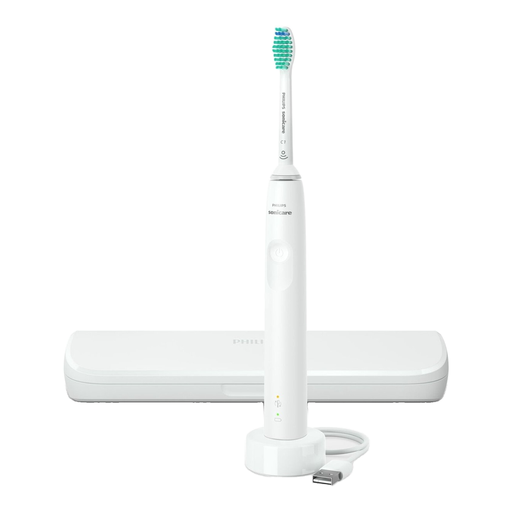
Why it suits this profile: This model keeps operation simple and combines sonic technology with a built-in pressure sensor, a 2-minute timer and a compact USB charging solution.
You are not paying for Bluetooth or extensive display features here. The 30-second zone reminder and pressure sensor directly address two common usage problems.
According to the product details: up to 14 days of battery life, 31,000 movements per minute and a travel case.
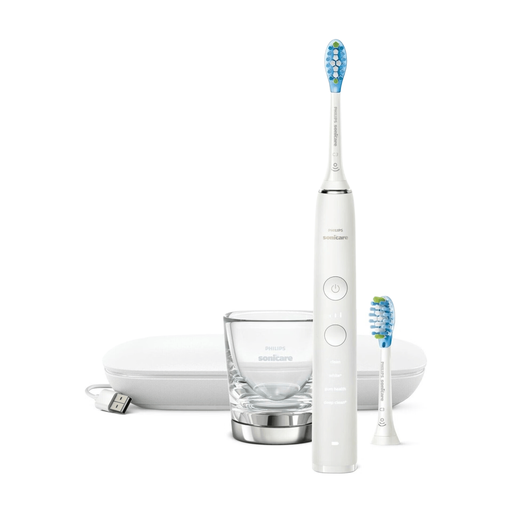
Why it suits this profile: If multiple brushing modes, an app, a charging glass and a travel case are important to you, this model offers a more comprehensive package.
Here, the app is a practical extra feature alongside the timer and pressure sensor. However, check beforehand whether you actually want to use the Bluetooth coaching.
According to Philips: four brushing modes, Bluetooth, a pressure sensor, two brush heads supplied and a charging glass.
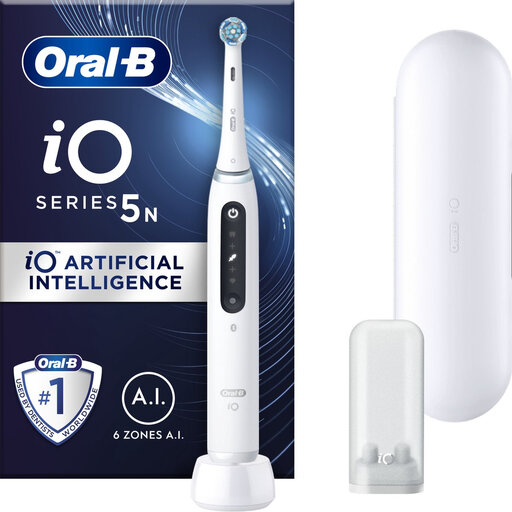
Why it suits this profile: The round brush head, five brushing modes and app support suit adults who want to actively monitor their brushing routine.
According to Oral-B, the smart pressure sensor distinguishes between pressing too hard, too softly and with the right amount of pressure. This makes the feature more specific than a general warning.
According to Oral-B: five brushing modes, Bluetooth, a round brush head, a pressure sensor and a travel case included.
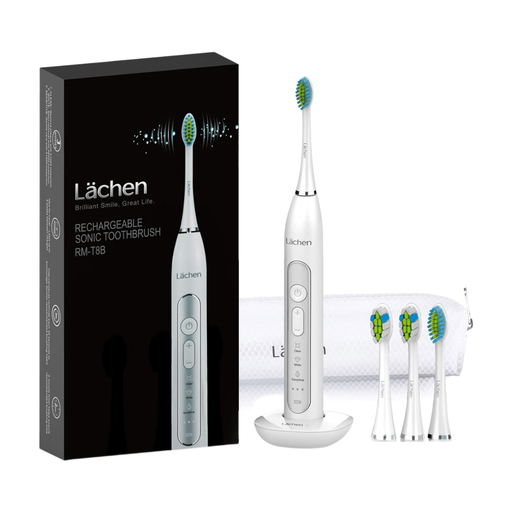
Why it suits this profile: The stated long battery life, USB charging station and storage bag are practical for frequent travellers and users who do not want to charge the brush often.
The combination of a timer, storage bag and USB charging means convenience when travelling is more than just a marketing label. However, check the availability and price of compatible Lachen brush heads.
According to the product description: nine combinations of modes and intensities, IPX7 water resistance and up to 60 days of battery life.
We have put together a complete, up-to-date list of products that fully meet these strict selection criteria and the applicable European safety regulations.
Its lifespan depends on the battery, motor, charging accessories and maintenance. Replace the brush head according to the manufacturer's instructions, usually about every three months. Stop using the toothbrush if the head or handle is damaged. The statutory guarantee in the EU is at least two years, but additional rights may vary depending on the circumstances and the seller.
As well as the purchase price, you mainly pay for replacement brush heads and electricity. The charger's electricity consumption is generally a smaller cost. Compare the price of each replacement head and check whether original heads are readily available. A cheaper device may be less economical in the long term if compatible heads are expensive or difficult to find.
It can be, depending on the brush head, intensity setting and your brushing technique. Choose a soft or sensitive brush head and start on a low setting. Do not press harder than necessary. If irritation, pain or bleeding persists, speaking to a dentist is wiser than continuing to switch between brushing modes.
