
Vandaag of morgen in huis

Kwaliteit gegarandeerd

Welkomstaanbiedingen ontgrendelen: GRATIS bezorging | Tot 80% korting | Gratis 30 dagen JoyPlus-proefperiode
Download de app
An electric toothbrush can be useful if you want to brush for longer, more evenly or with fewer hand movements. However, you may sometimes be paying mainly for marketing. For example, a high number of brushing movements does not automatically mean that a model will feel more comfortable or work better for your mouth. A long battery life is also less relevant if replacement brush heads are difficult to find.
So focus on the features you will use every day: a toothbrush with a timer, a suitable intensity, a comfortable grip and a charging solution that fits your routine. Below, you can find out which specifications are worth checking and which models suit different user profiles.
A sonic electric toothbrush is often promoted as offering thousands of movements per minute. This is a verifiable technical specification, but it does not tell you everything. Also consider the available modes, the softness of the brush head and how the handle provides signals while you brush.
A higher speed can also feel less comfortable for someone with a sensitive mouth. A model with several intensity levels offers more flexibility in this case.
An electric toothbrush with a long battery life can be useful on holiday, but check how the manufacturer calculated that battery life. The number of brushing sessions, the selected mode and the charging method can all affect how long it lasts.
Also check whether a rechargeable toothbrush comes with a USB charger, charging station or travel-friendly cable. A model that lasts a long time but requires an unusual charger is less practical for travellers.
IPX7 and IPX8 are technical protection classifications, not general permission to submerge every component for long periods. The charging unit and charging contacts may have different instructions from the handle. Always read the safety information supplied with the product.
A waterproof electric toothbrush is particularly useful when rinsing it under the tap. Do not use the charging station near water if the manufacturer advises against it.
A two-minute timer helps you stick to a consistent brushing time. Some models also give a signal every 30 seconds, allowing you to divide your mouth into four zones. This is practical for adults, teenagers and children who are still developing a regular routine.
A timer does not replace good technique. Move the brush head gently from tooth to tooth or across groups of teeth, and avoid applying excessive pressure.
A toothbrush with a pressure sensor can use light, sound or vibrations to indicate when you are pressing too hard. This is particularly useful if you are used to brushing firmly. Check which type of warning the model uses and whether the feature is available in every mode.
Several intensity levels make a handle more versatile within a family, but shared use requires each person to have their own brush head. For young children, age-appropriate brush heads and supervision are important.
As well as the stated battery life, look at:
A brush head is often replaced after around three months, or sooner if the bristles show visible signs of wear. Always follow the manufacturer's instructions. For a toothbrush for healthy gums, a gentle mode and limited pressure may also be more important than additional features. If problems persist, seek advice from a dentist or dental hygienist.
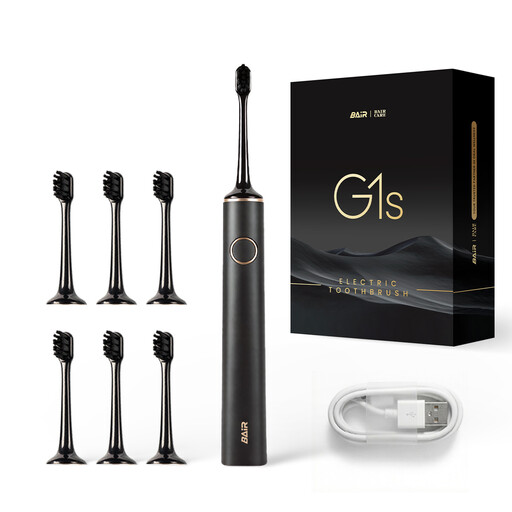
Why it suits this profile: This sonic model combines five brushing modes with three intensity levels. This means you can start gently and try a different setting later without immediately moving to a more advanced system.
The choice is not based on speed alone: the product specifications also list a timer, three intensity levels, IPX7 water resistance and a travel case.
Stated battery life of up to 90 days, rechargeable design, five modes and a smart two-minute timer.
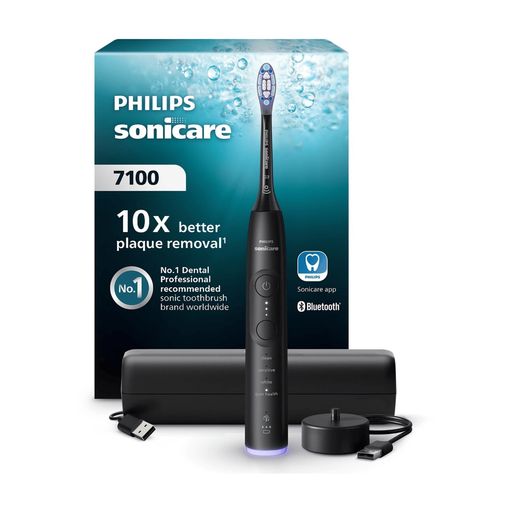
Why it suits this profile: If you value adjustability and guided brushing, you get four modes, three intensity levels, a pressure sensor and app support.
The stated features go beyond the number of movements alone: there is a timer, pressure warning and brush head replacement indicator.
62,000 movements per minute according to Philips, four brushing modes, three intensity levels and a travel case. Claims about gum care come from Philips' product information.
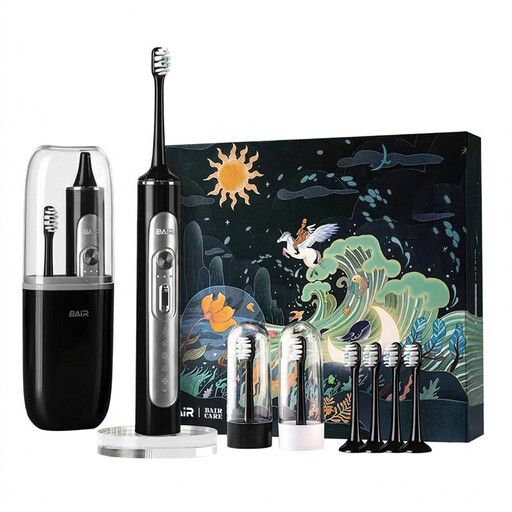
Why it suits this profile: This model is aimed at users who want to charge their toothbrush infrequently and regularly take it travelling or use it in a busy household.
The stated battery life is combined with a rechargeable design and IPX7 water resistance. However, check the actual usage time after purchase.
Stated battery life of up to 180 days, five modes, three intensity levels, a two-minute timer and a premium travel case.
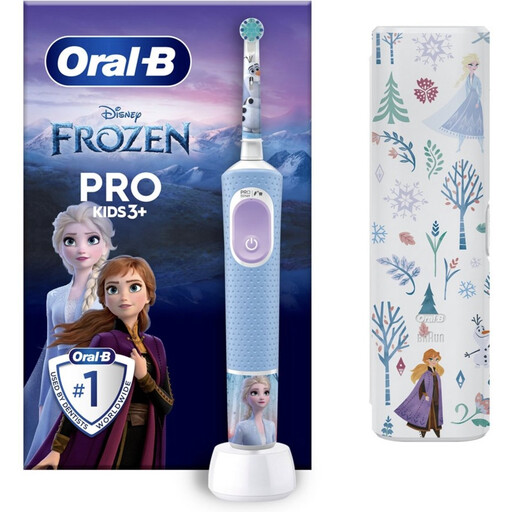
Why it suits this profile: The product information states that it is suitable from the age of three, and includes a sensitive brush head, a visible pressure sensor and a timer with 30-second intervals.
The choice for children is not based on the Frozen design alone: soft bristles, a pressure warning and a guided timer are also listed in the product specifications.
Sensitive brush head, 360-degree pressure sensor, two-minute timer and a stated battery life of up to eight days.
We have put together a complete, up-to-date list of products that fully meet these strict selection criteria and the applicable European safety regulations.
Its lifespan depends on the battery, charging contacts, motor and maintenance. Rinse the brush head after use, allow the handle to dry and check it regularly for damage. Replace the brush head according to the instructions, usually approximately every three months.
It can be, but choose a model that the manufacturer states is suitable for the child's age. Young children need supervision. Use a suitable, soft brush head and teach the child to apply only light pressure.
In addition to the purchase price, you will pay for replacement brush heads and electricity. Charging costs are generally a small part of the total cost. Before buying an electric toothbrush, therefore, pay particular attention to the price, availability and compatibility of replacement brush heads.
