
Vandaag of morgen in huis

Kwaliteit gegarandeerd

Welkomstaanbiedingen ontgrendelen: GRATIS bezorging | Tot 80% korting | Gratis 30 dagen JoyPlus-proefperiode
Download de app
An electric shaver for men should suit your beard growth, skin and daily routine. Yet many people buy based on a high number of blades, long battery life or a waterproofing claim without checking the details. As a result, a device may prove less suitable in practice for the neck, longer stubble or use while travelling.
In this guide, you’ll find out what to look for and which models suit different situations.
A cordless shaver with a long operating time sounds appealing, but you should also consider the charging time, connection type and fast-charging function. A model that runs for 120 minutes but requires a specific adapter isn’t automatically more convenient for travelling than one offering 50 or 60 minutes of use with a fast-charging option.
Also check whether the rechargeable shaver can be used while charging. With various models, including some Braun shavers, shaving while charging is not permitted.
A washable shaving head isn’t the same as a fully waterproof shaver. Some devices only allow the head to be rinsed. Other models are suitable for wet and dry shaving, including use in the shower, according to their product specifications.
Pay close attention to the precise instructions. Even with a water-resistant model, a charging station, USB cable or adapter must not be placed in water. If in doubt, check the manual and the water-resistance rating.
A rotary shaver and a foil shaver work differently. Rotary heads are often practical for circular movements and facial contours. Foil shavers are generally used with straight movements. The result also depends on the flexibility of the head, your hair length and the way you shave.
Marketing claims about reduced irritation or a smoother result are not universally applicable either. According to brands’ own research, including that of Philips and Braun, certain coatings, sensors or shaving elements may offer benefits, but user experiences vary from person to person. It’s therefore best to start by looking at verifiable specifications.
A rotary shaver usually has several round heads that are moved over the face in circular motions. This can be comfortable when shaving around the jawline and neck. A foil shaver has a straight shaving surface and suits users who are accustomed to short, straight movements.
For a shaver for beards and stubble, the recommended hair length is also important. An integrated precision trimmer is useful for sideburns, moustaches and the neckline, but it won’t always replace a separate beard trimmer for longer beards.
If you want to use shaving gel or foam, choose a model that clearly states wet and dry shaving in its product specifications. A fully washable head makes daily maintenance easier. After use, clean off hairs and product residue, then allow the head to dry completely before storing the device.
A cleaning station saves you a few steps, but involves recurring cartridge costs. A model that can be rinsed by hand has no such costs, but does require a little more maintenance.
Check these points before ordering:
A charging station can be convenient for home use. For travelling, a USB or Type-C connection may be more practical, provided the required adapter is available.
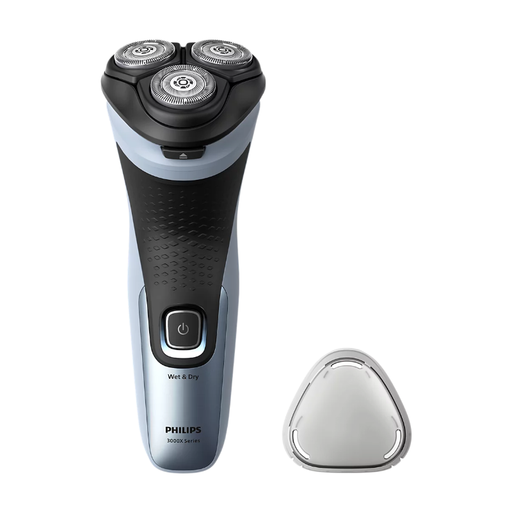
Why it suits this profile: This rotary model combines simple operation with an integrated pop-up trimmer and a 4D-flexible shaving head. The stated battery life is approximately 15 shaves per charge.
The specifications state that it is suitable for both wet and dry use, and that the head can be rinsed under running water. However, check that you have a suitable USB adapter, as one is not included.
27 self-sharpening PowerCut blades, a 360° flexible shaving head, pop-up trimmer and a fast-charging function for one shave.
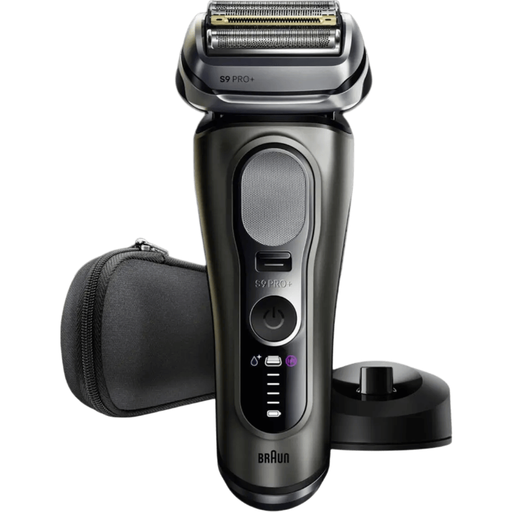
Why it suits this profile: This foil shaver is aimed at users who value a comprehensive set and automated maintenance. The package includes a 6-in-1 SmartCare Center, travel case, charger and cleaning brush.
The product specifications state 60 minutes of battery life and wet and dry use. Bear in mind the additional cost of maintenance cartridges, and do not use the shaver while it is charging.
5+1 synchronised shaving elements, a Li-ion battery with 60 minutes of operating time and a cleaning station.
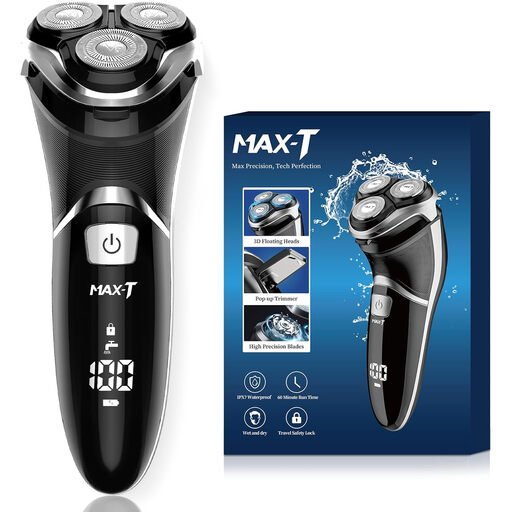
Why it suits this profile: This model is ideal for people who often travel or don’t want to recharge it constantly. Its stated operating time is up to 120 minutes, and the head has a 3D adaptive rotary design.
The stated IPX7 rating allows the device to be rinsed under running water when switched off. The charging port and device must be thoroughly dry before use and storage.
Up to 120 minutes of operating time, approximately 60 minutes to charge, a 3D adaptive rotary head and a fold-out precision trimmer.
We’ve put together a complete, up-to-date list of products that fully meet these strict selection criteria and the applicable European safety regulations.
A shaver for sensitive skin mainly requires a gentle shaving routine. Wash and dry your face when dry shaving, don’t press the head hard against your skin and avoid going over the same area repeatedly. When using a new shaving system, you may need to allow some time to get used to it.
Stop using the device if you experience persistent redness, irritation or discomfort. Don’t shave over damaged, sunburnt or irritated skin. Replace shaving heads, foils or blades according to the product information, and never use damaged parts.
That depends on the motor, shaving elements, head movement and your beard growth. Look for models with flexible heads, a turbo mode or a sensor that adjusts the power according to the manufacturer. A foil shaver may suit short, straight movements, while a rotary model may be more comfortable around complex facial contours.
In this selection, operating time per charge ranges from approximately 30 to 120 minutes. The lifespan of the device itself depends on maintenance, charging habits and the availability of replacement parts. Clean the head after use, keep moisture away from the charging port and regularly check whether the foil or blades are damaged.
In addition to the purchase price, replacement shaving heads, foils, cleaning cartridges and electricity may all add to the cost. A model with manual cleaning generally requires fewer consumables than a device with a station. So don’t compare only the price of the shaver; also consider maintenance costs over its expected service life.
