
Vandaag of morgen in huis

Kwaliteit gegarandeerd

Welkomstaanbiedingen ontgrendelen: GRATIS bezorging | Tot 80% korting | Gratis 30 dagen JoyPlus-proefperiode
Download de app
An electric kettle may seem like a simple purchase, but the differences between models can be significant. A compact kettle can be ideal for one person, while a household with several tea drinkers may benefit more from a 1.7-litre kettle. Wattage, materials and features such as temperature control also determine how practical the appliance is for everyday use.
Pay particular attention to these common pitfalls:
For a family, a 1.5- to 1.7-litre family kettle is often practical. According to product information, a 1.7-litre capacity equates to approximately six to seven 250 ml cups, depending on the model. For a student room, office or single user, 0.4 to 0.8 litres may be sufficient.
Wattage is measured in watts. A fast-boiling kettle often has a power rating of 2000 to 2400 watts. Product listings for 2200-watt models, for example, quote a boiling time of around four to five minutes for 1.5 litres of water. Treat this as a guideline rather than a guarantee for every situation. Only fill the kettle with the amount you need: less water usually means a shorter wait and lower energy consumption.
A stainless-steel kettle often has a robust interior and is less vulnerable to knocks than glass. With double-walled models, pay attention to the construction: an outer wall can reduce the temperature of the surface you touch, but the lid, spout and steam will still be hot.
A glass kettle lets you see the water level and may feature built-in LED lighting. Borosilicate glass is mentioned in several product descriptions because of its resistance to temperature changes. Glass is still breakable, so handle the kettle carefully and check it regularly for damage.
If you prioritise materials that come into contact with water, you can look for a BPA-free kettle. Check exactly which parts are BPA-free, however. Some product listings specify, for example, that the plastic components do not come into contact with the water. This claim comes from the brand’s product specifications and should not be interpreted more broadly than stated there.
A kettle with temperature control is particularly useful for green tea, coffee, milk or other applications where boiling water is not always desirable. Models may use preset settings, such as 40, 60, 70, 80, 90 and 100 °C, or offer an adjustable range.
A kettle with a keep-warm function can be convenient when several people want to make tea or coffee one after another. Check how long the function remains active and whether it maintains the selected temperature. On some models, this is limited to a maximum of 60 minutes.
At a minimum, look for:
Always use an electric kettle on a dry, stable surface. Never immerse the kettle, base, plug or cord in water. Be aware of hot steam and do not fill the kettle above the maximum mark.
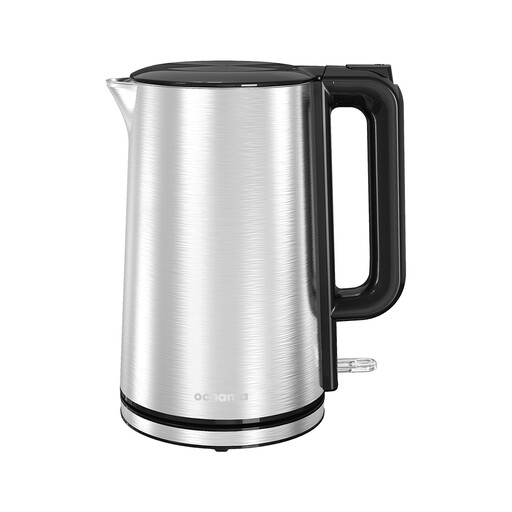
Why it suits this profile: This model combines a 1.7-litre capacity with 2100 watts and straightforward controls. It is a good fit for households that mainly want to boil water quickly without needing multiple temperature settings.
The product information lists automatic switch-off when the kettle boils dry and a double-walled stainless-steel construction. The capacity and safety features are clearly stated.
1.7-litre capacity, 2100 watts, double-walled stainless steel and a separate base with cord storage.
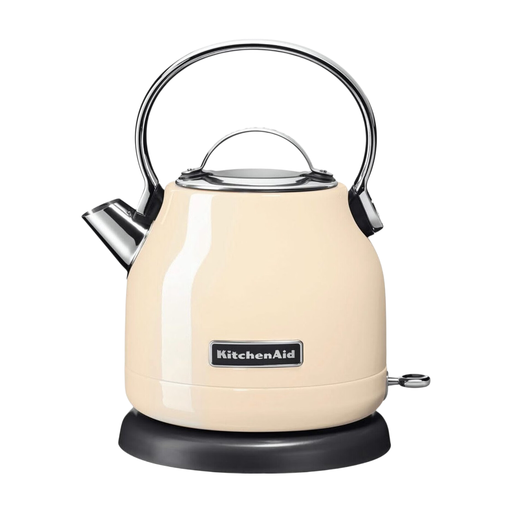
Why it suits this profile: If you value a classic design and compact dimensions, this model offers a 1.25-litre kettle with a stainless-steel housing and 2000 watts of power.
The specifications list automatic switch-off and boil-dry protection. Its capacity is smaller than 1.7 litres, so you are less likely to heat more water than you need.
1.25-litre capacity, 2000 watts, removable limescale filter and a 360° swivel base.
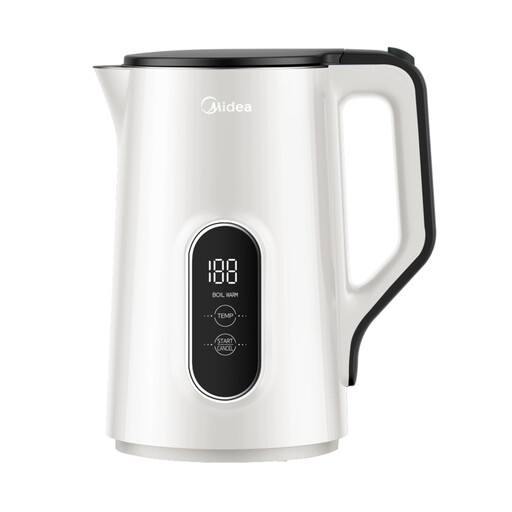
Why it suits this profile: This model is aimed at tea drinkers, coffee lovers and families who regularly use different water temperatures.
The product listing specifies seven temperature settings from 45 to 100 °C, automatic switch-off and boil-dry protection. This makes the features verifiable rather than simply presenting them as general benefits.
2200 watts, 1.5 litres, seven temperature settings, digital display and up to one hour of keep-warm time.
A kettle will generally last longer when you use it correctly. Do not fill it below the minimum or above the maximum mark, and only boil clean water unless the manufacturer explicitly permits other uses. A model marketed as a tea kettle or wellness kettle may have additional programmes, but always check the instructions before heating milk, herbs or other ingredients.
Descale the kettle regularly. Limescale can cover the heating element and affect the heating time. Use a product suitable for the appliance and rinse it thoroughly afterwards. Clean the exterior with a slightly damp cloth and keep the base dry.
For one or two people, 0.8 to 1.5 litres is often sufficient. A 1.7-litre kettle is better suited to families or situations where several cups are made one after another. Do not look only at the maximum capacity; check the minimum fill mark too.
That depends on the wattage, the amount of water and how often you boil it. A 2200-watt appliance only uses that amount of power while heating. Measuring out exactly how much water you need helps prevent unnecessary heating. A keep-warm function can be convenient, but it uses additional energy throughout the selected period.
Its lifespan depends on usage, limescale build-up, materials and maintenance. Descaling regularly, not allowing the kettle to boil dry, and handling the glass and lid carefully can help reduce wear. When buying, also check the warranty information and whether a limescale filter or replaceable parts are available.
We have put together a complete, up-to-date list of products that fully meet these strict selection criteria and the applicable European safety regulations.
