
Vandaag of morgen in huis

Kwaliteit gegarandeerd

Welkomstaanbiedingen ontgrendelen: GRATIS bezorging | Tot 80% korting | Gratis 30 dagen JoyPlus-proefperiode
Download de app
A cold home office, bedroom or student room does not always require heating the whole house. With electric heating, you can add warmth exactly where you need it, but products vary considerably in power, noise, size and safety features. The wrong choice can result in high electricity costs, insufficient warmth or a device that proves inconvenient in everyday use.
The main pitfalls:
The right choice starts with how you intend to use it.
Power is expressed in watts. Many portable models offer settings such as 600, 750, 1000, 1500 or 2000 watts. Lower power may be sufficient for a desk or small room, while a poorly insulated space will need more time and power to heat up.
Pay attention to the difference between:
A simple calculation can help: power in watts ÷ 1000 × hours of use = kWh. A 1500-watt heater running continuously for one hour theoretically uses 1.5 kWh. With a thermostat, actual consumption will often be lower, but this depends on the conditions.
For a bedroom, office or study, a quiet heater is important. Fan heaters use a fan to distribute warm air quickly. This speeds up heating, but the fan may be audible. A convector heater without an active fan generally operates more quietly.
An oscillation function, such as 70° or 90°, moves the airflow around the room. This can help distribute warmth more widely, but it does not automatically make a device suitable for a large room. Also check the stated maximum floor area and the dimensions of the room.
At a minimum, check for:
A CE mark indicates that the manufacturer declares the product complies with relevant European requirements. This does not guarantee that a heater can be used safely in every room. Never cover an electric heater, do not block the air inlet or outlet, and never use a standard heater in a damp area such as a bathroom.
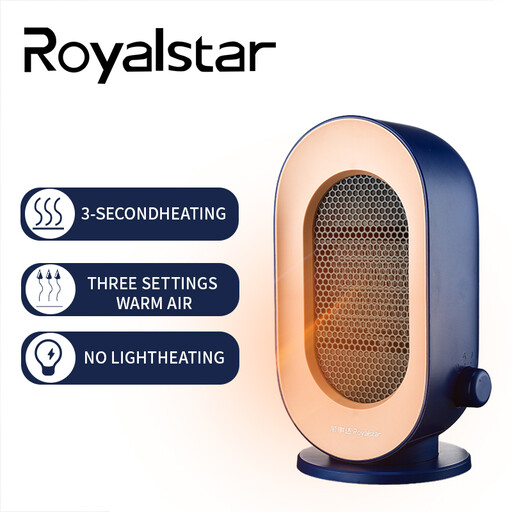
Why it suits this profile: Its compact size and 600-watt power are well suited to a desk, small student room or personal workspace.
The lower power output helps prevent you from using a 2000W model for a small area. There are three heat settings; check the exact settings in the instruction manual.
600W power, three settings, compact design, tip-over protection and overheating protection.

Why it suits this profile: If you are looking for a compact branded product for a room of up to approximately 15 m², this model offers adjustable settings and a low stated noise level of 24 dB(A).
The product information mentions not only rapid ceramic heating, but also 600W and 1500W settings. This allows you to adjust the power to suit the situation.
1500W maximum power, three temperature settings, handle, tip-over protection and overheating protection.
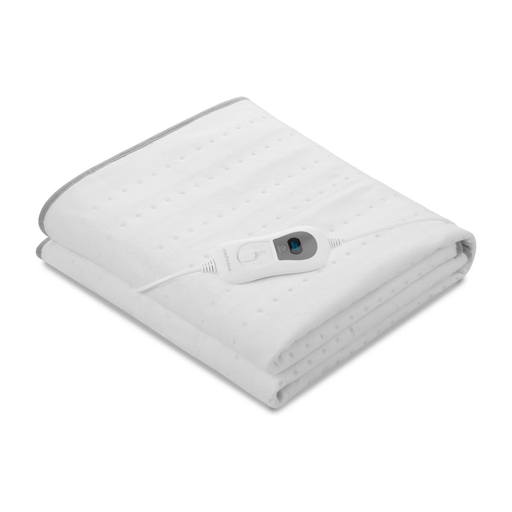
Why it suits this profile: This heated underblanket warms a 200 x 90–100 cm mattress directly and, according to the specifications, uses 60 watts.
You warm the bed rather than the entire bedroom. The blanket has three settings, overheating protection and automatic shut-off after 180 minutes.
60W power, three heat settings, detachable controller, washable design and automatic shut-off.
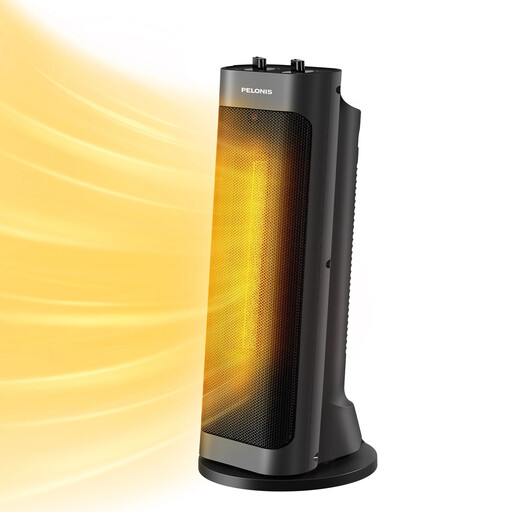
Why it suits this profile: This portable ceramic heater has four heat settings, an adjustable thermostat and 70° oscillation, making it suitable for a workspace, bedroom or study.
The thermostat and low setting offer more control than simply switching the heater on or off. The listing also states a noise level of 50 dB, along with tip-over and overheating protection.
PTC ceramic heating, up to 2000W, 70° oscillation, thermostat, carry handle and two safety functions.
We have put together a complete, up-to-date list of products that fully meet these strict selection criteria and the applicable European safety regulations.
That depends on the power output and how long you use it. A 2000-watt model theoretically uses 2 kWh per hour at full power. Multiply this by your electricity tariff. A thermostat, lower heat setting or timer can reduce the number of hours the heater runs.
Not automatically. Both types convert electricity into heat. A ceramic heater can distribute warmth quickly and often offers several settings. A convector heater, on the other hand, can operate quietly over longer periods. So compare the power output, thermostat, usage time and room size in particular.
Only use an electric blanket or heated underblanket in accordance with the instructions. Check for automatic shut-off, overheating protection and the correct size for your mattress. Do not fold, crease or cover the blanket while it is in use, and switch it off when required by the instructions.
