
Vandaag of morgen in huis

Kwaliteit gegarandeerd

Welkomstaanbiedingen ontgrendelen: GRATIS bezorging | Tot 80% korting | Gratis 30 dagen JoyPlus-proefperiode
Download de app
An electric heater may seem simple: plug it in, set the temperature and you’re done. Yet households in the Netherlands regularly buy a model that isn’t suited to the room or how it will be used. A small fan heater can be comfortable in a home office but struggle in a spacious living room. A larger model with Wi-Fi may be convenient, but less suitable if you move the heater to a different room every day.
As a Joybuy Product Recommendation Officer, I focus mainly on specifications that can be checked. When choosing, watch out for these common pitfalls.
A power rating of 2000 watts sounds powerful, but it doesn’t tell you on its own how comfortable the heater will be. Insulation, ceiling height, outdoor temperature and the desired heating time also play a part. Always check the stated recommended floor area. A 2000-watt convector heater suitable for up to 20 m² isn’t automatically suitable for an open-plan living room of 35 m².
An electric heater converts electricity into heat. At full power, a 2000-watt model uses around 2 kWh per hour. The actual cost depends on the temperature setting, how long it is used and your electricity tariff. An eco mode, thermostat or timer can limit how long the heater runs, but does not reduce its maximum power.
Also pay attention to marketing claims. A brand’s own research may suggest that a day-and-night programme or eco mode can deliver a certain level of savings, but this is not a guarantee for every home. Savings depend on the settings and how the heater is used.
A heater with overheat protection or tip-over protection provides an additional layer of safety. That does not mean you can cover the appliance, place it against curtains or leave it running unattended. Place every portable heater on a flat, stable and hard surface. Keep flammable materials at a safe distance and do not use the heater in a damp room unless the product specifications expressly allow it.
For a bedroom, student room or home office, 600 to 1500 watts is often practical for local supplementary electric heating. For larger rooms, models rated at 1800 to 2200 watts are more logical, provided the stated recommended area matches the room.
Use the square-metre figure as a guide, not an absolute promise. A well-insulated room heats up differently from a draughty space with single glazing. Also check whether the model has multiple power settings. With settings such as 800, 1200 and 2000 watts, you can adjust the power more closely to suit the situation.
None of these types is automatically more economical in every situation. Look at the power rating, thermostat and your usage pattern.
A heater with a thermostat switches the heating element on and off around the set temperature. This is more practical than repeatedly switching the heater on and off manually. A heater with a timer is useful when you want to set an automatic switch-off time in advance.
A smart heater with Wi-Fi suits established routines, for example if you want to set the temperature before you arrive home. However, check whether an app, Bluetooth connection or smart-home platform is required. For simple local heating, a mechanical thermostat may actually be easier to manage.
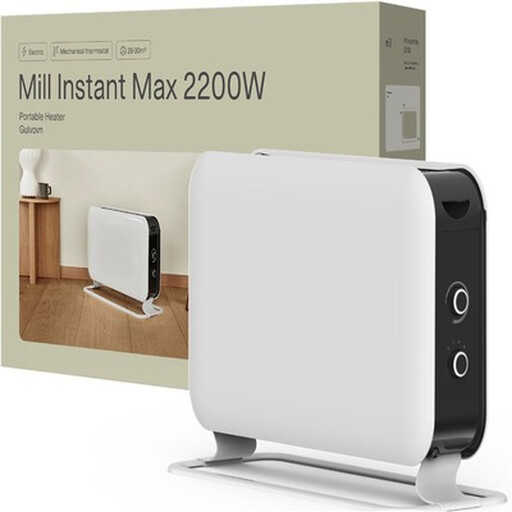
Why it suits this profile: A straightforward electric heater without an app or complicated controls, for rooms of up to 30 m² according to the product specifications.
The power rating, three settings and recommended floor area are clearly stated. The mechanical thermostat means you don’t have to rely on an app.
2200 W, three power settings, mechanical thermostat and quiet operation according to the product specifications.
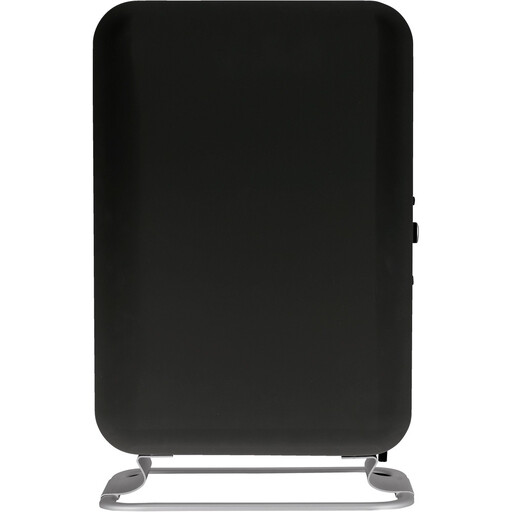
Why it suits this profile: For anyone who values remote control and the even warmth of an oil-filled radiator in a room of up to 34 m².
The app allows you to create schedules and set the temperature, while tip-over and overheat protection are specified. At 12.1 kg, it is less practical to move around.
Wi-Fi and Bluetooth connectivity, three settings of 800/1200/2000 W and a stated range of up to 34 m².

Why it suits this profile: Ideal for a bedroom, home office or seating area where a timer, remote control and directed airflow are desirable.
The adjustable thermostat, 24-hour timer and eco mode give you more control than a simple on/off switch. Treat the stated noise levels as product specifications, not a guarantee for every room.
1800 W, four settings, oscillation, remote control, 24-hour timer and tip-over and overheat protection according to the product information.
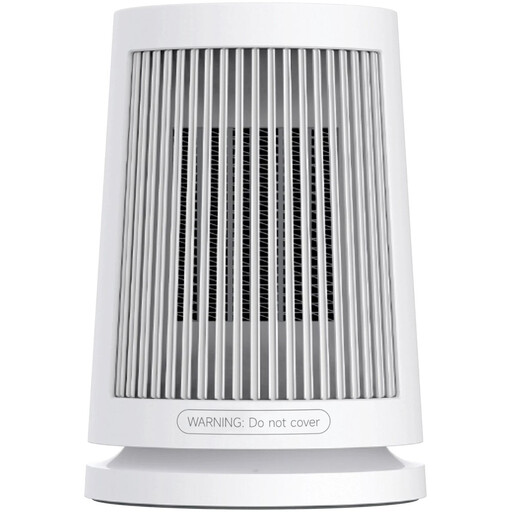
Why it suits this profile: With its compact size and weight of 0.93 kg, this model is well suited to a desk, small room or personal workspace.
The lower power rating is better suited to local supplementary heating than to heating a large living room. Tip-over protection does not replace placing the heater on a stable surface.
600 W, PTC ceramic heating, 45° oscillation, automatic switch-off and a compact size of 18.8 × 14.2 × 18.8 cm.
We’ve put together a complete, up-to-date list of products that fully meet these strict selection criteria and the applicable European safety requirements.
Before use, check that the plug, cable and casing are undamaged. Ideally, connect a powerful electric heater directly to a suitable wall socket. Do not use a multi-socket extension that is already heavily loaded with other appliances. Keep the heater approximately one metre away from curtains, bedding, paper and furniture where specified in the manual.
Never place a portable heater under a desk where clothing or paper could come into contact with the air outlet. Switch off the appliance and let it cool down before moving or cleaning it. A CE mark is relevant to compliance with European product requirements, but safe use is still essential.
This mainly depends on the power rating and how long it is used. A 2000-watt model uses approximately 2 kWh per hour at full power. Multiply this by your current electricity price. A thermostat, timer and lower power setting can prevent the element from running continuously at maximum power.
For a bedroom, a quiet convector heater or oil-filled radiator can be a practical option. A ceramic fan heater heats up more quickly, but can create airflow and fan noise. Check the noise level, dimensions, recommended floor area and whether overheat and tip-over protection are included.
Only use a model with suitable timer and safety features for this purpose, and always follow the manual. Position the heater in an unobstructed area, do not cover it and keep flammable materials away. Automatic switch-off is an additional feature, not a substitute for careful use.
