
Vandaag of morgen in huis

Kwaliteit gegarandeerd

Welkomstaanbiedingen ontgrendelen: GRATIS bezorging | Tot 80% korting | Gratis 30 dagen JoyPlus-proefperiode
Download de app
An electric heater can be a practical solution when you need extra warmth temporarily in the living room, bedroom, home office or student room. However, the range is not easy to compare. A low price tells you little about noise levels, controls, safety or electricity consumption during everyday use.
The following pitfalls are common:
The type of heater mainly determines how the warmth is distributed.
A convector heater warms the air flowing past the heating element. This usually happens without a fan, making this type suitable for a bedroom, office or living room where a quiet heater is preferred. It may feel as though the room warms up more gradually than with a fan heater.
According to the product information, a model such as the Mill SG2000LED has a power rating of 2,000 watts, three settings, an electronic thermostat and a fan for extra heat distribution. The manufacturer states that it is suitable for areas of up to 20 m². Always check that the room is well insulated; the stated area is not a guarantee that every home will reach the same temperature.
A ceramic heater uses a PTC or other ceramic heating element. This type is often compact and used as a portable heater for a desk, bedroom or smaller room. A fan distributes the heat more directly, but usually creates more noise.
According to the product specifications, the Mill CUS1800MECW has a PTC element, two heat settings of 1,200 and 1,800 watts, a mechanical thermostat, and protection against tipping over and overheating. The product page states that it is suitable for areas of up to 30 m². Treat this as a guideline rather than a guaranteed level of performance.
A fan heater is suitable when you want to feel warmth quickly, for example while working from home or warming up a small room. The airflow distributes heat rapidly, but it can produce noise and move dust around. So do not only look at the maximum temperature; also check the stated noise level and whether a lower setting is available.
The power rating is given in watts. You can calculate the theoretical cost as follows:
power in kW × number of hours used × your electricity tariff = energy cost
A 2,000-watt heater running continuously at full power for one hour uses 2 kWh. A thermostat switches the element off once the set temperature has been reached, but actual consumption depends on insulation, room temperature, outdoor temperature and how long the heater is used.
Be wary of claims such as “40% energy saving”. According to Dreo’s own research, the DR-HSH018 can save up to 40% through intelligent power regulation and a thermostat. This is a brand claim based on certain conditions and is not a guaranteed result for every Dutch home.
A heater with a thermostat can automatically cut the power when the desired temperature has been reached. A mechanical thermostat is straightforward to use; an electronic thermostat often allows more precise adjustment.
A heater with a timer is useful when you want to set the operating time in advance. Some models offer a timer from 1 to 12 hours, while others have a 24-hour programme. A heater with a remote control is particularly convenient when the appliance is positioned on the floor or when you want to adjust it from your bed or desk.
At a minimum, check for:
Never cover an electric heater and do not use it in a damp room unless the product information expressly states that it is suitable for this. An IP rating provides information about protection against moisture, but it does not automatically make a standard indoor heater suitable for use in a bathroom.

Why it suits this profile: This compact model is designed for a desk, bedroom or another small space. The product title states 600 watts; the technical power field on the product page has not been completed. Check this information at checkout.
The product specifications mention tip-over protection and dual overheating protection. Its compact size means you do not need to choose an unnecessarily large heater for a small workspace.
PTC ceramic heating, 45° oscillation, automatic shut-off and a weight of 0.93 kg.
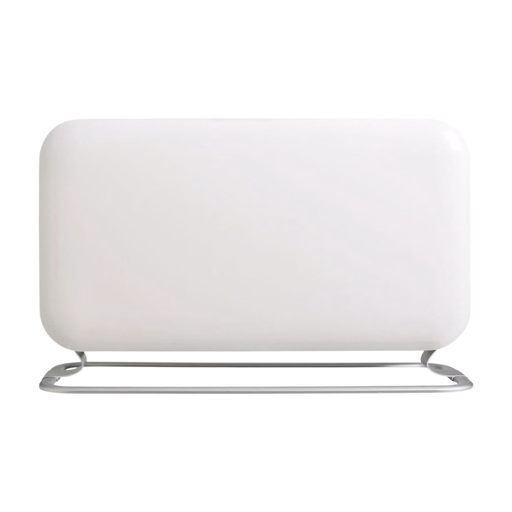
Why it suits this profile: A living room or home office often calls for even warmth and straightforward temperature control. This convector model combines an LED display with an electronic thermostat.
The product information states that it uses quiet convection, with three settings and a thermostat. The built-in fan can distribute heat further on colder days.
2,000 watts, LED display, electronic thermostat and a 160 cm cable.
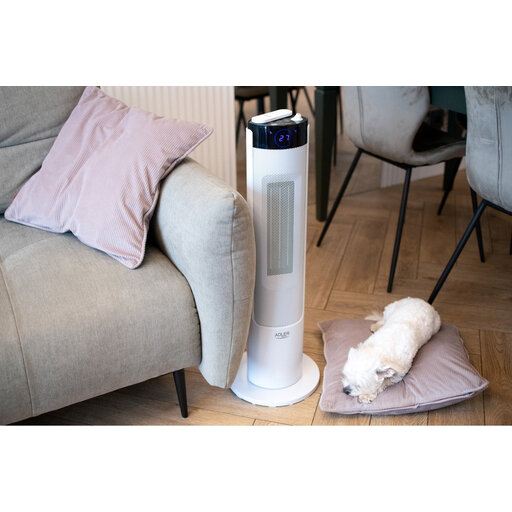
Why it suits this profile: The tower design saves floor space. With a remote control, timer and oscillation, this model suits users who want to adjust several settings every day.
The specifications mention overheating protection and automatic shut-off if the heater tips over. The timer can be set from 1 to 12 hours, so the appliance does not continue running unnecessarily.
Two heat settings of 1,400 and 2,200 watts, LCD temperature control from 10–35 °C and 80° horizontal oscillation.
We have put together a complete, up-to-date list of products that fully meet these strict selection criteria and the applicable European safety regulations.
This depends on the floor area, ceiling height, insulation and desired temperature. Models of around 1,800 to 2,200 watts are often marketed for medium-sized rooms, but the stated coverage varies between manufacturers. Use the m² indication as a guideline and do not automatically choose the highest power rating.
There is no general answer to this. Costs depend on the energy price, power rating, usage time and efficiency of your heating system. Electric supplementary heating can make sense when you are heating just one workspace or room rather than the entire home. Calculate the consumption in kWh beforehand and compare it with your current tariff.
Place the appliance upright on a level, stable and dry surface. Keep the air vents clear and do not position the heater under curtains, next to bedding or directly against furniture. Do not use it as a clothes airer, and unplug it before moving, cleaning or storing it. Always check the manual for the model you have chosen.
