
Vandaag of morgen in huis

Kwaliteit gegarandeerd

Welkomstaanbiedingen ontgrendelen: GRATIS bezorging | Tot 80% korting | Gratis 30 dagen JoyPlus-proefperiode
Download de app
An electric heater seems simple: plug it in, choose a setting and you’re done. Yet many households buy a model that isn’t suitable for the room or intended use. A small fan heater, for example, can deliver warm air quickly but may sound disruptive in the bedroom. An electric heater rated at 2000W can be powerful, but at full power it also uses 2 kWh per hour.
As a Joybuy Product Recommendation Officer, I therefore start by looking at verifiable specifications. Not big marketing promises, but power output, room size, controls, noise level and safety features.
Higher power does not automatically mean that a heater is suitable for every room. Check the stated heating area as well. A 1200W model may be suitable for a home office of around 18 m², while a 2000W model is more likely to be intended for a larger room or one that cools down more quickly.
Also consider insulation, ceiling height, draughts and your desired temperature. The stated area is a product specification, not a guarantee that you’ll experience the same level of warmth in every home.
An electric heater converts electricity into heat, but consumption mainly depends on power, operating time and thermostat control. A 2000W heater running at full power for one hour theoretically uses 2 kWh. A lower setting or automatic control can limit consumption, but the exact amount will vary depending on the circumstances.
According to information provided by some brands, features such as an ECO mode or adaptive control can reduce energy use. Treat this as a product claim and always check how the setting works. A timer can also prevent the heater from running for longer than necessary.
Overheat protection and tip-over protection are useful features. However, they do not make incorrect positioning or covering the heater safe. Maintain at least the clearance specified in the manual, do not block the air inlet or outlet, and do not use an electric heater in a damp room unless the product is expressly designed for that purpose.
Where possible, use a suitable, earthed wall socket. Do not connect other high-powered appliances to the same socket.
Don’t automatically choose 2000W. Compare the power rating with the stated area and your intended use. The models in this overview range from 600W to 2000W. For a desk or small personal space, a lower power rating may be more practical; for a living room or poorly insulated room, greater capacity may be relevant.
A heater with a thermostat can monitor the set temperature and save you from constantly making manual adjustments. Check whether the thermostat is mechanical or electronic and how many heat settings are available.
A heater with a timer is useful when you want to set an operating time in advance. The models discussed offer timers of up to 12 or 24 hours. A remote control or app is particularly useful when the heater is some distance away, for example beside the sofa or in the bedroom.
For sleeping or concentrated work, a quiet heater is more important than an extra heat setting. Look for a stated value in dB. If no value is provided, you cannot simply assume that the appliance is quiet.
At a minimum, check for:
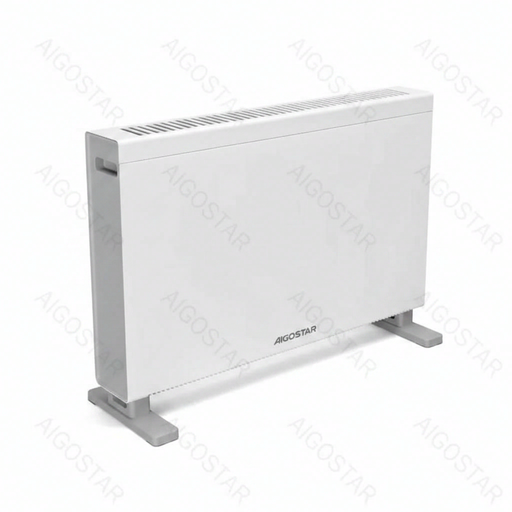
Why it suits this profile: The two power settings of 1250W and 2000W make it easy to choose the right output for a living room or home office. The product specification states that it is suitable for areas of 20 to 25 m².
The product states its power rating, room-size indication and 24-hour timer. This helps you match your choice more effectively than simply judging the heater by its appearance.
Natural convection, remote control, LED controls, carrying handle, and tip-over and overheat protection.

Why it suits this profile: According to the product information, this compact ceramic model is intended for rooms of up to 15 m² and has three temperature levels plus two power settings.
The stated maximum power output of 1500W helps prevent you from automatically choosing a more powerful appliance for a smaller room.
According to Philips’ own information, the model operates at 24 dB(A). Tip-over protection, overheat protection and a handle are also listed.

Why it suits this profile: According to the product specifications, this model is designed for rooms of 15 to 25 m² and combines high power with temperature control, a timer and remote control.
The stated dB range of 25–42 dB, timer and tip-over protection make important usage factors verifiable before you buy.
2000W PTC ceramic heating, 70° oscillation, adjustable thermostat from 5 to 35°C and multiple layers of protection according to DREO.
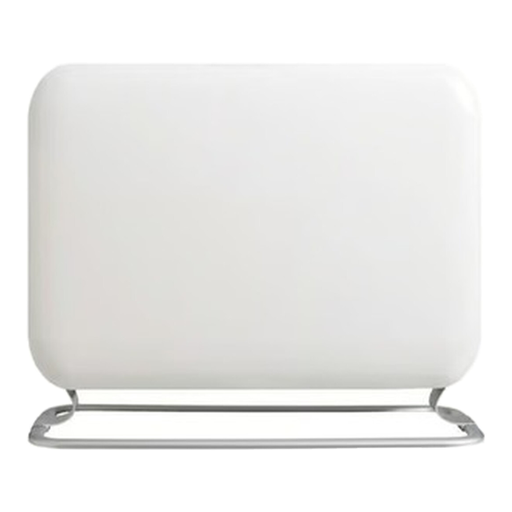
Why it suits this profile: According to the product specifications, this convector heater is suitable for rooms of up to 18 m² and can be controlled via WiFi and the Millheat app.
The clearly stated 1200W output and 18 m² coverage help prevent you from buying an overpowered model for a compact workspace.
WiFi control, weekly programmes, holiday mode, child lock and overheat protection according to the product description.
We’ve put together a complete, up-to-date list of products that fully meet these strict selection criteria and the applicable European safety regulations.
It depends on the room’s size, insulation, ceiling height and the amount of draught. Use the stated m² indication as a starting point and don’t choose based on wattage alone. For a small workspace, 600W to 1500W may be sufficient; larger or colder rooms may require more power.
Calculate theoretical consumption using: power in kW × operating time in hours = kWh. A 2000W electric heater uses 2 kWh per hour at full power. Power settings, thermostat control and a timer can limit the running time or average power output. Your electricity tariff then determines the cost.
Always check the manual. Only choose a model with suitable safety features, stable positioning and a timer if you want to limit the operating time. Keep the heater clear of bedding, curtains and furniture, never cover it, and unplug it when the appliance is not needed.
