
Vandaag of morgen in huis

Kwaliteit gegarandeerd

Welkomstaanbiedingen ontgrendelen: GRATIS bezorging | Tot 80% korting | Gratis 30 dagen JoyPlus-proefperiode
Download de app
An electric food processor can take a lot of work off your hands: chopping vegetables, mixing sauces, puréeing ingredients or mincing meat. Yet many people buy an appliance that is not well suited to their kitchen. A small food chopper may prove too limited for family-sized portions, while a multifunctional food processor takes up unnecessary space if you only want to chop onions and herbs.
The main pitfalls are usually not related to appearance, but to the finer details.
Higher wattage does not automatically mean that every ingredient will be processed more quickly or evenly. Also check the recommended operating time, blade type, bowl capacity and how the appliance is operated.
A 300- or 350-watt model may be suitable for short chopping sessions, while an 800- or 1000-watt appliance offers more space and accessories. Also pay attention to the difference between rated power and maximum power. The Monsga G100, for example, is listed as having 300 watts, with a maximum power of 1200 watts. These values are not the same and should therefore not be compared directly.
A mini food processor with a capacity of around 500 to 900 ml is handy for pesto, herbs, dressings or small portions. For a family, however, the bowl can quickly prove too small. An appliance with a capacity of 1.8 to 2.1 litres is more practical for larger quantities of vegetables, sauce or mince.
Do not fill the bowl above the indicated mark. Too many ingredients can block the blades and lead to a less even result.
An electric chopper or food processor often has several parts: a lid, blade, bowl, drive shaft and sometimes slicing or grating discs. Check in advance which parts can be removed and whether they are dishwasher-safe.
For this type of product, the motor base must not be immersed in water. Sharp blades and discs should be cleaned carefully by hand unless the product information explicitly states otherwise.
As well as the wattage, look at the recommended operating cycle. The ochama multifunctional blender, for example, specifies a maximum of one minute of continuous use, followed by two minutes of rest during heavy blending. According to the product information, the IAGREEA food chopper is designed for pulsing for up to 30 seconds per cycle. This makes these models suitable for short preparations, but less suitable for prolonged kneading or processing large quantities one after another.
A glass bowl is heavy, but is less likely to absorb smells or stains. The Severin KM 3867 has a 1000 ml glass bowl and stainless-steel blades. A plastic bowl may be lighter and is often easier to move around. With plastic, always check the information about food contact and BPA-free materials.
For households with a variety of cooking tasks, a food processor with blender may be worth considering. According to the product specifications, the Kenwood MultiPro Compact has a 2.1-litre bowl and a 1.2-litre blender jug. This combines several functions in one appliance, but it also takes up more space than a compact food chopper.
Think about which function you will actually use:
Make sure that an accessory is not only mentioned in the title, but is also clearly listed in the packaging and product specifications.

Why it suits this profile: The three stackable stainless-steel bowls offer flexibility for vegetables, meat and purées without requiring you to buy a large food processor straight away.
The product information lists three bowls with capacities of 1.8, 2.2 and 2.5 litres. This makes the appliance less limited than a small bowl designed for just one type of preparation.
350 watts, two speeds, pulse control and 304 stainless-steel bowls with a non-slip base.
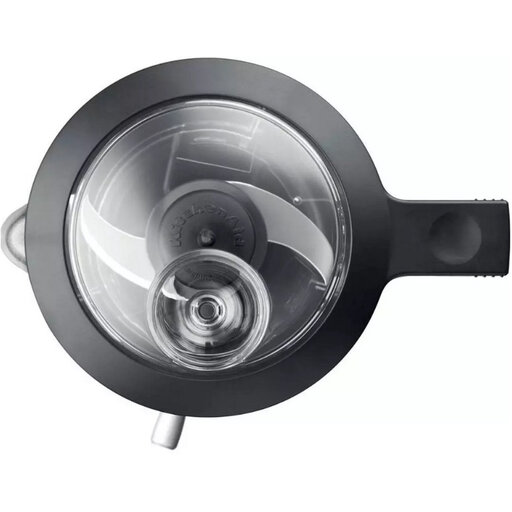
Why it suits this profile: This compact model is designed for everyday small tasks such as chopping herbs and making dressings, hummus and sauces.
The 830 ml capacity makes it clear that this is a mini food processor. You are not buying a large appliance for small portions.
Two speeds with pulse function, a removable stainless-steel blade and cord storage.
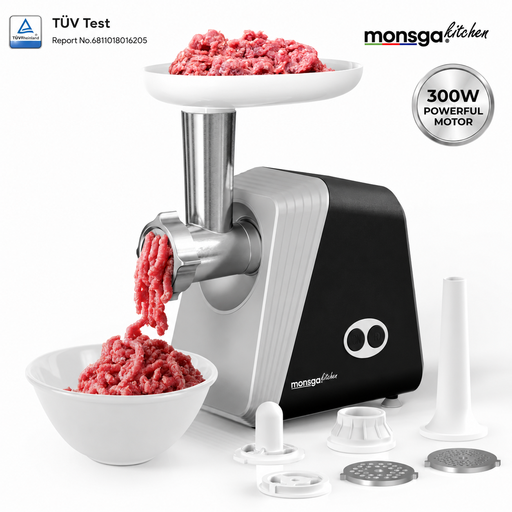
Why it suits this profile: This is a targeted choice for anyone who wants to prepare mince, sausage filling or kibbeh at home rather than mainly making smoothies.
The three grinding plates let you choose the texture you want: fine, medium or coarse. The reverse function can help when ingredients become stuck.
Includes a sausage filler, kibbeh and biscuit attachments, three grinding plates and cord storage.
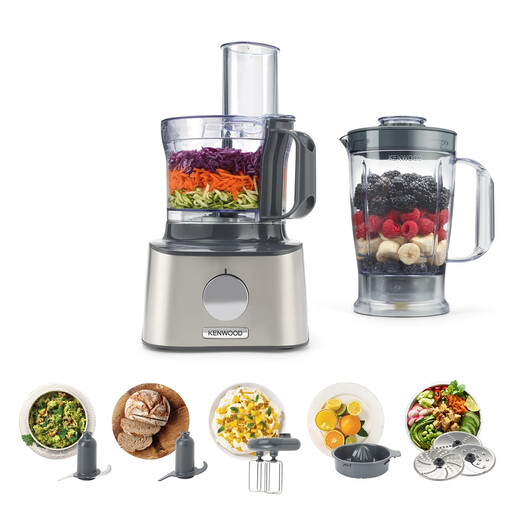
Why it suits this profile: The combination of chopping, slicing, grating, kneading, whisking and blending suits households that want to handle a range of cooking tasks with one base unit.
The 2.1-litre bowl and 1.2-litre blender capacity are clearly specified. This makes it easier to assess the capacity in advance.
800 watts, two speeds, pulse function, juicing function and dishwasher-safe accessories according to the product information.
We have put together a complete, up-to-date list of products that fully meet these strict selection criteria and the applicable European safety regulations.
For onions, herbs, sauces and soft vegetables, a compact model of around 240 to 400 watts may be sufficient. If you also process nuts, raw meat or larger quantities, consider an appliance with more power and a suitable motor cycle. The blade design, bowl capacity and pulse function remain at least as important as the wattage.
Its lifespan depends on how it is used, cleaned and loaded. Use short pulses when instructed in the manual, do not exceed the maximum fill level and allow the motor to cool down between heavy-use sessions. Also check the statutory guarantee and any manufacturer's warranty. Products such as the Severin KM 3867, Kenwood FDM301 and Cuisinart ECH4E specify a minimum statutory guarantee of two years or an additional manufacturer's warranty in the product information.
Power consumption depends on the wattage and operating time. A 400-watt appliance running for five minutes uses less energy than the same appliance running continuously for a longer period. Pulse control and short preparation cycles generally limit the operating time. Choose a model that suits the size of your portions so that you do not need several unnecessary cycles.
