
Vandaag of morgen in huis

Kwaliteit gegarandeerd

Welkomstaanbiedingen ontgrendelen: GRATIS bezorging | Tot 80% korting | Gratis 30 dagen JoyPlus-proefperiode
Download de app
An electric food chopper can significantly reduce everyday chopping time. Onions, herbs, vegetables, meat, nuts and fruit can be processed quickly without much manual chopping. However, models vary considerably in bowl capacity, motor load, controls and cleaning requirements. A high wattage or a large bowl does not tell the whole story.
As a Joybuy Product Recommendation Officer, I focus primarily on verifiable specifications and practical use. This helps you avoid paying for features you do not need or choosing an appliance that turns out to be inconvenient in your kitchen.
A 2-litre bowl sounds spacious, but you usually should not fill it completely. Ingredients need room to move around so they can be chopped evenly. Check whether the manufacturer specifies a maximum fill level or recommended working capacity.
For a household that mainly prepares onions, herbs and small portions of dips, 500 to 1,000 ml is often enough. Families and keen home cooks who prepare larger quantities of raw vegetables, sauces or mince will benefit more from a 1.5 to 2-litre bowl.
Motor power is relevant, but it does not independently determine how well a food chopper performs. The shape and number of blades, how ingredients move around the bowl and the maximum operating time also matter.
A 300-watt food chopper may be suitable for short pulses with soft ingredients. For meat, nuts and hard vegetables, it is particularly important that the manual permits these uses. Also check whether a specified duty cycle applies. Some appliances may only run for 30 seconds at a time and must then cool down.
Blades with multiple cutting edges can work efficiently, but they are sharp and can sometimes be difficult to remove from the bowl. Check which parts are dishwasher-safe. On many models, the motor base is not washable and may only be cleaned with a damp cloth.
A safety switch, non-slip base and a lid that locks securely are practical features. They prevent the appliance from starting when the bowl or lid has not been fitted correctly. Always check the manual before processing raw meat, hot liquids or ice.
An electric food chopper with a glass bowl is transparent, allowing you to monitor the texture of your ingredients. According to the product specifications for the models concerned, glass does not absorb odours or stains and feels sturdy, but it is heavier than plastic. A plastic bowl is often lighter and convenient for everyday use.
Choose the capacity based on your portion sizes:
Bear in mind that a product description may sometimes state the bowl’s total capacity and sometimes its recommended fill capacity. These two values are not always the same.
Stainless steel blades are standard in kitchen food choppers. Four blades are suitable for a wide range of chopping tasks, while models with six blades can process ingredients at several levels within the bowl. However, the number of blades is not, on its own, a guarantee of quality.
A single speed with a push button is straightforward to use. Two speeds or a pulse button give you greater control over the texture. For salsa or coarsely chopped vegetables, use short pulses. For purées, dips or baby food, longer processing is often more practical. Cut large ingredients into smaller pieces first and remove bones, stones and tough skins.
The range extends from compact models of around 200 watts to multifunctional appliances of 600 watts or more. The right power level depends on the ingredients and portion size. An electric food chopper for meat and vegetables should also be suitable for short, controlled processing. Do not run the appliance for longer than the manufacturer recommends.
Also check:
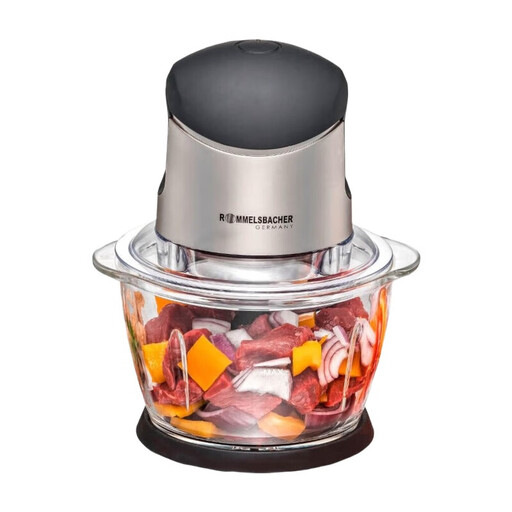
Why it suits this profile: With 400 watts, a 1-litre glass bowl and straightforward controls, this model is well suited to everyday chopping without lots of additional settings.
The product information specifies a removable four-blade stainless steel knife, a safety system and removable dishwasher-safe parts. The bowl capacity is manageable for smaller portions.
1-litre glass bowl, 400-watt motor, metal drive system and a compact size of approximately 15.5 × 19 × 22.5 cm.
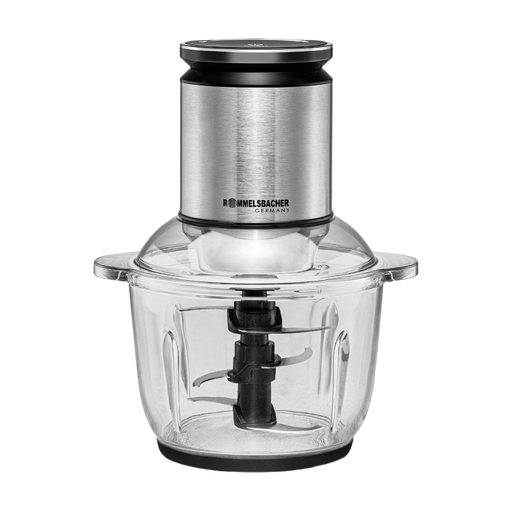
Why it suits this profile: If you want to prepare different textures, the 22 speed settings offer more adjustability than a standard food chopper.
The specifications list a 2-litre glass bowl, a six-blade stainless steel knife, overheating protection and a safety lock.
600 watts, 22 speed settings, 2-litre capacity and removable dishwasher-safe parts.

Why it suits this profile: The three bowls are designed for different tasks, including vegetables, meat and preparations such as purée or baby food.
The bowls come in different sizes, and the product information specifies a maximum operating time of 30 seconds per cycle. This makes the usage limits clearer.
Three 304 stainless steel bowls measuring 1.8, 2.2 and 2.5 litres, two speeds and curved stainless steel blades.
We have put together a complete, up-to-date list of products that fully meet these strict selection criteria and the applicable European safety regulations.
Only if the manual states that this is permitted. Cut the meat into small pieces, remove any bones and use short pulses. Clean the bowl, lid and blades thoroughly immediately after use. If you want to minimise the transfer of odours or flavours, it is best to use separate bowls.
Its lifespan depends on how it is used and maintained, as well as whether the maximum operating time is observed. Overloading, pieces that are too large and prolonged continuous operation can put strain on the motor and drive system. A metal drive system, removable blades and available replacement parts can be practical for regular use, but always check the brand’s terms and conditions.
A food chopper is usually used for only a few seconds or minutes per preparation. As a result, consumption per use is limited. The difference between 300 and 600 watts does not automatically determine the total cost; the operating time is what matters most. Use short pulses and allow the appliance to cool down when instructed by the manual.
