
Vandaag of morgen in huis

Kwaliteit gegarandeerd

Welkomstaanbiedingen ontgrendelen: GRATIS bezorging | Tot 80% korting | Gratis 30 dagen JoyPlus-proefperiode
Download de app
An electric cooking pot can be a useful addition to a small kitchen, student room, office or campervan. You can use one to cook noodles, soup, rice, stews or hotpot meals, for example, without needing a full cooker. However, many models look similar, even though capacity, controls and safety features can vary considerably.
The three most common buying mistakes are:
Choose the capacity according to how many people you’re cooking for and the type of dish:
Don’t just look at the number of litres; check the dimensions too. Even a compact cooking pot can take up quite a bit of space if it has a wide handle, glass lid or built-in controls. Measure your worktop and storage space before you order.
The wattage tells you how much electrical power the appliance uses, but it doesn’t tell you how precisely you can cook. For example:
An electric sauté pan or electric stew pot with several settings gives you more control than a model with just an on/off switch. A low setting is important for simmering, keeping food warm and hotpot. A higher setting is useful for pasta or boiling water.
A non-stick cooking pot is easy to clean, but it’s best to use wooden or silicone utensils to help prevent scratches. A stainless steel inner pot is generally less prone to damage, but burnt-on food can take more effort to remove.
Also check:
Take extra care with a pressure cooker because of the steam and pressure. Never force the lid open or exceed the indicated fill line. The lid on a standard electric hotpot usually isn’t pressurised, but hot liquids and steam can still cause burns.
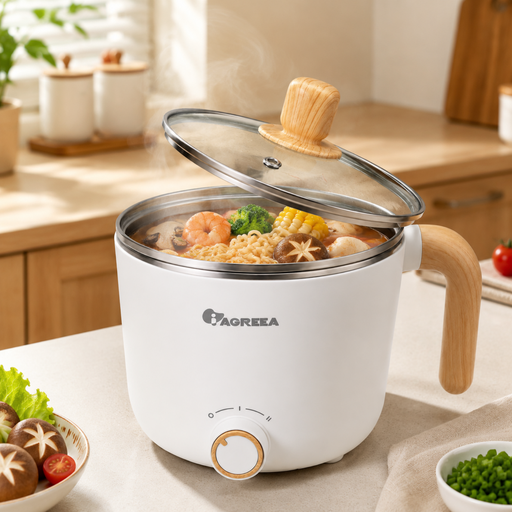
Why it suits this profile: The 1-litre capacity is designed for one person or small meals. With 300 and 600 watts, you can choose between gentle cooking and faster heating.
The capacity and power are clearly specified. That means you won’t pay for a large pot that you’ll barely use in a small living space.
1 litre, stainless steel inner pot and compact dimensions for soup, pasta, rice and noodles.

Why it suits this profile: This model combines stewing, steaming, frying or searing, and keeping food warm in a 7.1-litre capacity. It’s a good fit for families and anyone who wants one appliance to handle several stages of cooking.
The functions and settings are described clearly. Do note the instruction that the inner pot must not be used on a hob or in an oven.
7.1 litres, adjustable time and temperature, keep-warm function and parts listed as dishwasher-safe in the product description.
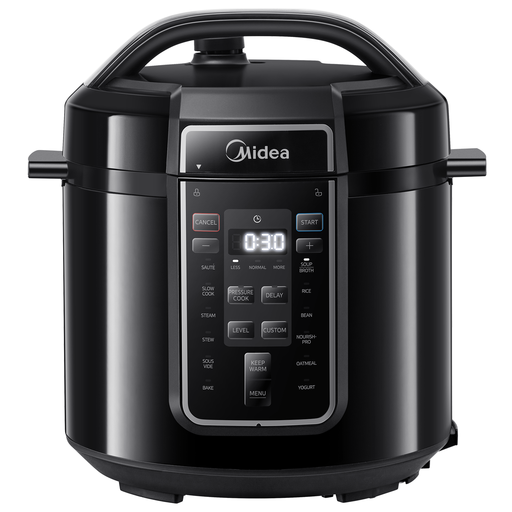
Why it suits this profile: The 6-litre capacity and 14 cooking functions are designed for families preparing soup, stews, steamed meals and other larger portions.
The description lists the capacity, power, programmes and safety instructions separately. When pressure cooking, follow the steam warnings and fill lines.
1,000 watts, 14 functions, stainless steel inner pot and automatic keep-warm function.
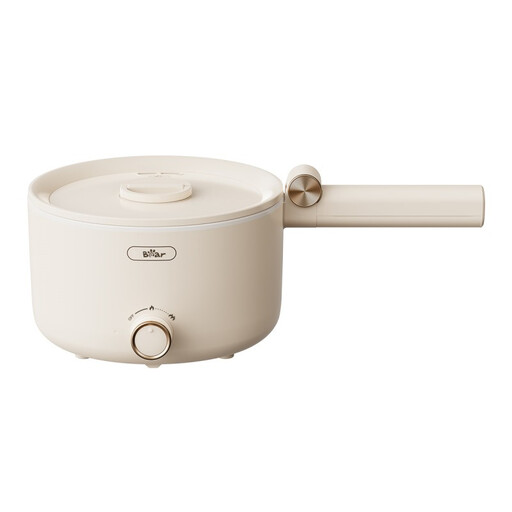
Why it suits this profile: With a 1.6-litre capacity, this is a practical electric hotpot for one or two people. The two power settings support cooking, stewing and steaming.
The product information lists automatic shut-off, boil-dry protection and the maximum capacity. These features help with everyday use, as long as you keep an eye on the pot while cooking.
1.6 litres, 800-950 watts, foldable handle and non-stick coating according to the product specifications.
We’ve put together a complete, up-to-date list of products that meet these strict selection criteria and the applicable European safety regulations.
You can use models designed for 220-240 volts, provided they’re placed on a stable, heat-resistant surface. Check the power rating first, especially if several appliances are connected to the same circuit. A 1 to 1.6-litre mini electric cooking pot is usually easier to store than a family-sized model.
Its lifespan depends on how you use and clean it, as well as the materials it’s made from. Don’t use metal spatulas with a non-stick pot, never immerse the electrical base in water, and let the appliance cool completely before cleaning it. Also check the cable, plug, lid and coating regularly for damage.
Its energy use depends on its power rating and how long you use it for. A 1,000-watt appliance heating for half an hour uses 0.5 kWh in theory. In practice, a pot may switch off or drop to a lower setting. So consider your cooking habits, not just the maximum wattage on the label.
