
Vandaag of morgen in huis

Kwaliteit gegarandeerd

Welkomstaanbiedingen ontgrendelen: GRATIS bezorging | Tot 80% korting | Gratis 30 dagen JoyPlus-proefperiode
Download de app
If your feet get cold easily or you want to make your sofa more comfortable, an electric blanket may be just what you’re looking for. However, many models look similar, even though they can differ considerably in size, controls and care requirements. Choose the wrong one and it might not fit your bed properly, be difficult to wash or end up unused in a cupboard after a short time.
This buying guide will help you choose an electric heated underblanket, heated blanket or electric throw based on verifiable product specifications.
More settings don’t automatically make a blanket easier to use. What matters more is whether the lowest setting feels comfortable, whether the controls are easy to use and whether there’s a timer. An electric blanket with a timer switches off automatically after a set period. This is useful when you’re reading or relaxing under the blanket.
Check the timer options, too. Some models offer settings such as 2, 4 and 12 hours, while others switch off after 180 minutes.
A small heated blanket is suitable for one person, but it won’t always cover the whole mattress. For example, an 80 x 150 cm model is better suited to a single bed or use over your legs than to a wide double bed.
An electric blanket measuring 140 x 160 cm offers more coverage for use on the sofa or as a bed cover. Always check whether the product is designed to go on top of you or underneath you. An electric underblanket should lie flat on the mattress and must not be folded or covered with heavy items.
A washable electric blanket usually has a detachable controller. This doesn’t mean the controller or cable can get wet. Before washing, unplug the blanket, disconnect the controller and follow the washing instructions on the label. Don’t reconnect everything until the blanket is completely dry.
Choose the size according to where you’ll use the blanket:
Materials such as polyester, fleece and flannel all feel different. A soft electric blanket made from plush flannel can feel comfortable against your skin, while a smooth polyester layer may be easier to care for. Don’t just look at the material name: check the washing instructions and how the heating wires are incorporated, too.
Digital controls make it easier to see your temperature and timer settings. Check whether the timer offers a single set period or several options. Automatic shut-off is especially useful when you’re using the blanket in bed. For the sofa, simple controls with three settings may be enough.
Check the cable length and whether the controller is detachable, too. A short cable can be awkward in the bedroom if the socket is some distance from the bed.
Look for an electric blanket with overheating protection and automatic shut-off. These are product features, not a guarantee that every use will be risk-free. Always follow the instructions: don’t use the blanket if it’s folded, creased, damp or damaged.
For use in the Netherlands, it’s important to choose a plug that fits a European socket. An EU plug is generally used with sockets that meet European standards, such as type C or F, with a mains voltage of approximately 230 V and a frequency of 50 Hz. Check the product listing before you order. In English, an American plug is called a US plug or American plug; it isn’t necessarily suitable for Dutch sockets. Don’t use an arbitrary adapter if the voltage or frequency doesn’t match.
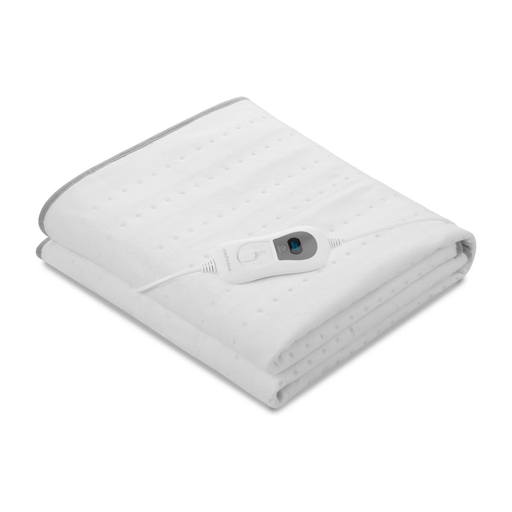
Why it suits this profile: This underblanket is designed for mattresses measuring 200 x 90-100 cm. It has 3 heat settings, switches off automatically after 180 minutes and comes with a detachable controller.
It’s clearly specified as an underblanket, and the detachable controller allows it to be washed according to the product information.
60 W power, 3 heat settings, automatic shut-off and overheating protection, according to the product specifications.
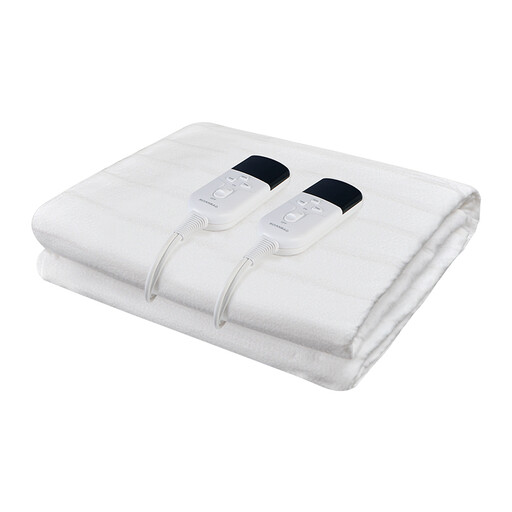
Why it suits this profile: This model offers 3 heat settings, a booster function, two controllers and timer options of 2, 4 or 12 hours.
The detachable connection allows machine washing according to the care label; the timer and safety features are specified in advance.
160 x 140 cm, machine-washable design, overheating and overcurrent protection, and two fuses in the controller, according to the product listing.
We’ve put together a complete, up-to-date list of products that meet these strict selection criteria and comply with current European safety regulations.
Power consumption depends on the wattage and how long you use the blanket. A 60 W model running for one hour uses 0.06 kWh. Multiply this by your current electricity rate to calculate the cost per hour. The actual cost will therefore depend on your energy tariff, heat setting and use of the timer.
That depends on the instructions and the built-in timer. If you’re using it overnight, choose a model with automatic shut-off where possible and use the recommended setting. Don’t use a blanket if it’s folded, creased or covered with heavy materials.
Lifespan varies depending on the model and how often you use it. Don’t leave the blanket on for hours unnecessarily, wash it according to the instructions and store it somewhere dry, without folding it tightly. Replace it if you notice visible damage, a damaged cable or uneven heating.
An electric blanket heats the area you’re using directly, while central heating warms an entire room. Whether it works out cheaper depends on the wattage, how long you use it, your electricity rate and how you heat your home. Use the timer and a suitable heat setting to limit unnecessary energy use.
