
Vandaag of morgen in huis

Kwaliteit gegarandeerd

Welkomstaanbiedingen ontgrendelen: GRATIS bezorging | Tot 80% korting | Gratis 30 dagen JoyPlus-proefperiode
Download de app
An electrically height-adjustable desk can be useful for working from home, studying or gaming. With the press of a button, you can switch between sitting and standing. However, an electric mechanism alone tells you little about whether a desk is right for your space and needs.
Look out for these three common pitfalls:
A height-adjustable desk should go low enough for a comfortable seated position and high enough for standing. The models in this selection typically have a height range of around 72 to 120 cm.
Measure the following in advance:
A 120 x 60 cm desk will often fit in a bedroom, student room or compact home office. For two monitors or a larger gaming setup, a 140 x 60 cm or 160 x 70 cm desktop may be more practical.
The stated load capacity is an important detail to check. The product information for the desks mentioned usually gives a maximum static load of 70 kg. This doesn’t mean you should put unlimited weight on the desk while raising or lowering it.
Roughly calculate the weight of your:
A metal frame, adjustable feet and evenly distributed weight can all help keep your setup stable. Also check that the floor is level.
An adjustable desk with a memory function is especially practical if several people use the same desk or you regularly switch between two preferred heights. Check how many settings are available: some models have two memory positions, while others have four.
A desk with a USB-C port can connect a phone or compatible device directly to the control panel. Check the stated charging capability and use a suitable adapter. A USB-C connection isn’t a substitute for a complete cable-management system.
Also look for:
According to the product information for several models, the motor may stop temporarily after around two minutes of continuous adjustment because of overheat protection. Some models specify a waiting time of 18 minutes. This is worth bearing in mind if you adjust the desk several times in quick succession.
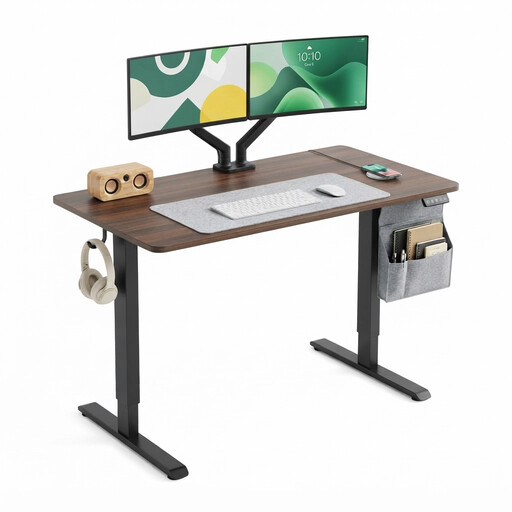
Why it suits this profile: Its compact size is ideal for a laptop, one monitor and everyday study or home-office tasks. The height adjusts electrically from 72 to 118 cm.
The product information states a load capacity of 70 kg, a digital control panel and two memory settings. This makes the key features clear.
120 x 60 cm desktop, 72–118 cm height range, two memory settings and two included hooks. The model is listed as CE-certified and certified to a European standard.
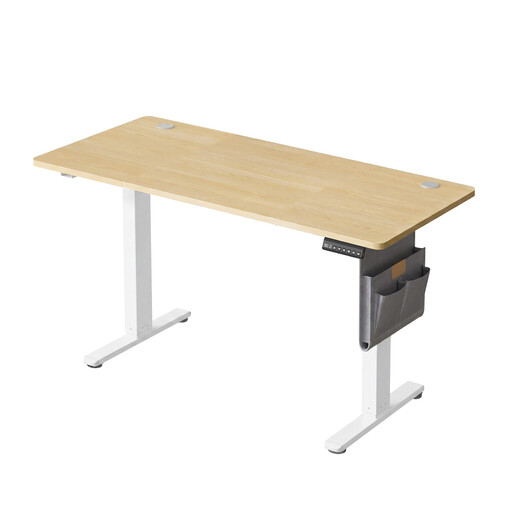
Why it suits this profile: The larger desktop has room for multiple screens, documents or a more extensive work or gaming setup. It measures 160 x 70 cm.
The specifications state a maximum static load of 70 kg, adjustable feet, two cable grommets and a locking function on the control panel.
Height range of 72–120 cm, memory function, USB-C connection, cable management and a steel frame. Its stated dimensions make it suitable as a spacious office or gaming desk.
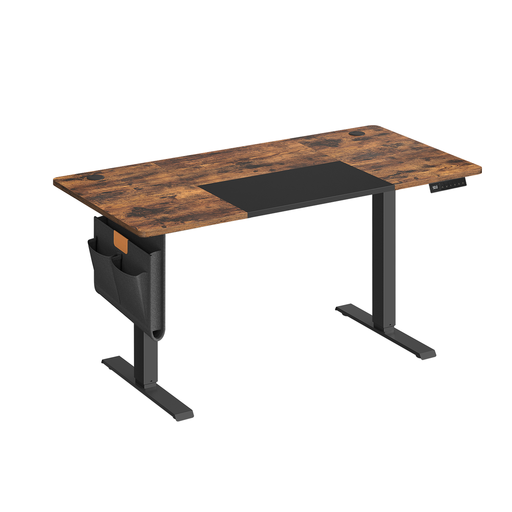
Why it suits this profile: Four memory settings are useful if you work at different heights or share a desk with others. The 140 x 60 cm desktop gives you more room than a compact model.
The product information lists four memory settings, cable management, hooks and a USB-C port. It also states a maximum static load of 70 kg.
140 x 60 cm desktop, stepless height adjustment from 72–120 cm, four memory settings, a USB-C port and three hooks. According to the product information, this model is designed for indoor use.
We’ve put together a complete, up-to-date list of products that meet these strict selection criteria and the applicable European safety regulations.
Assemble the desk on a level surface and check all plugs and cable connections before use. Keep the area around the frame clear while adjusting the desk. Don’t place it right up against a wall if the desktop or frame could come into contact with it.
Keep electrical components away from liquids. Clean the desktop with a soft, slightly damp cloth and avoid abrasive products. Check from time to time that the screws and connections are still secure.
For an ergonomic desk, getting the adjustment right matters more than simply having a motor. When seated, set the desktop at around elbow height. When standing, you should be able to use the keyboard without raising your shoulders. Change position regularly, but don’t treat this as a medical solution.
Power consumption depends on the type of motor, how often you adjust the desk and its standby mode. The adjustment mechanism usually only runs for short periods. For an accurate estimate, check the wattage in the manual and multiply it by the time you use the desk. A USB-C port can increase power consumption when you use it to charge devices.
Its lifespan depends on assembly, load, how often it’s used and maintenance. Don’t exceed the stated maximum load of 70 kg, and avoid adjusting it continuously for long periods. Checking the screws, cables and plugs regularly can help you spot wear early.
A 120 x 60 cm desktop is often practical for a laptop, one monitor and a keyboard. For two monitors, a desktop computer or a wide gaming setup, 140 x 60 cm or 160 x 70 cm is more convenient. Measure the depth of your monitor stand or arm before ordering, too.
