
Vandaag of morgen in huis

Kwaliteit gegarandeerd

Welkomstaanbiedingen ontgrendelen: GRATIS bezorging | Tot 80% korting | Gratis 30 dagen JoyPlus-proefperiode
Download de app
An electrically adjustable desk can be useful if you work from home, study or regularly want to change your working position. However, not every electric sit-stand desk will suit your space or equipment. A low price, for example, may come with a small desktop, limited stability or controls without memory settings.
So don’t focus solely on the appearance or terms such as “ergonomic desk”. Check the dimensions, adjustment range, load capacity and practical details first. Read on to find out which common pitfalls are often overlooked and which models suit different needs.
A desk measuring 120 x 60 cm may seem compact and practical, but a monitor, laptop, keyboard and lamp can quickly take up a lot of space. It’s usually a neat fit for one laptop. If you use two screens or want to keep documents beside your keyboard, a desktop that’s 140 or 160 cm wide is often more convenient.
Measure the space available beforehand, too. Remember to allow for skirting boards, cables and clearance behind the desk as the desktop moves up and down.
A sit-stand desk has more room to move when it’s raised. A lightweight frame or uneven floor may then become noticeable. So check:
A stated load capacity doesn’t automatically tell you how stable a desk will feel. How the weight is distributed matters, too. Position heavy equipment as centrally as possible and check that monitor arms are suitable for the desktop.
A desk with a memory function can be useful, but only if you can easily save your preferred settings. A desk with USB-C won’t necessarily work as a universal charger for every laptop, either. Check what the port is designed for and the charging capacity stated.
Also consider cable management. A desk may be electrically adjustable but still look untidy if adaptor and monitor cables are left hanging loose. Cable ports, an organiser or a hook can make a practical difference.
The space available and your height are key when choosing a desk for working from home. The models featured have an adjustment range of around 72 to 120 cm. This allows you to work both sitting and standing, but always check that the lowest setting suits your desk chair and that the highest setting feels comfortable.
A desktop measuring:
The selected electric models state a maximum static load capacity of 70 kg. This specification refers to a stationary load; it doesn’t mean you should add extra weight to the desk while adjusting it.
According to the product descriptions, the frames are made of steel and the desktops of chipboard. When your desk arrives, check that all the parts are included and follow the assembly instructions. A sturdy frame, correct assembly and a level floor all help minimise unnecessary movement.
The product descriptions mention collision protection and overheating protection. For some models, they state that the height adjustment will pause temporarily after around two minutes of continuous movement and can be used again after approximately eighteen minutes. This is a usage limit to bear in mind, not a reason to keep operating the motor for long periods without a break.
Keep electrical parts away from liquids and don’t position the desk right up against a wall if the desktop needs to move. Set the sensor according to the instructions and check that no cables can get trapped.
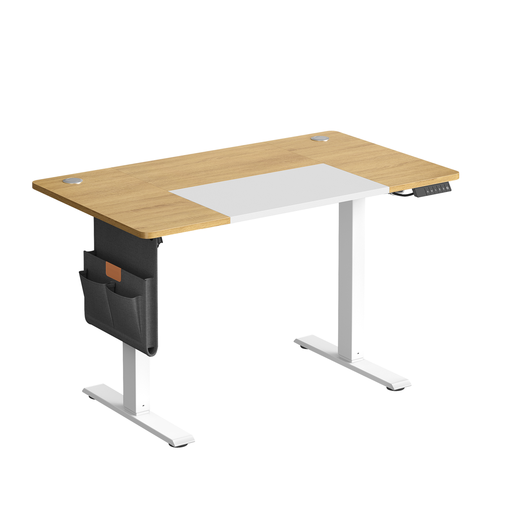
Why it suits this need: Its compact size is a good fit for a student room, home office or smaller bedroom. According to the product description, this model has memory settings, cable management and a USB-C port.
Saved height settings make daily adjustments easier. The description mentions a sensor and overheating protection; always follow the instructions provided for safe use.
120 x 60 cm, adjustable from 72 to 120 cm, maximum static load of 70 kg and a USB-C port according to the product specifications.
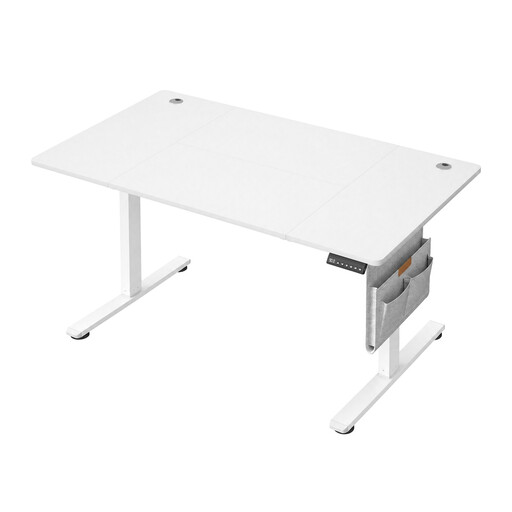
Why it suits this need: This model offers extra width and depth for a professional home office, two screens or a combination of a laptop and paperwork.
The larger desktop helps prevent your workspace from feeling cramped. According to the product description, it has two cable ports, an organiser and a hook for accessories.
160 x 70 cm, white desktop, steel frame, memory function, USB-C port and a stated maximum static load of 70 kg.
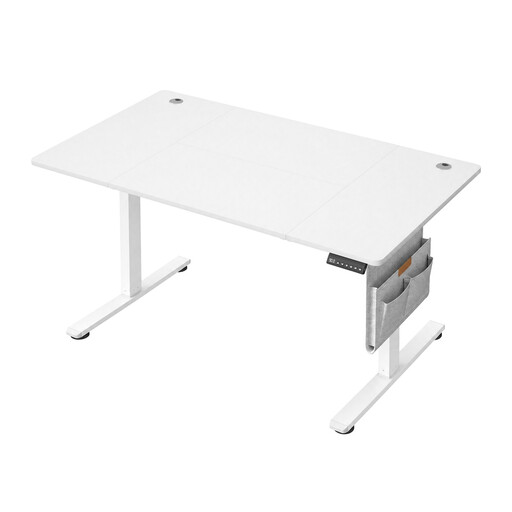
Why it suits this need: This mid-sized desk gives you more workspace than a compact computer desk without the depth of a large office desktop. It’s a good fit for working from home every day with one or two devices.
Four memory settings mean fewer manual adjustments. The cable ports, storage pocket and hook help keep loose items off the desktop.
140.1 x 60.1 cm, four memory settings, adjustable from 72 to 120 cm and a stated load capacity of 70 kg.
First, level the desk before connecting the motor. Check that the desktop can move freely and leave enough space between it and the wall. Route the cables along the frame with enough slack. A monitor or power cable that’s connected too tightly could come under strain when you adjust the desk.
If you want to pair a white desk with a tidy workspace, choose accessories that work well with your cable management. If you need plenty of storage, a fixed corner desk with drawers could be an alternative. The LANTINE Desk has a reversible L-shaped design, two open shelves and four drawers, but according to the product description, it isn’t height-adjustable. Consider this type if storage and a fixed working height matter more to you than alternating between sitting and standing.
We’ve put together a complete, up-to-date list of products that meet these strict selection criteria and the current European safety regulations.
Power consumption depends on the motor, how often you adjust the desk and the standby mode. The selected models list an energy-saving mode on the controls, but don’t state a fixed consumption in watt-hours. If energy use is a deciding factor for you, compare the technical specifications.
Its lifespan is affected by the quality of the frame, the load on the motor, assembly and how often it’s used. Don’t treat the maximum load capacity as your target load, and avoid adjusting the desk continuously for long periods. Keep the instructions and regularly check that the screws are still tight after assembly.
Yes, as long as the dimensions and clearance are right. A 120 x 60 cm model takes up less space than a 160 x 70 cm desktop. Measure the floor space and check the clearance above and behind the desk, too. This helps prevent the desktop, a monitor or cables from hitting a wall or another piece of furniture as you adjust the desk.
