
Vandaag of morgen in huis

Kwaliteit gegarandeerd

Welkomstaanbiedingen ontgrendelen: GRATIS bezorging | Tot 80% korting | Gratis 30 dagen JoyPlus-proefperiode
Download de app
Electric vehicles come in many forms: from an electric mobility scooter for short journeys to an electric moped, electric motorcycle or electric dirt bike for recreational use. The differences are about more than motor power and range. The vehicle’s legal classification, battery quality and where you plan to ride are all key to whether it will be a practical choice.
Many buyers encounter the same pitfalls. For example, a long claimed range may depend on the rider’s weight, the terrain and riding style. A vehicle that looks like a moped is not automatically suitable for public roads. And an off-road electric motorcycle often cannot be used on cycle paths, roads or pavements.
This buying guide will help you compare electric vehicles objectively and choose a model to suit your everyday needs.
An electric motorcycle with a top speed of 45 km/u is not subject to the same rules as a vehicle limited to 25 km/u. For use on public roads, RDW registration for electric vehicles, a number plate, third-party insurance and the appropriate driving licence are all important. A 45 km/u model will generally require at least an AM licence. Always check the vehicle category on the Dutch registration certificate.
An electric dirt bike or off-road electric motorcycle without a Certificate of Conformity (CoC) is usually intended for private land or designated off-road tracks. You should not assume it can be used on public roads, even if it has lights or a number-plate-style fitting.
A 2,000 or 3,500-watt motor tells you the stated power, but it does not automatically indicate the actual speed, pulling power or running time. Nor is a quoted range guaranteed. The rider’s weight, hills, tyre pressure, temperature, speed and surface all have an impact.
When buying, ask about the battery voltage, capacity in Ah, charging time, whether the battery is removable and whether it can be replaced. For example, a 60V 30Ah battery stores more energy than a 60V 20Ah battery, but it may also make the vehicle heavier.
A vehicle may look suitable for everyday transport on paper, but in practice it could be difficult to park or store. Check the turning circle, seat height, reverse function, suspension and overall dimensions. A bike storage tent is a practical addition for a bicycle, electric scooter or motorcycle kept outdoors. Choose a level surface, secure the tent properly and clear away snow to prevent the frame from being overloaded.
Do not compare motor power alone. Also check:
According to the product description, the Mangosteen M1P has a 60V 30Ah lithium battery and a stated range of up to 80 km. The manufacturer gives a charging time of 4 to 6 hours. Treat this as a product specification under certain conditions, not as a guaranteed everyday range.
For road use, the vehicle must match its approved specification. Before buying, check:
According to the product information, the Chunlai CL-06Z is an L2e-P three-wheeled moped with EU type approval, a 1,000W motor, a 60V 20Ah lithium battery and a maximum speed of 25 km/u. The four-wheeled Chunlai CL-30ZR-60 is classified in the supplied documentation as an L6e-A light quadricycle. Always check the final Dutch registration requirements and traffic rules with the RDW and the Dutch government.
A suitable helmet should be included in your budget for an electric motorcycle or moped. The MY-935 modular motorcycle helmet with visor is listed in the product information as meeting ECE R 22.06. When it arrives, check that the marking and size meet current requirements. Measure your head and make sure the fit is secure but not too tight.
A CarPlay screen for a motorcycle can make navigation and phone functions easier to view. Only use these systems if you can keep your attention on the traffic. For off-road riding, eye protection, gloves, knee and elbow protection, and sturdy shoes are also recommended.
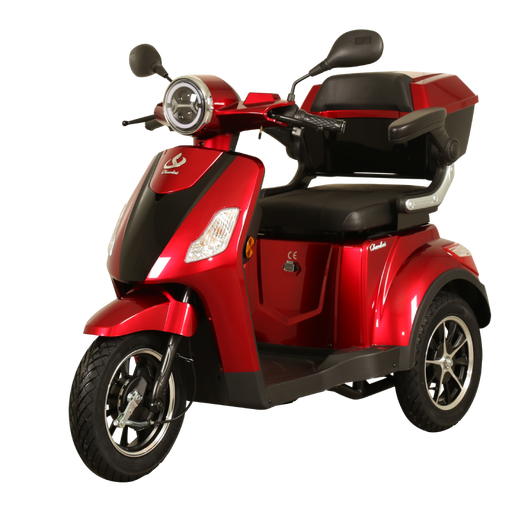
Why it suits this profile: For short journeys and anyone looking for a clear, upright riding position. The three wheels, reverse function and digital display are designed for manoeuvring and everyday use.
The stated L2e-P classification and EU type approval provide a clearer starting point than a model without vehicle documentation. Registration, insurance and licence requirements must still be checked.
1,000W motor, 60V 20Ah lithium battery, 25 km/u and a seat with backrest and armrests.
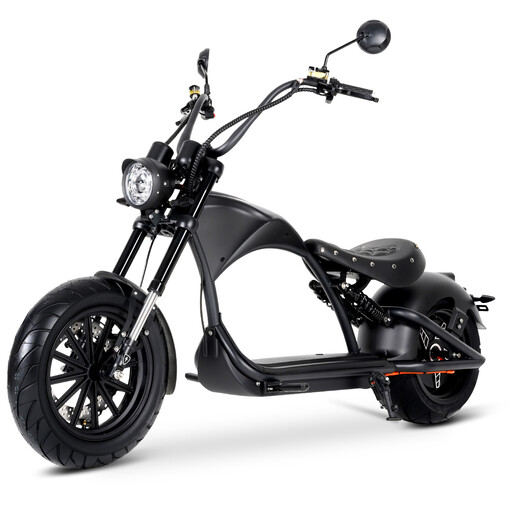
Why it suits this profile: For commuters and adults looking for an electric motorcycle with a top speed of 45 km/u, a larger battery and features for longer journeys.
The product information lists a CoC and L1e-B classification. Before use, check that the documents, RDW registration, insurance, number plate and AM, A or B driving licence requirements are all in order.
2,000W motor, removable 60V 30Ah battery, hydraulic disc brakes and a stated top speed of 45 km/u.
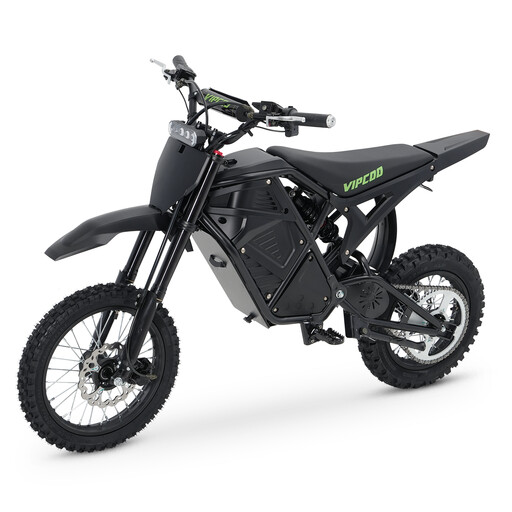
Why it suits this profile: For adults and teenagers who want to ride exclusively on private land or suitable off-road tracks, and value suspension and braking control.
The product information explicitly states that it is for off-road use and is not approved for public roads. This makes the limits on where you can use it clearer than with models whose documentation is unclear.
3,500W motor, removable 48V 23Ah battery, full suspension and hydraulic disc brakes.
We’ve put together a complete, up-to-date list of products that meet these strict selection criteria and comply with current European safety regulations.
That depends on the vehicle category. An ordinary electric bicycle is subject to different rules from a vehicle registered as a low-speed moped. A type-approved 25 km/u scooter or three-wheeled moped may require registration, third-party insurance, a helmet and an AM driving licence. Always check the Dutch registration certificate and the latest information from the RDW.
Charging costs depend on the battery capacity and your electricity tariff. A 60V 20Ah battery has a theoretical energy capacity of around 1.2 kWh; charging losses are additional. Multiply the energy used in kWh by your electricity tariff. Maintenance, insurance, tyres and any registration fees should also be included in the total cost of ownership.
Battery life is affected by how often it is charged, temperature, storage and use. Use the supplied charger, avoid storing a fully discharged battery for long periods and follow the manufacturer’s instructions. With a removable battery, replacing it or charging it indoors is often easier. Before buying, check whether a replacement battery is available and what warranty terms apply.
