
Vandaag of morgen in huis

Kwaliteit gegarandeerd

Welkomstaanbiedingen ontgrendelen: GRATIS bezorging | Tot 80% korting | Gratis 30 dagen JoyPlus-proefperiode
Download de app
An electric vehicle can be a practical choice for commuting, short shopping trips, leisure rides or maintaining mobility later in life. The range extends from an electric bicycle and electric moped to electric mobility scooters, motorcycles, trikes, quadricycles and electric dirt bikes.
However, comparing models is about more than motor power or price. A model that appears suitable for public roads may require registration, insurance, a driving licence and a helmet. An off-road model, meanwhile, may not be permitted on public roads at all. Below, we outline the key considerations and our recommendations for 2026.
A vehicle capable of 25 km/h is not automatically a bicycle or an unregistered mobility scooter. The vehicle category determines which rules apply. A 25 km/h mobility scooter, for example, may be classified as a moped or another type of motor vehicle.
Before buying, always check:
The final classification in the Netherlands is determined by the RDW. Do not use a vehicle on public roads until registration and insurance have been arranged.
Higher motor power does not tell the whole story when it comes to everyday use. Battery voltage, capacity, weight, brakes, suspension and tyres also influence the riding experience.
For example, a lithium battery for an electric vehicle rated at 60 V and 20 Ah has a nominal energy capacity of approximately 1,200 Wh. The actual range then depends on speed, load, temperature, gradients, tyre pressure and riding style. Manufacturer range figures are therefore an indication, not a guaranteed distance for every rider.
An electric dirt bike or off-road motorcycle may be technically powerful, but that does not mean it is road legal. According to the product information, the VIPCOO H3 is intended exclusively for private land and off-road use. The same information states that RDW registration is not possible.
Look out for terms such as:
For short urban journeys, 25 km/h may be sufficient. A 45 km/h electric moped or electric motorcycle is more suitable when higher speeds are important, but it is subject to stricter regulations. A 45 km/h model generally requires registration, a number plate, third-party liability insurance, an AM, A or B driving licence and an approved helmet.
Check whether the stated speed refers to the maximum design speed or is simply a marketing figure. For a type-approved vehicle, the motor, controller and software must correspond to the approved configuration. Modifications that increase speed can affect both road approval and insurance coverage.
Do not compare Ah alone—consider V as well. The basic calculation is:
Voltage × capacity = nominal energy in Wh
A 60 V 20 Ah battery provides approximately 1,200 Wh. Also check:
With lithium batteries, it is best to follow the manual, store the battery in a dry place and use only the specified charger.
An electric trike is often manoeuvrable at low speeds. An electric quadricycle offers a broader support base, but it may be larger and more difficult to park. Consider the seating position, armrests, back support, suspension, tyres and turning circle.
For heavier-duty or more demanding applications, hydraulic disc brakes and suspension are relevant product specifications. They are not, however, a substitute for appropriate riding behaviour, a helmet and protective clothing.
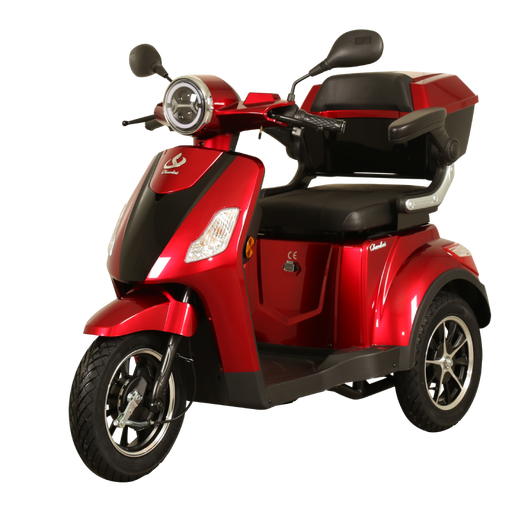
Why This Fits Their Persona: A compact option for short everyday trips where a stable seating position and straightforward controls are priorities.
The product information states EU type approval as L2e-P, a CoC for the specific configuration and a maximum design speed of 25 km/h. Verify these documents upon delivery.
1.0 kW motor, 60 V 20 Ah lithium battery, reverse function and three wheels. The product specifications also list suspension, back support and armrests.
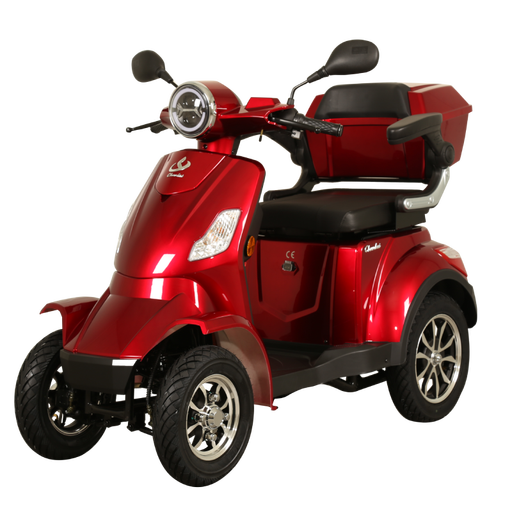
Why This Fits Their Persona: Designed for users seeking greater stability and a supportive seat on short journeys.
The configuration is listed as L6e-A with EU type approval. For road use, RDW registration, a CoC, insurance and the correct driving licence and traffic regulations remain essential.
Four wheels, a 1.0 kW motor, removable 60 V 20 Ah lithium battery, suspension and reverse function. The stated maximum speed is 25 km/h.
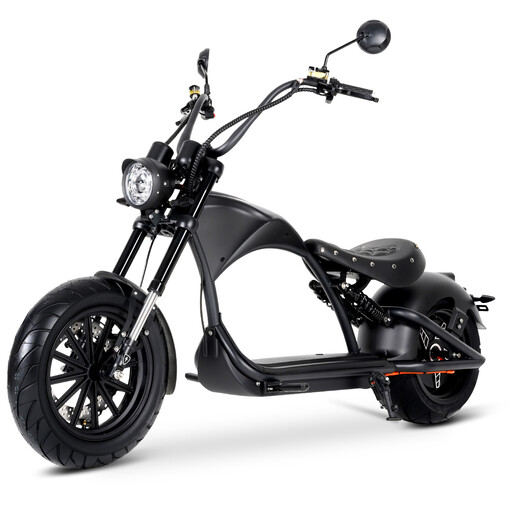
Why This Fits Their Persona: Suited to daily journeys where 45 km/h and a larger battery are important, provided all Dutch moped regulations are met.
The product information lists L1e-B, a CoC and registration requirements. Check the VIN, CoC and RDW procedure before using the vehicle on public roads.
2,000 W motor, 60 V 30 Ah lithium battery, hydraulic disc brakes and a stated top speed of 45 km/h.
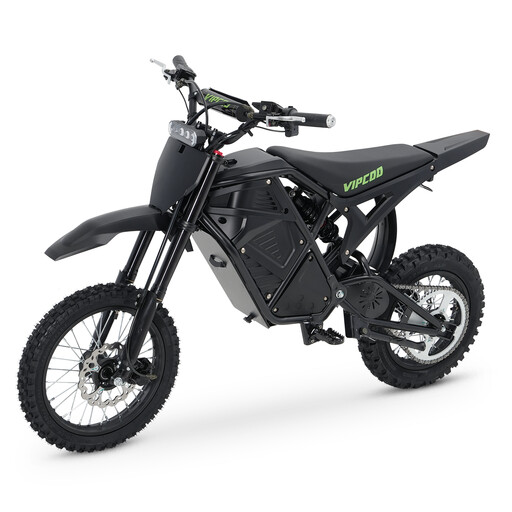
Why This Fits Their Persona: Intended for private land, off-road tracks and enclosed areas where road registration is not the objective.
According to the product information, this model is not approved for public roads and RDW registration is not possible. It is therefore clearly positioned as an off-road vehicle.
3,500 W motor, removable 48 V 23 Ah battery, full suspension and hydraulic disc brakes. The stated IPX4 rating is a product specification, not a guarantee for every use case.
Browse a current selection of electric motorcycles and compare motor power, battery, speed and intended use before placing your order.
No. It depends on the vehicle category. A standard electric bicycle is governed by different rules from an electric moped, electric trike or type-approved electric quadricycle. Many moped-style models require at least an AM driving licence. Always check the RDW classification and your licence details.
Service life depends on charging frequency, storage temperature, load and maintenance. Use the specified charger, avoid storing the battery for long periods when fully discharged and follow the manual. Before buying, ask about a separate replacement battery and the applicable warranty terms.
The electricity cost per journey is usually easy to estimate: charging consumption in kWh multiplied by your electricity tariff. Also account for insurance, registration, maintenance, tyres, brake components and any number-plate fees. The legal costs for an electric bicycle differ from those for a 25 km/h mobility scooter or a 45 km/h electric moped.
