
Vandaag of morgen in huis

Kwaliteit gegarandeerd

Welkomstaanbiedingen ontgrendelen: GRATIS bezorging | Tot 80% korting | Gratis 30 dagen JoyPlus-proefperiode
Download de app
An electric tyre inflator can come in handy if your car tyre is slowly losing air, you’re cycling outside town or you’re heading off on a motorbike trip. However, portable models vary considerably in ease of use, pressure readings, battery life and suitability for vehicle tyres. A compact inflator that works well for a bike isn’t necessarily suitable for inflating several car tyres.
So the key question isn’t just how many PSI are stated on the packaging, but how you plan to use the inflator. Read on to find out which common pitfalls can lead to a disappointing purchase and which specifications to check beforehand.
A label such as 150 PSI tyre inflator sounds more than adequate for a car, bike or motorbike. However, the maximum pressure doesn’t tell you how much air the compressor moves per minute or how long it can run continuously. An inflator with a high maximum pressure can still be slow when used on a car tyre.
So check the stated airflow, operating time and warnings about overheating too. A compact model is often enough for occasional top-ups. If you need to inflate several tyres in a row, a more powerful unit or a model with an additional 12V power supply may be more practical.
A cordless tyre inflator works without a mains socket or a cable connected to your car, but its battery will run out. Check the battery capacity, charging time and whether you can power it from a vehicle socket while it’s in use.
A rechargeable tyre inflator is particularly useful for cyclists, motorcyclists and campers. If you’re a car owner who wants to inflate several tyres, a model with both a battery and a 12V connection provides a useful backup.
A digital tyre inflator displays PSI, BAR or kPa clearly. This makes it easier to set the pressure, but check that it offers the unit you need and that the display remains visible while inflating. Always use the recommended pressure for your vehicle, bike tyre or motorbike tyre as your starting point.
A tyre inflator with automatic shut-off helps prevent over-inflation. According to the product description, it stops when it reaches the set pressure, but check the tyre pressure afterwards if accuracy is important.
High pressure can be important for bike tyres, while car tyres benefit most from sufficient airflow. So check both figures:
You can use a car tyre compressor for a bike or ball, but only if it comes with the right adapter. Also check that the connector is suitable for Schrader or Presta valves.
A rechargeable tyre inflator with USB-C is easy to charge at home or on the go. Check the charging cable, battery indicator and whether it has a USB output. A model with a 12V cable will work as long as your car battery and socket are available.
A cordless model is practical for electric vehicles, as they don’t always have a traditional engine bay or an easily accessible power socket. However, check that the inflator is designed for your car’s tyre sizes and usage requirements.
A portable tyre inflator should fit easily in a glove compartment, bike bag or rucksack. Check:
CE marking doesn’t guarantee that every model is suitable for every situation. It’s particularly important to check the manual, connections and usage restrictions.
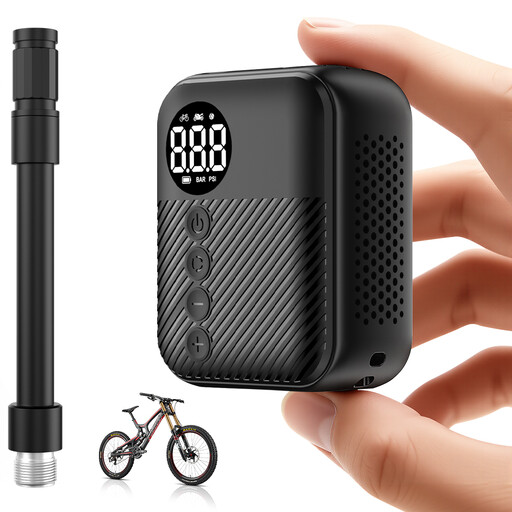
Why it suits this type of user: According to the product information, this pocket-sized inflator is designed for bike, motorbike and car tyres, and works wirelessly using a built-in rechargeable battery. That makes it a good fit for occasional use on the go.
The digital display shows the pressure setting, and the product information states a maximum pressure of 150 PSI. Be sure to check the recommended tyre pressure and remaining battery charge.
Compact design, digital pressure display, USB-rechargeable battery and, according to the product information, CE certification.
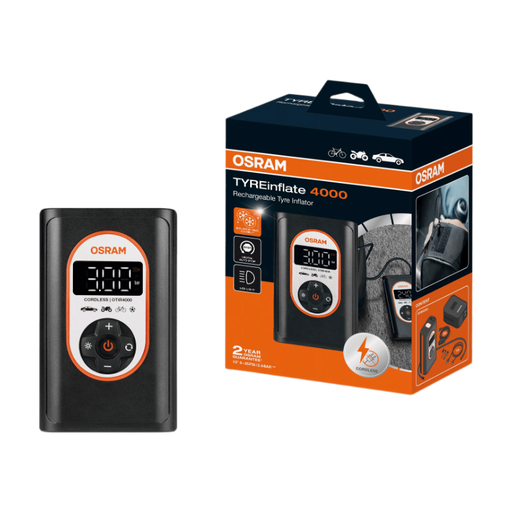
Why it suits this type of user: According to the product specifications, this model combines a built-in battery and USB-C charging with direct power from a 12V socket. It’s a practical choice for drivers who also want a backup power source while on the road.
The automatic shut-off helps prevent over-inflation. The description also says you can adjust the pressure using a deflation valve.
Pressure memory for up to four vehicles, according to the product information, LED lighting, three units of measurement and a 12V cable included.

Why it suits this type of user: According to the product description, this model has a 7500 mAh battery, a maximum pressure of 160 PSI and modes for cars, motorbikes, bikes and balls. It’s a good match for users looking for a versatile inflator.
The preset modes and automatic shut-off reduce the chance of choosing the wrong setting. If you plan to use it frequently, always check the stated operating time.
Four units of measurement, a large LED screen, LED lighting and, according to the product information, a power bank function.
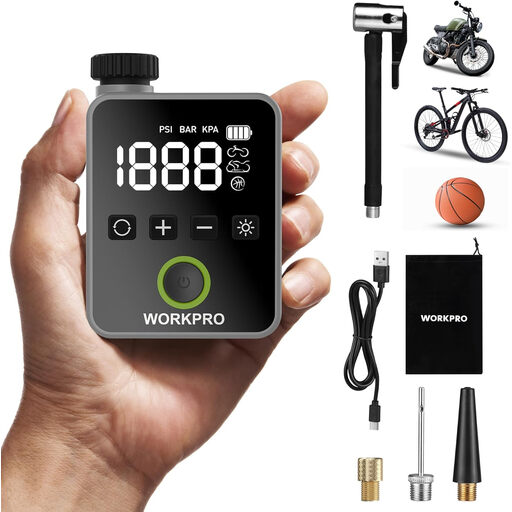
Why it suits this type of user: According to the product information, this model weighs 270 grams, has four modes and comes with four nozzles. The manufacturer says it’s suitable for bikes, motorbikes, balls and other inflatables.
The adjustable pressure range of 3 to 140 PSI and automatic shut-off make it easier to use. According to the product information, this model isn’t designed for lorry or trailer tyres.
Very low stated weight, HD LED screen, automatic shut-off and three lighting functions, including an SOS signal according to the product description.
We’ve put together a complete, up-to-date list of products that meet these strict selection criteria and the applicable European safety requirements.
First, check the recommended tyre pressure. Then choose the right adapter, secure the hose firmly to the valve and set the pressure in PSI, BAR or kPa. Stay nearby while the tyre is inflating, and after the automatic shut-off, check that the pressure matches the required level.
Its lifespan depends on the battery type, charging habits, storage and how long you use it each time. Don’t let the inflator overheat regularly, use the correct charging cable and store it somewhere dry. Follow the maximum operating time in the manual.
That depends on the airflow, maximum pressure, connections and stated vehicle compatibility. A model designed for bikes and motorbikes may be suitable for small adjustments to a car tyre, but check the product specifications before inflating a flat car tyre or several tyres in a row.
