
Vandaag of morgen in huis

Kwaliteit gegarandeerd

Welkomstaanbiedingen ontgrendelen: GRATIS bezorging | Tot 80% korting | Gratis 30 dagen JoyPlus-proefperiode
Download de app
An electric tyre inflator can be useful for topping up tyre pressure at home, on the road or at a campsite. However, not every model is suitable for car tyres. Some compact air pumps are designed mainly for air beds, balls or small inflatables. Others have a high maximum pressure but are less practical for several tyres because of their short battery life or limited cooling time.
The main pitfall, then, is not the appearance or number of accessories, but the combination of pressure, power supply and intended use.
A manufacturer may quote a figure such as 230 l/min. This mainly tells you how much air the pump moves. For a car tyre, the maximum working pressure in PSI, bar or kPa is what matters. A pump with an airflow of 230 l/min and a pressure of just 3,5 kPa, such as the Baseus PocketGo, is not suitable for car or motorbike tyres.
According to the product description, this model is intended for low-pressure items such as air beds, inflatable cushions and similar products. For bicycle tyres, check the required pressure too; it may be higher than the pump can manage.
A cordless tyre inflator runs on a built-in battery. That’s handy at the roadside, but its running time, charging time and charging options determine how useful it really is. A flat battery won’t help when you need to top up several car tyres.
Check:
A 12V model without a battery is less flexible, but ready to use whenever you’re by the car.
“For cars, motorbikes and bicycles” doesn’t automatically mean the pump will handle all these uses equally quickly. A compact car and motorbike tyre inflator may be suitable for small top-ups, but struggle with a completely flat SUV tyre. So check both the maximum pressure and the manufacturer’s usage restrictions.
For a truck, caravan or trailer, only use a model whose specifications clearly support that application.
Car tyres are often inflated to around 30–40 PSI, but the correct pressure is shown on the sticker inside the door frame, on the fuel flap or in the car’s manual. A model with an adjustable range of 3–150 PSI gives you more flexibility than a pump that can only handle low pressure.
A digital tyre inflator with selectable PSI, bar or kPa readings makes the pressure easier to check. However, make sure the gauge shows a realistic current pressure when you first connect it.
A tyre inflator with automatic shut-off stops when it reaches the selected pressure, according to the product specifications. This helps reduce the risk of overinflating a tyre, but after use, check the pressure with a separate gauge if accuracy is important.
Automatic shut-off is especially handy when you want to inflate all your tyres to the same pressure. For small top-ups, a manual start-and-stop function may be enough.
A 12V tyre inflator usually connects to the car’s 12V socket. Start the engine before using the pump to avoid putting unnecessary strain on the vehicle’s battery. Check the cable and air hose lengths: a cable several metres long means you won’t have to keep moving the pump.
For cordless models, weight and charge level matter. A compact mini air compressor fits easily in a glove compartment, but often has a smaller motor. Allow each device to cool according to the instructions, especially after inflating several tyres in a row.
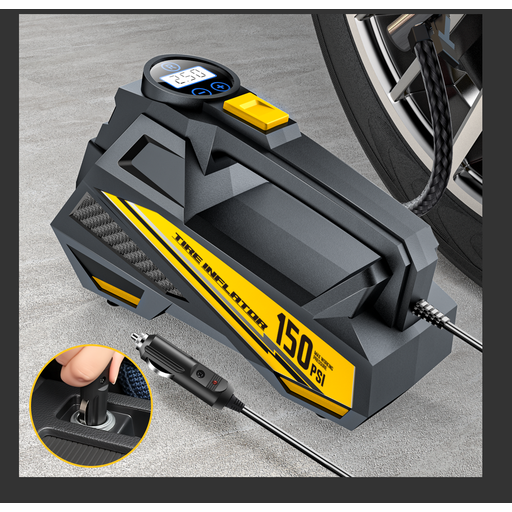
Why it suits this buyer: The 12V connection is easy to understand, and there’s no battery to charge. According to the product specifications, this model supports a maximum pressure of 150 PSI and can be used for cars, motorbikes, bicycles and balls.
The stated 12V power supply and 150 PSI pressure make it clear how a vehicle pump differs from a low-pressure air blower. Check that it’s suitable for your specific vehicle and intended use.
12V motor, maximum pressure of 150 PSI and a display, according to the product description.
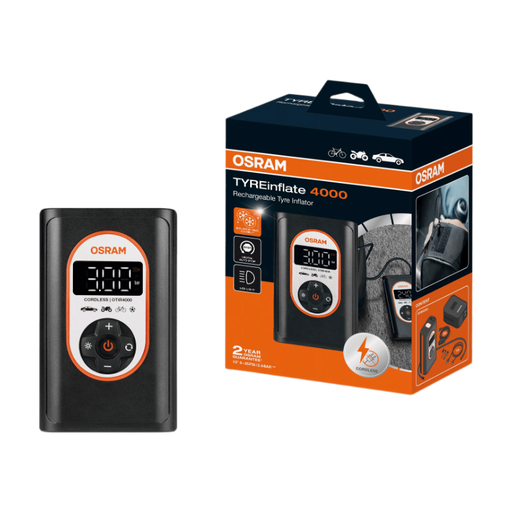
Why it suits this buyer: This model combines cordless use with a 12V cable as an alternative power source. The product specifications state a maximum working pressure of 8,3 bar, pressure memory for four vehicles and a USB-C charging port.
The dual power supply means you’re less reliant on a single battery that might run flat. Automatic shut-off and switchable pressure units make repeated use easier.
Automatic shut-off, LED lighting, pressure memory and a built-in deflation valve, according to the product information.

Why it suits this buyer: This is a wired compressor for car tyres, with a 12V power supply, five presets and an adjustable range of 3–150 PSI, according to the product specifications. It’s a good fit for motorists who regularly top up different vehicles or bicycles.
Presets for cars, motorbikes, bicycles and balls make the intended uses clearer. The 12V cable means you won’t need to charge a battery before each session.
0,5 PSI adjustment, automatic shut-off, three LED modes and a stated motor power of 100 W.
We’ve put together a complete, up-to-date list of products that meet these strict selection criteria and the applicable European safety regulations.
Check tyre pressure when the tyres are cold, and use the pressure recommended by the car manufacturer. A high PSI rating doesn’t automatically mean a tyre will inflate faster. Speed also depends on the air hose, motor, temperature and the difference between the current and desired pressure.
Also bear these points in mind:
No. Check the maximum pressure, recommended vehicle category and permitted running time. Portable models are often suitable for topping up cars and light vehicles, but truck, trailer and some motorhome tyres require greater capacity.
Its lifespan depends on battery use, storage, charging cycles and heat exposure. Follow the instructions, charge it with the correct cable and let the device cool down after intensive use. A 12V model doesn’t have a built-in battery that loses capacity over time.
A 12V compressor uses a relatively high amount of power while it’s running, but usually only for a few minutes per tyre. Start the engine before use and don’t run the pump for longer than necessary. This helps limit the load on the vehicle’s battery.
