
Vandaag of morgen in huis

Kwaliteit gegarandeerd

Welkomstaanbiedingen ontgrendelen: GRATIS bezorging | Tot 80% korting | Gratis 30 dagen JoyPlus-proefperiode
Download de app
An electric tyre inflator can come in handy if your car tyre is slowly losing pressure, when you’re out cycling or when you’re checking your tyres before setting off. Yet many models look much the same. A compact casing, a high PSI rating and a digital display don’t automatically mean an inflator is right for your needs.
Here are the main pitfalls to watch out for:
For a car tyre inflator, a suitable pressure range and sufficient airflow matter more than just the highest figure on the packaging. Many passenger car tyres are somewhere around 30 to 50 PSI, according to the vehicle manufacturer, but the correct tyre pressure is shown on the sticker inside the door frame, on the fuel filler flap or in your car’s manual.
A 150 PSI tyre inflator offers a generous upper limit on paper. That doesn’t mean you should use that pressure for your car tyre. Also check the airflow, number of cylinders and stated inflation time. A mini compressor with multiple cylinders may be more practical for vehicles than a very small model designed only for bike tyres.
A cordless tyre inflator or rechargeable air pump works without a mains socket or a running car. That’s useful at the roadside, with an electric car or on a bike ride. However, check:
A corded model uses your car’s 12V socket and is generally available for as long as the power supply is working. This can be a practical choice if you mainly want to top up car tyres at home or on the road.
A tyre inflator with a digital gauge shows the set or measured pressure directly on the display. Check which unit it uses: PSI, bar, kPa or kg/cm². The correct value should match the recommendation for your vehicle or tyre.
A tyre inflator with automatic shut-off stops when the set pressure is reached, according to the product description. This can make it easier to use, but always check the setting before inflating and make sure the hose is securely attached to the valve. For bikes, both Presta and Schrader connections are relevant; for cars and motorbikes, Schrader is usually the standard.
The options below are matched to different situations. The features listed are based on the product information provided. Brand claims about speed or performance are not an independent guarantee, so also check the current product page, included accessories and safety instructions.
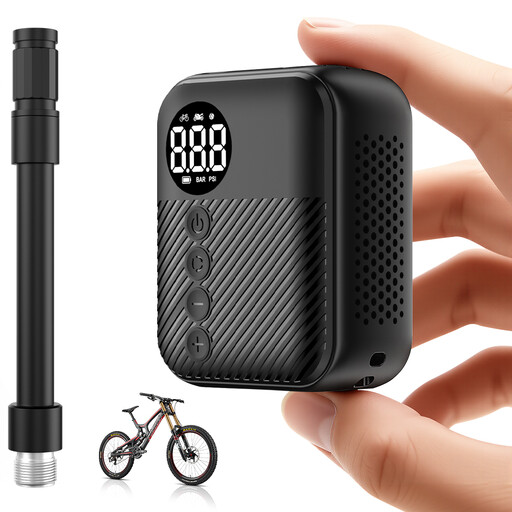
Why it suits this user: This compact electric bike pump is easy to carry in a bike bag, rucksack or glove compartment. Its rechargeable battery is handy for occasional use on the go.
The digital gauge shows the pressure, and the product information lists a maximum of 150 PSI. Check that the battery life suits your tyre type and the number of tyres you need to inflate.
Pocket-sized, with a built-in rechargeable battery and digital pressure display. According to the product description, this model is designed for bike, motorbike and car tyres.
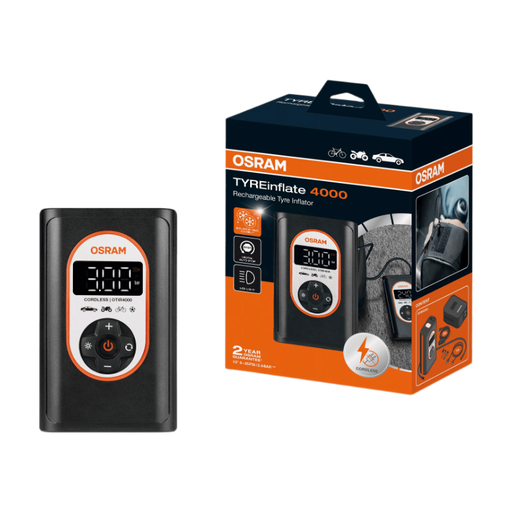
Why it suits this user: A good fit if you’re looking for a versatile car tyre inflator for everyday use, travel and emergencies, with both battery power and 12V support.
The product information lists automatic shut-off, selectable units and a 12V cable. This gives you an alternative if the battery isn’t sufficiently charged.
Type-C charging, pressure memory for up to four vehicles, LED lighting and a valve for releasing air. The stated maximum working pressure is 8.3 bar.
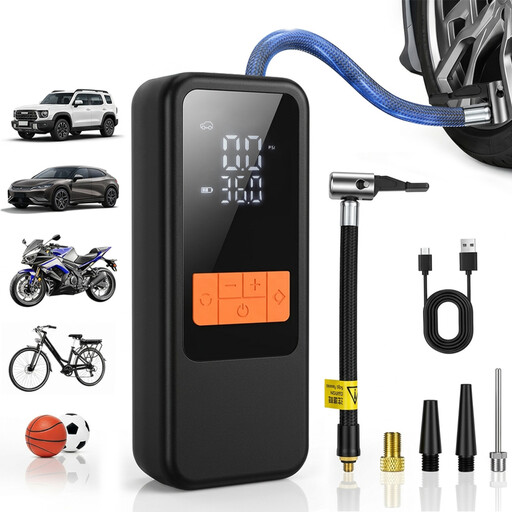
Why it suits this user: A good option for drivers, motorcyclists and cyclists who want one device for several inflation jobs.
The description lists five modes, including car, motorbike, bike, ball and manual settings. It also gives specific battery life and inflation times, making it easier to judge the capacity.
Up to 150 PSI, stated measurement accuracy of ±0.01 kg/cm², a 4,000 mAh battery and a two-mode LED function.
We’ve put together a complete, up-to-date list of products that meet these strict selection criteria and the applicable European safety requirements.
An electric tyre inflator is designed for topping up tyres or making a small pressure adjustment. If there’s visible damage, a leak or a completely flat tyre, it’s best to seek professional help.
It depends on the model. Check whether the manufacturer lists car or SUV tyres, the maximum pressure and how much air the inflator moves. An electric bike pump with limited capacity isn’t automatically suitable for car tyres.
Battery life varies depending on capacity, set pressure, tyre volume and temperature. Check the stated charging time and the number of tyres or minutes of use per charge. For several car tyres, a model with 12V backup may be more practical.
The cost of electricity to charge it is usually low, but the overall cost mainly depends on the purchase price, battery wear and whether the battery can be replaced. A corded car air compressor uses the 12V power supply and doesn’t have a built-in battery that loses capacity over time.
