
Vandaag of morgen in huis

Kwaliteit gegarandeerd

Welkomstaanbiedingen ontgrendelen: GRATIS bezorging | Tot 80% korting | Gratis 30 dagen JoyPlus-proefperiode
Download de app
An electric trimmer may seem simple at first: charge it, switch it on and start trimming. But models can differ considerably in how they work, how they’re maintained and which areas of the body they’re designed for. A nose hair trimmer isn’t automatically suitable for your beard, while a multi-groomer may be less precise than a device designed for one specific purpose.
If you focus only on a low price, a high RPM or the word “waterproof”, you could end up with the wrong product. Look out for the following pitfalls before ordering a cordless trimmer.
A hair clipper for your head usually has wider blades and guide combs for longer lengths. This makes it less suitable for nose, ear or eyebrow hair. For sensitive areas, a rounded protective head or a dedicated body trimmer is a better choice.
Check whether the manufacturer says the device is suitable for your face, body, nose, ears, eyebrows or head hair. A separate precision head can make a multi-groomer more versatile, but also check whether it’s actually included.
The term waterproof isn’t always used in the same way. A device that can simply be rinsed may not necessarily be suitable for full immersion. A rating such as IPX7 gives you a clearer indication: it refers to protection against temporary immersion under specified test conditions. Always check the instructions for use in the shower and for charging.
Even with a waterproof trimmer, the charging port needs attention. Don’t use an electrical device in the shower while it’s plugged in, unless the instructions explicitly say you can.
A long runtime sounds appealing, but it’s most relevant if you use the device often or for long periods. For a weekly trim of your nose hair, a shorter runtime is usually enough. For a beard trimmer, body trimmer or hair clipper, both battery life and charging time matter.
Also check whether the trimmer can be used while charging. This varies by model. A USB-C connection is handy at home and on the go, but a supplied cable isn’t necessarily the same as an adapter.
Look for stainless steel blades, rounded blade edges and a protective guard for sensitive areas. When using a nose or ear hair trimmer, don’t insert the head deep into your nostril or ear canal. For example, Philips advises that the Series 3000 NT3650/16 trimmer should be inserted no further than 0.5 cm into the nose. Follow the instructions for each model.
A flexible shaving head can help you follow the contours of your beard. For body hair, adjustable or fixed guide combs are useful because they keep the blades at a distance from your skin. Check whether the blades and heads can be replaced, as this affects the product’s lifespan and maintenance.
For a beard trimmer, several combs or an adjustable length setting are important. For an eyebrow trimmer, a small precision comb is often enough. A body trimmer may benefit from a protective comb for longer hair.
Don’t just look at the number of accessories; check what they’re designed to do:
A removable head that can be rinsed under the tap saves time. However, “washable” doesn’t always mean you can put the whole handle under water. With the Philips All-in-One Trimmer MG3930/15, the blades and combs can be rinsed, but the handle shouldn’t be submerged in water.
Compare the battery type and specifications too. The Sparoma TC-021 lists a 600mAh battery, a two-hour charging time and up to 120 minutes of use. The Xiaomi Grooming Kit Pro lists an 800mAh Li-ion battery, USB-C charging and up to 90 minutes of use. These are product specifications, not a guarantee that every user will get the same runtime.
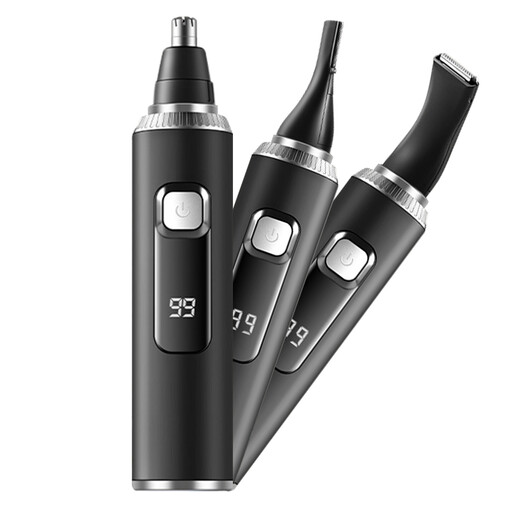
Why it suits this user: This compact model combines a nose and ear hair trimmer with attachments for sideburns and eyebrows. It’s a good choice if you want one device for several small grooming tasks.
The product information clearly lists three functions and an IPX7 rating. The removable head can be rinsed according to the description; check the instructions for guidance on cleaning the handle.
8500 RPM according to the product specifications, USB-C charging, a battery indicator and a protective cap included.
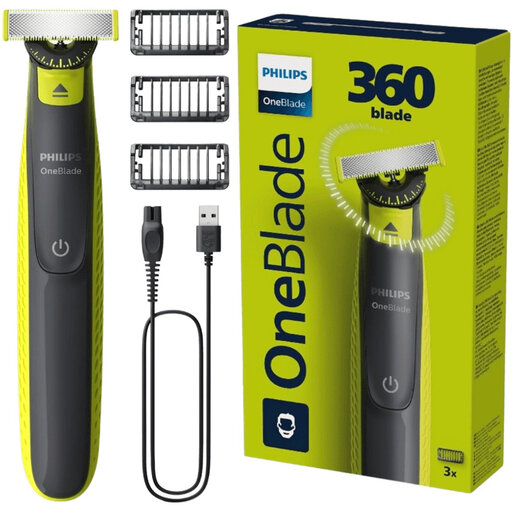
Why it suits this user: This cordless trimmer is designed for the face and light beard growth. Its flexible head and double-sided blade are practical for trimming, shaving and defining contours.
The product information clearly states that it’s designed for the face. That way, you won’t buy a multi-groomer expecting it to be suitable for head or body hair too.
Washable, replaceable double-sided blade, adjustable trimming comb and a stated runtime of 45 minutes.
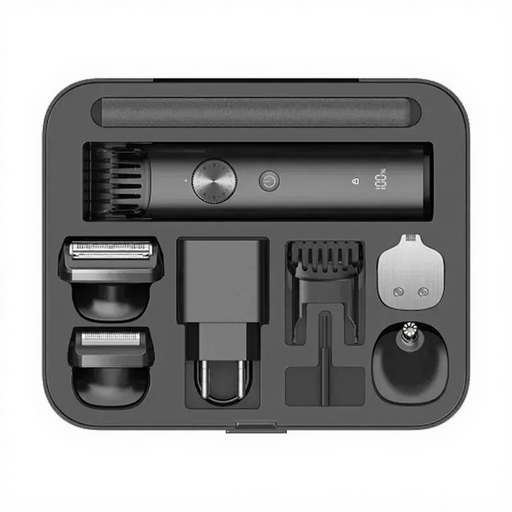
Why it suits this user: This model is designed for anyone who wants to groom their face, body and nose hair with one device. The different heads and length settings make it suitable for a more extensive routine.
The product information specifies four attachments, a range of 0.5 to 20 mm and an IPX7 rating. This makes its intended uses and care requirements clearer than those of a generic multi-groomer.
USB-C charging, an LED battery display, travel lock, self-sharpening stainless steel blades and up to 90 minutes of use according to the product information.
We’ve put together a complete, up-to-date list of products that meet these strict selection criteria and the applicable European safety regulations.
A CE mark refers to the manufacturer’s declaration of conformity with the applicable European rules. It isn’t a quality rating. Also check the warranty terms, returns information and the seller’s contact details. Many electrical grooming products are covered by a minimum two-year legal guarantee, depending on the consumer law that applies.
Choose a model with a narrow, protected head designed for nose and ear hair. A rotary or vertical head with rounded protective edges can be practical. Don’t assume a beard trimmer or hair clipper is suitable for these areas; check whether the manufacturer explicitly says it can be used for them.
It depends on the model, the battery and how often you use it. Product information may list runtimes of 45, 60, 90 or 120 minutes, but frequent use and different attachments can affect the actual runtime. Check the charging time too, and whether you can use the device while it’s charging.
As well as the purchase price, you may need to pay for electricity, replacement blades, shaving foils or batteries. A rechargeable trimmer with USB-C can be handy if you already have a suitable adapter. For models with replaceable heads, it’s worth checking the cost and availability of spare parts in advance.
