
Vandaag of morgen in huis

Kwaliteit gegarandeerd

Welkomstaanbiedingen ontgrendelen: GRATIS bezorging | Tot 80% korting | Gratis 30 dagen JoyPlus-proefperiode
Download de app
Electric toys for children often look appealing thanks to lights, sound, high speeds and eye-catching designs. However, a long list of features means little if the toy is not suitable for the child’s age, the surface it will be used on or their motor skills. For example, an RC car for children may have plenty of power but be difficult to control indoors. An electric ride-on car may look spacious in the product photo, while the storage space available at home is limited.
Pay particular attention to these three common pitfalls:
The recommended age is a useful starting point, but it is not a substitute for the safety information. A remote-controlled toy car for children aged 3 and over may contain small parts or have a speed that requires supervision. Read the label and the product page in full.
For children’s toys intended for ages 3 and over, check among other things:
The CE marking indicates that the manufacturer declares compliance with the applicable EU requirements. Also check that warnings and instructions are available in an understandable form. If you are unsure whether a product is suitable, choosing one intended for an older age group is not automatically a safe option for a younger child.
For an RC car for children, 2.4G remote control, proportional steering and an accessible control layout are practical features to look for. Proportional steering means that a slight movement of the control can produce a limited response. This is generally easier to control precisely than simple on-off operation.
An electric children’s motorbike or scooter requires a different set of considerations. Look at:
A three-wheeled children’s ride-on toy may feel more stable than a two-wheeled model. Training wheels can help during a child’s first play experience, but they do not remove the need for supervision. Ideally, use a ride-on toy in an enclosed, level area and never in traffic.
A rechargeable lithium battery is convenient for small RC cars, while electric ride-on cars and motorbikes often use lead-acid or other battery configurations. Check the stated voltage, capacity, charger and charging time. Only use the supplied or specified charger.
The 4WD drift model below states a playtime of 20 to 40 minutes per charge. This is the product’s stated specification; actual playtime may vary. A product with two interchangeable sets of tyres is appealing if your child wants to both race and drift, although changing tyres requires some assistance and storage space.
When buying, it is sensible to check whether:
The right choice depends on age, experience and how the toy will be used. This selection is based on the stated specifications, age recommendations and product features.
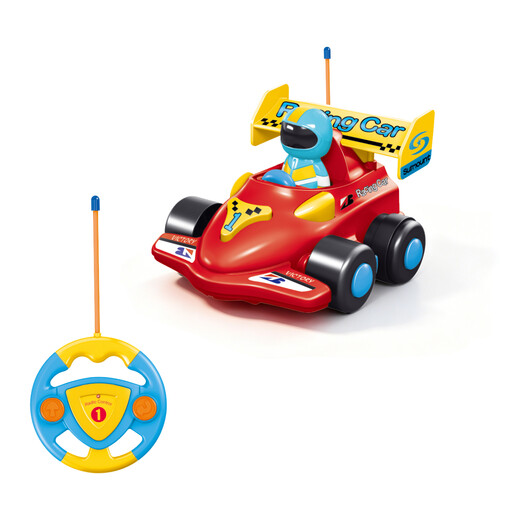
Why it suits this profile: The simple controls are designed for young children. The product information states 18 months to 5 years, but also mentions small parts and a warning for children under 3. Always follow the strictest warning and supervise play.
The controls are straightforward, and the product warning makes it clear that age and small parts need to be assessed carefully.
Forward, reverse and steering controls; lights and sound effects; runs on 3 AA batteries, not included.
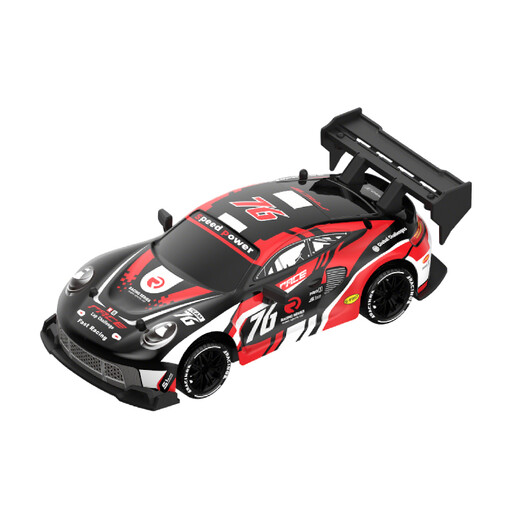
Why it suits this profile: For children aged 8 and over who already have experience with a remote-controlled toy car and want to practise racing and drifting.
The two sets of tyres allow you to use drift tyres or racing tyres, depending on the surface and playing style.
4WD drive; proportional 2.4G control; shock-absorbing chassis; LED lighting and rechargeable battery.
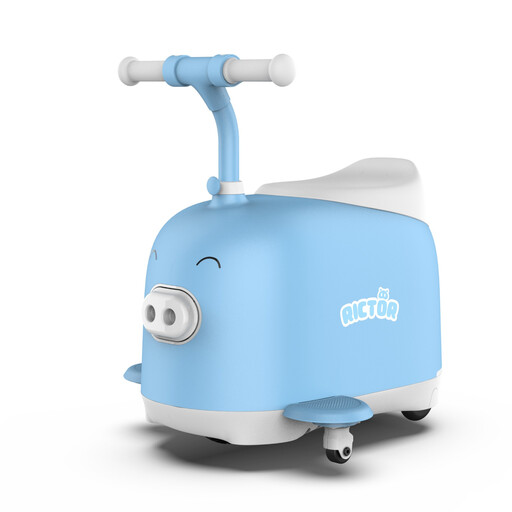
Why it suits this profile: This model is designed for children aged 5 to 12 and families looking for a foldable electric vehicle with storage space and adjustable speed.
According to the product information, the speed can be set to 5, 10 or 15 km/u. A parent can set limits via the app; check compatibility and operation beforehand.
5-wheel anti-tip design; foldable; storage space; three speed settings; stated range of 15–20 km.
We have compiled a complete, up-to-date list of products that fully meet these strict selection criteria and the applicable European safety regulations.
It varies by product. Some interactive vehicles are designed for children from 1 year old, while a remote-controlled drift car is often marketed for ages 6 or 8 and over. Always check both the age recommendation and the warnings. If the information conflicts, use the strictest safety warning as your guide.
For small RC cars, the stated playtime in this selection is around 20 to 40 minutes per charge. Electric scooters and ride-on models sometimes give a distance in kilometres rather than a number of minutes. Actual playtime depends on weight, speed, inclines, surface, lighting and sound. Do not leave a battery completely flat for an extended period after use, and follow the charging instructions.
In addition to the purchase price, you need to allow for the electricity used for charging, batteries for remote controls and any replacement batteries, tyres or chargers. A model using standard AA batteries may be convenient for occasional use; a rechargeable battery is more practical if your child plays frequently. Before buying, check whether parts are available and whether the instructions include maintenance information.
