
Vandaag of morgen in huis

Kwaliteit gegarandeerd

Welkomstaanbiedingen ontgrendelen: GRATIS bezorging | Tot 80% korting | Gratis 30 dagen JoyPlus-proefperiode
Download de app
An electric toothbrush can be a useful switch if you find it difficult to brush every area for the same amount of time and with consistent pressure using a manual toothbrush. However, with some models, you mainly pay for features you will hardly use. An app, a glossy casing or a high number of movements per minute says little on its own about how well a device suits your routine.
As a Joybuy Product Recommendation Officer, I therefore focus mainly on verifiable specifications: the brushing method, a toothbrush with a pressure sensor, the timer, battery life, available replacement brush heads and included accessories.
Brands sometimes quote percentages for plaque removal or healthier gums. Such figures are not automatically comparable, as the test method, brushing time and comparison with a manual toothbrush may differ. According to Philips’ own research, certain Sonicare models make claims about plaque removal. Oral-B also reports results for iO models compared with a manual toothbrush. Treat these figures as brand claims, rather than guaranteed results for every user.
When comparing models, it is better to look at details such as the number of brushing modes, whether there is a timer and how pressure is indicated.
An electric toothbrush with an app can record brushing time, zones or pressure. This is useful if you like receiving feedback and actually open the app regularly. If you do not use your phone in the bathroom, a built-in timer and a light or vibration signal may be all you need.
Also check that Bluetooth, the app and the features you want are available on your smartphone. A smart electric toothbrush is not automatically more practical than a simpler rechargeable model.
The handle is only part of the total cost. According to the product information, replacement brush heads should generally be changed every three months, or sooner if the bristles are worn. Check the following beforehand:
A sonic toothbrush uses rapid vibrations. The Philips Sonicare DiamondClean 9000 models in this selection state approximately 62,000 movements per minute, with four modes: Clean, White+, Gum Health and Deep Clean+. On some versions, the intensity can be adjusted across three levels.
Oral-B iO uses a round brush head with rotating, pulsating and vibrating movements. According to the product specification, the iO 6 has five modes, while the iO Series 9 lists seven smart modes. None of these technologies is automatically suitable for everyone. If you are switching from a manual toothbrush, you may benefit from a gentle mode and using less pressure.
A toothbrush with a pressure sensor warns you when you are pressing too hard. This may happen through a vibration, light signal or display. The Oral-B iO 6 indicates whether the pressure is too high, too low or just right. Philips Sonicare describes a gentle vibration signal that activates when you apply too much pressure.
A timer helps you stick to the recommended two-minute brushing time. An interval signal, often every 30 seconds, tells you when to move to another part of your mouth. These are practical features that are useful even without a smartphone.
A rechargeable electric toothbrush usually uses an integrated lithium-ion battery. Philips states that the DiamondClean 9000 can last up to 14 days with normal use. The Oral-B iO 6 lists a battery life of 60 minutes and a charging time of 12 hours. Always check the product specification for the exact model before buying, as accessories and charging methods may vary between versions.
For travel, a travel case, universal voltage of 110–220 volts or charging via a USB connection may be relevant. Allow the handle and brush head to dry before storing them in a closed case.
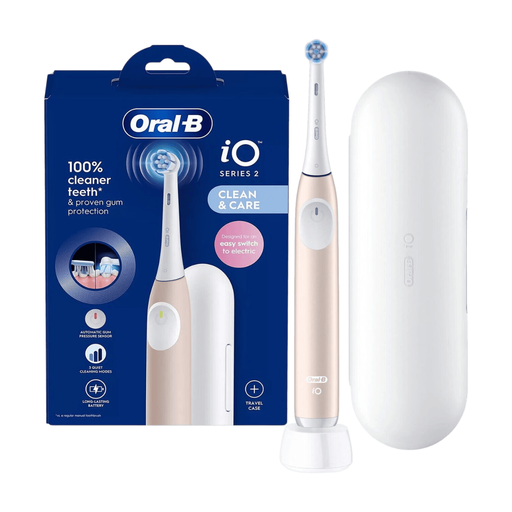
Why it suits this profile: This model focuses on the essentials: three brushing modes, a timer, a pressure sensor and a rechargeable battery. The included travel case is practical for commuting or holidays.
You are not paying specifically for extensive app features. Pressure is shown by a light signal, and the timer works directly on the handle.
Three modes, pressure sensor, timer, lithium-ion battery and a compact travel case.
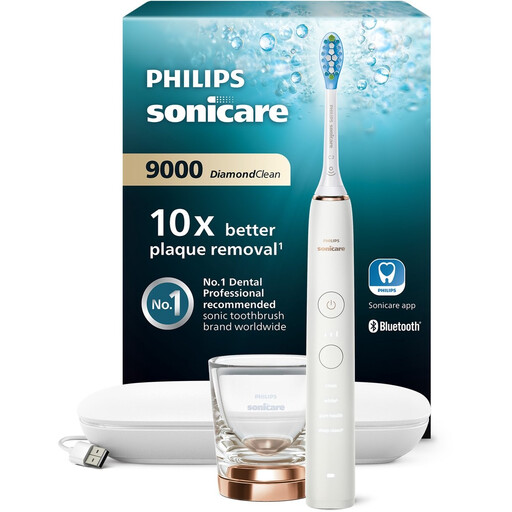
Why it suits this profile: The combination of a sonic brushing method, four modes, three intensity levels and a Bluetooth app makes this model suitable for adults who want to fine-tune their brushing routine.
The pressure sensor and adjustable intensity give you greater control if you have sensitive gums. The BrushSync feature can also provide a replacement reminder.
Four brushing modes, three intensity levels, timer, Bluetooth app and up to 14 days’ use according to the product specification.
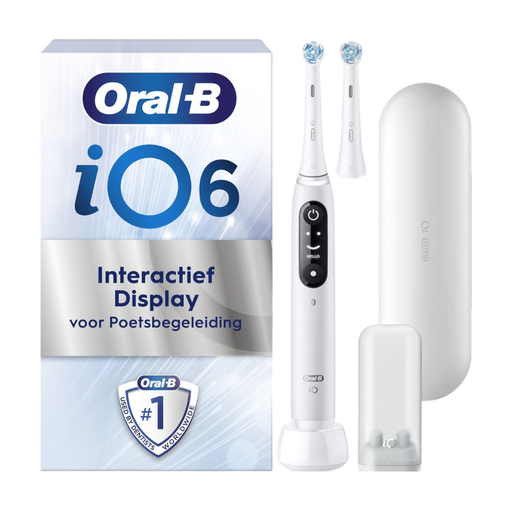
Why it suits this profile: The interactive display, five brushing modes, real-time app functionality and included travel accessories are ideal for users who want plenty of feedback and adjustment options.
The display shows brushing time and battery status directly. This means you are less dependent on an app to check the essentials.
Five modes, pressure sensor, interactive display, two replacement brush heads, travel case and charging station.
We have put together a complete, up-to-date list of products that fully meet these strict selection criteria and the applicable European safety regulations.
Start with the lowest intensity and hold the brush head gently against your teeth. You do not need to press hard; the device’s movements do the work. A toothbrush with a pressure sensor can help you monitor how much force you are using, but it is not a substitute for personalised advice from a dentist.
Replace the brush head according to the manufacturer’s instructions. Rinse the brush head after use and store it dry. Stop using the toothbrush if irritation or bleeding persists, and ask a dentist for advice.
Battery life per charge varies considerably between models. Philips states that certain DiamondClean 9000 versions can last up to 14 days. The Oral-B iO 6 lists a battery life of 60 minutes. The overall lifespan of the device also depends on battery wear, maintenance and correct charging. On many models, the battery is integrated and is not designed to be replaced by the user.
That depends on how you use it. An app is particularly useful if you want to review feedback on brushing time, pressure or zones. If all you need is a timer and pressure sensor, a model without an extensive app can work just as well. So do not compare only the purchase price; also consider the cost of compatible replacement brush heads and any accessories.
This depends on the battery and how often you brush. A model with around two weeks of battery life needs charging less often than a version with a shorter battery life. For everyday use at home, a charging station is practical; when travelling, a charging case or USB solution may be more convenient. Always consult the manual for the correct charging method.
