
Vandaag of morgen in huis

Kwaliteit gegarandeerd

Welkomstaanbiedingen ontgrendelen: GRATIS bezorging | Tot 80% korting | Gratis 30 dagen JoyPlus-proefperiode
Download de app
An electric toothbrush can make your brushing routine easier, but not every model suits every user. A low price says little about the features available, while a more expensive model is not automatically better suited to your brushing habits. Focus instead on verifiable specifications such as the pressure sensor, timer, battery life, brushing modes and included accessories.
Brands often quote high numbers of movements or pulses. For example, a sonic toothbrush may advertise up to 62,000 movements per minute, while a rotating model has a lower figure. These numbers are not directly comparable: the brushing technique, brush shape and way the toothbrush is used all differ.
So also check whether the toothbrush comes with a suitable brush head, offers multiple intensity levels and includes clear instructions for use. According to some brands’ own research, certain models may remove more plaque or discolouration than a manual toothbrush. These results are brand claims and may vary from person to person.
An electric toothbrush with a pressure sensor is particularly useful if you tend to brush too hard. The sensor may use a light, vibration or message on the handle. This does not guarantee a particular result, but it does provide a practical reminder to reduce the pressure.
Before buying, check how the warning is provided. When you are travelling or using a shared bathroom, a subtle vibration may be less noticeable than a visual indicator. If you have sensitive gums, also choose a soft brush head and a low intensity setting. If irritation persists, it is advisable to seek advice from a dentist.
A rechargeable toothbrush may seem attractively priced until you have to buy a travel case, additional handle or replacement brush heads separately. So check:
A sensor is a useful basic feature for everyday use. According to the product description, models such as the Oral-B iO range indicate whether you are brushing with too much pressure, too little pressure or the correct amount. The Oral-B iO 6N also has five modes, including Daily Clean, Intense Clean, Sensitive, Super Sensitive and Whitening.
With a Philips Sonicare toothbrush, pressure is often indicated by a vibration or visual alert. The Philips Sonicare 5500 Duo Pack has two modes: Clean and White. The Philips Sonicare 7300 offers two modes with three intensity levels per mode. More modes are not automatically necessary; they are mainly useful if you genuinely switch between everyday cleaning, whitening or caring for sensitive gums.
An electric toothbrush with a timer helps you avoid brushing for too short a time. Many models stop or provide a signal after two minutes and alert you every 30 seconds that you can move to another area of your mouth. Check whether the timer only measures the total brushing time or also provides an interval signal.
A model with zone guidance can be helpful if you often miss part of your teeth. Smart models may provide additional feedback through an app. Use this information as a guide, not as a replacement for a professional check-up.
A rechargeable toothbrush with a lithium-ion battery is practical at home and when travelling. Usage times vary between products. For example, the Oral-B iO 6N states approximately 60 minutes of use and a charging time of 12 hours. The Philips Sonicare 5300 range states up to approximately three weeks of use per full charge, depending on how frequently it is used.
Also pay attention to the charger. A charging glass, docking station and travel case with charging function are different accessories. Only use the charger supplied with the product or approved by the manufacturer, and keep the charging station dry.
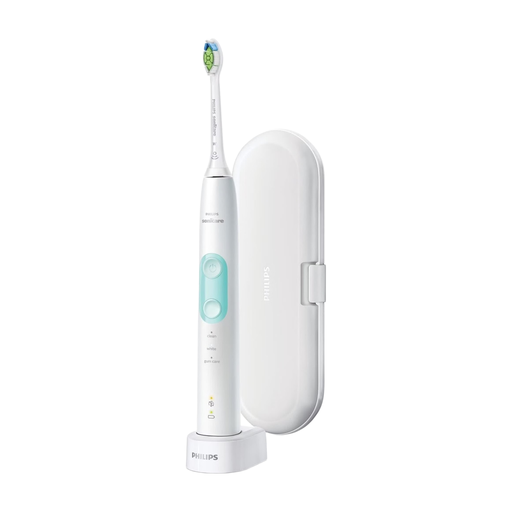
Why it suits this profile: This model combines three brushing modes, a pressure sensor, a timer and a travel case, without focusing on an app or extensive smart features.
The product details state that it has a 2-minute timer, interval signals and a warning when too much pressure is applied. This means you do not have to focus solely on marketing figures for brushing movements.
Clean, White and Gum Care modes; two brush heads included; battery life of up to approximately two weeks according to the specifications.
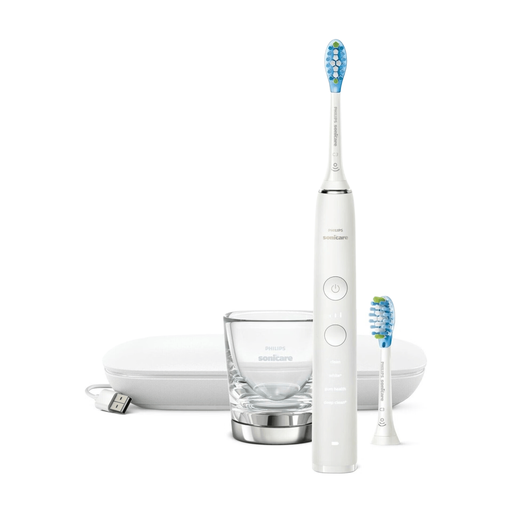
Why it suits this profile: Suitable for anyone looking for a Philips Sonicare toothbrush with app connectivity, multiple modes, a charging glass and a travel case.
The product information mentions both a pressure sensor and a timer. The app can track your brushing habits, but the basic functions remain available without constant app monitoring.
Four brushing modes, Bluetooth, two brush heads, pressure detection and a charging glass according to the listed product specifications.
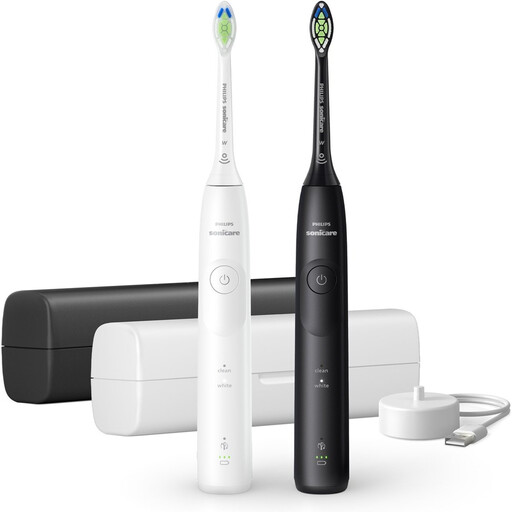
Why it suits this profile: A practical duo-pack electric toothbrush for two adults who each want to use their own handle.
You do not need to buy a second handle separately. The set includes two handles, two brush heads, a charging station and two travel cases.
Clean and White modes, pressure sensor, 30-second timer and battery life of up to three weeks according to the product details.
We have put together a complete, up-to-date list of products that fully meet these strict selection criteria and the applicable European safety regulations.
The lifespan depends on the battery, charging station, brush head and daily use. Replace the brush head according to the manufacturer’s instructions, often around every three months or sooner if the bristles are worn. According to the product information, the products mentioned come with a statutory minimum two-year guarantee; additional rights may arise under Dutch law.
In addition to the purchase price, you mainly pay for replacement brush heads and electricity. The electricity used by a rechargeable toothbrush is generally a smaller cost than replacement brush heads. So compare the price and availability of suitable replacement heads before placing your order.
A sonic toothbrush may have a sensitive setting, low intensity and a soft brush head. This may make the model suitable for your preferences, but it is not a medical treatment. Brush gently and stop if you experience pain or irritation. If problems persist, it is best to consult a dentist.
