
Vandaag of morgen in huis

Kwaliteit gegarandeerd

Welkomstaanbiedingen ontgrendelen: GRATIS bezorging | Tot 80% korting | Gratis 30 dagen JoyPlus-proefperiode
Download de app
An electric toothbrush can make brushing easier, but not every model suits every user. The difference isn't just in the number of vibrations or the price. A pressure sensor, timer, battery life, brush head type and the cost of replacement heads all determine whether a purchase remains practical in the long run.
If you only go by terms like "extra thorough cleaning" or a high number of movements per minute, you risk paying for features you'll hardly ever use. With these checkpoints, you can compare models in a level-headed way.
A sonic toothbrush with 31,000 or 62,000 movements per minute sounds impressive. Yet you can't directly compare these figures with the rotation and pulsation movements of, for example, an Oral-B iO electric toothbrush. The brushing technique, brush head and guidance method all differ.
So treat the number of movements as technical information, not as standalone proof of a better result. Above all, check whether the brush feels comfortable in your hand and whether you consistently use the right mode.
With an electric toothbrush that has a pressure sensor, the warning might be a light signal, a vibration or an automatic reduction in intensity. So check what the sensor actually does. The Philips Sonicare Series 3100 HX3673/13, for example, states that the vibrations are automatically reduced when you apply too much pressure. Other models mainly give a visual warning.
If you have sensitive gums, a gentle mode can be useful. An electric toothbrush for sensitive gums does not replace advice from a dentist or dental hygienist if you have persistent pain, irritation or bleeding gums.
A low purchase price can become less attractive when compatible brush heads are expensive or hard to find. Also look at what's in the box. An electric toothbrush with a travel case is handy for commuting or holidays, while an electric toothbrush duo pack can make sense for two adults.
Also check the recommended replacement period. In the product information provided, around three months is mentioned for various models, or sooner when the bristles show wear.
A pressure sensor helps you avoid brushing too hard, but how it works varies from model to model. Look out for:
According to the product specifications, the Oral-B iO Series 6 has five modes and a light and vibration sensor. The Philips Sonicare 7100 HX7421/01 offers four brushing modes and three intensities. More settings are only valuable if you actually use them.
An electric toothbrush with a timer helps you avoid stopping too soon. Many models give a signal every 30 seconds to switch zones, and stop or signal after two minutes. The Philips Sonicare Series 3100 combines a two-minute Smartimer with a 30-second QuadPacer.
A timer makes your brushing routine clearer, but it doesn't remove the need to move gently across all tooth surfaces.
Compare the battery life with your usage situation. The Philips Sonicare Series 3100 states a usage time of up to 14 days and has a compact USB charging solution. The Philips Sonicare 5500 duo pack states up to three weeks of use on a full charge. The stated usage time depends on brushing frequency, intensity and model settings.
For travel, a travel case, USB charging and a battery indicator are practical details. Also check whether the charger is suitable for the sockets you use, and keep the charging base away from water.
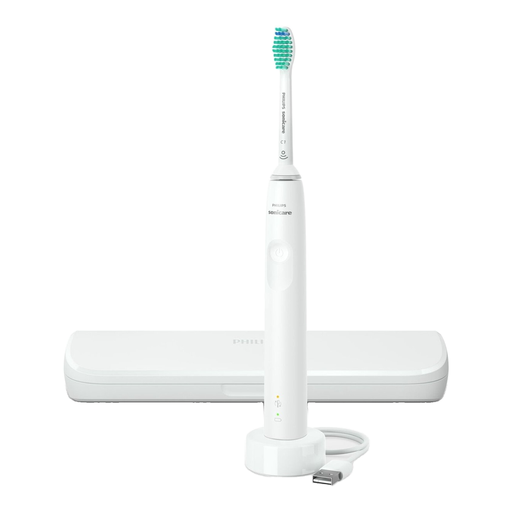
Why this fits the profile: A straightforward model with timer, pressure sensor, USB charging station and a battery life of up to 14 days according to the product description.
The key basic functions are clearly specified, without you paying for lots of extra brushing programmes.
31,000 movements per minute, two-minute timer, 30-second zone pacing and travel case.
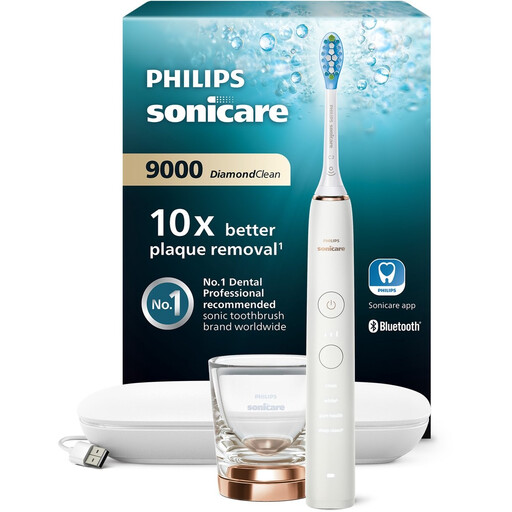
Why this fits the profile: Aimed at users who value app integration, multiple modes and adjustable intensity.
The choice of four modes and three intensities makes the features concrete; you're not just paying for a high vibration number.
62,000 movements per minute, pressure sensor, BrushSync replacement reminder and battery life of up to 14 days according to the product information.
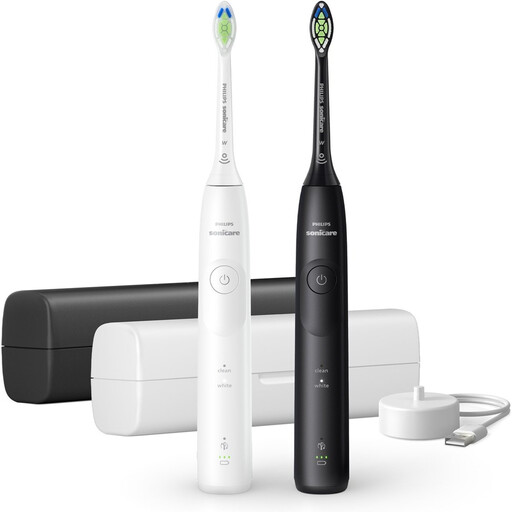
Why this fits the profile: A practical choice for two users or for anyone who wants to combine a whitening mode with an extra brush head.
The packaging states two handles, two brush heads and two travel cases, so the contents can be checked in advance.
Two brushing modes, pressure sensor, timer, two handles and a stated battery life of up to three weeks.
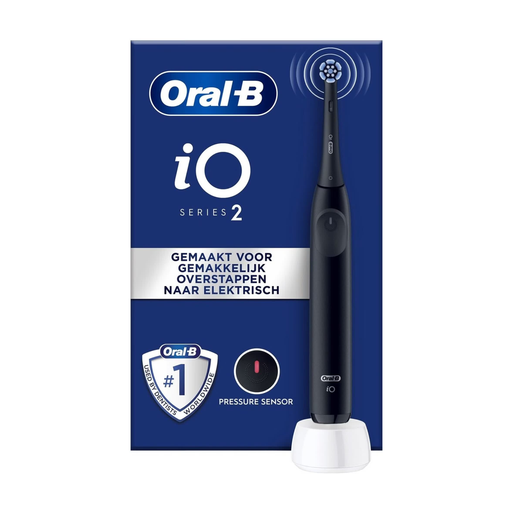
Why this fits the profile: Suitable for adults who want a compact round brush head, three intensity levels and simple operation.
The three clear intensities make operation straightforward and limit the need to pay for unused programmes.
Three speeds, pressure sensor, timer with signals every 30 seconds and a round brush head.
We've put together a full, up-to-date list of products that fully meet these strict selection criteria and current European safety regulations.
Brush with light pressure and let the electric toothbrush do the work. Rinse the brush head after use and let it dry. Don't share a brush head with anyone else. Replace the brush head according to the manual, usually around every three months or sooner if you notice visible wear.
With a whitening mode, pay attention to the manufacturer's wording. According to Philips' own information, the W2 Optimal White brush head is designed to help remove stains and discolouration. That's a product claim, not a guarantee of a particular shade. If you're unsure about discolouration or sensitivity, see a dentist for appropriate advice.
That depends on the battery, charging mechanism, use and maintenance. Don't just look at the stated battery life, but also at the availability of replacement brush heads and the warranty. For many electric toothbrushes in the Netherlands and the EU, the statutory warranty is at least two years, although additional conditions may vary per product.
A sonic toothbrush can have a Sensitive mode or low intensity. Start gently and use little pressure. If irritation, pain or bleeding gums persist, it's wise to consult a dentist or dental hygienist. No device replaces personal oral care advice.
In addition to the purchase price, you pay for brush heads and electricity. The power consumption is usually a smaller part of the total cost. Above all, compare the price and availability of compatible brush heads, especially if you're buying a duo pack.
