
Vandaag of morgen in huis

Kwaliteit gegarandeerd

Welkomstaanbiedingen ontgrendelen: GRATIS bezorging | Tot 80% korting | Gratis 30 dagen JoyPlus-proefperiode
Download de app
An electric toothbrush can be a practical switch if you are moving on from a manual toothbrush, often brush for too little time or struggle to clean every area equally thoroughly. However, paying more for a model with lots of modes, apps or eye-catching claims does not automatically give you a better daily routine.
Your choice mainly depends on your brushing technique, sensitivity, family situation and the availability of suitable replacement brush heads. Below, you can find out which specifications are verifiable and which marketing details are best treated with caution.
A toothbrush with several brushing modes may sound appealing, but having more settings does not automatically make the device more suitable. For everyday use, a standard mode and a gentler mode are often enough. Extra features are mainly relevant if you will actually use them, for example if you have a sensitive mouth or different brushing preferences.
Pay attention to the terminology too. “Sensitive”, “gentle” and “super sensitive” are brand names or programme names, not universal quality standards. So check how many modes there are and how you select them.
A rechargeable electric toothbrush may last for several days or weeks according to the product specifications. Actual battery life depends on brushing frequency, the intensity selected and the condition of the battery. You should therefore also check the charging time, the type of charging station and whether a travel case is included.
For models with a USB-C connection, it is important that the charging port is completely dry before you connect the cable. A waterproof handle does not automatically mean that the charger is water-resistant.
Brands regularly compare their models with a manual toothbrush and quote percentages relating to plaque or gums. Do not treat such figures as a general guarantee. When a brand quotes a result, the source is according to the brand’s own research. The outcome may depend on the method used, brushing time and user group.
You should therefore also consider practical features such as an electric toothbrush with a pressure sensor, a timer and the price of replacement brush heads.
A pressure sensor gives a light or vibration signal when you press too hard. Some models also automatically reduce the speed. This is useful for beginners and for people who want to adopt a gentler brushing technique. However, a sensor is no substitute for calm movements: place the brush head against your teeth and let the device do the work.
According to the product specifications, the Oral-B iO2 has an automatic pressure sensor that reduces the speed and signals red when too much pressure is applied. The iO5 and iO6 also indicate whether the pressure is too high, too low or just right.
An electric toothbrush with a timer helps you stick to the recommended two-minute brushing time. An interval signal every 30 seconds divides your mouth into four zones. This is a simple feature with immediate practical value, particularly if you tend to miss certain areas.
Check whether the timer stops automatically, vibrates or works with a light signal. For children, a musical timer or visual feedback can provide extra motivation, but adult supervision is still necessary.
A sonic toothbrush uses rapid vibrations, while Oral-B iO models combine a round brush head with rotating, vibrating and pulsating movements. Neither system is automatically better for everyone. The shape of the brush head, the softness of the bristles and your own preference are at least as important.
Replace the brush head according to the product instructions, generally around every three months or sooner if the bristles are worn. Before buying, check that suitable replacement brush heads are readily available and fit within your budget.
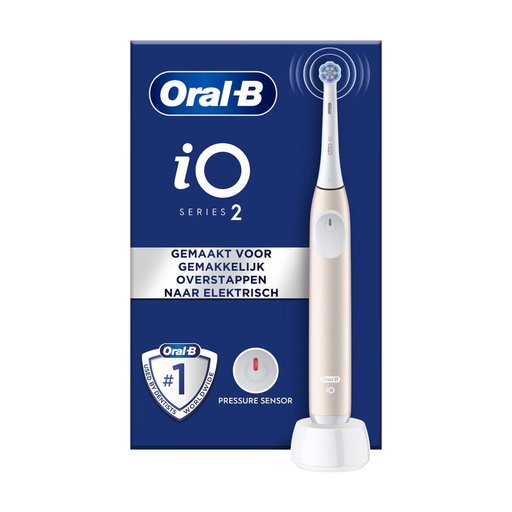
Why it suits this profile: One-button operation and three intensity levels make this electric toothbrush straightforward for anyone switching from a manual toothbrush for the first time.
You are not paying for an app or a large number of programmes. The product specifications do include a pressure sensor and a timer with signals every 30 seconds.
Three quiet intensity levels, automatic pressure sensor and two-minute timer; suitable for adults.
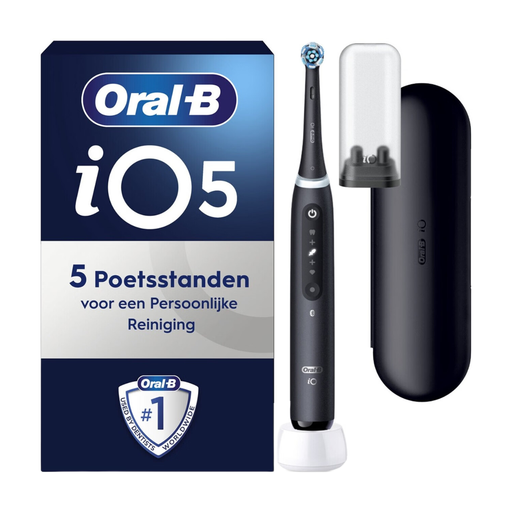
Why it suits this profile: This model is aimed at users who want to combine multiple settings and digital guidance with a round Oral-B iO brush head.
The five brushing modes are clearly labelled, and the pressure sensor distinguishes between brushing that is too gentle, too hard and just right. However, check whether you really want to use the app features.
Five modes, light and vibration sensor, lithium-ion battery with a stated operating time of 60 minutes, and timer.
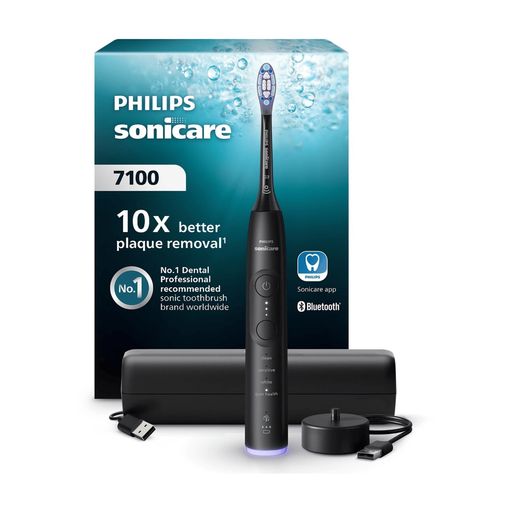
Why it suits this profile: The combination of a travel case, multiple modes and intensity levels suits adults who use their toothbrush both at home and on the go.
The product specifications list four brushing modes, three intensity levels and a pressure sensor. This lets you adjust the settings without relying solely on marketing percentages.
62,000 movements per minute according to the product specification, four modes, three intensity levels and a travel case included.
An electric children’s toothbrush should be suitable for the child’s age, hand size and motor skills. Models for children aged 3 and over often have a smaller brush head, extra-soft bristles, a simple timer and a visible pressure sensor. According to the product information, the Oral-B Vitality Pro Kids Spider-Man and Frozen are intended for children aged 3 and over and have a timer with signals every 30 seconds.
For children aged 6 and over, there are models such as the Oral-B iO Kids 6+, with three modes and a musical timer. Always check the age recommendation on the product page and keep small, loose brush heads out of reach of young children. A parent should supervise young children while they brush their teeth.
A waterproof electric toothbrush can be practical when rinsing, but do not use a charging station near water. The Rushi R-C31 is listed as IPX7 water-resistant; at the same time, the manufacturer warns that the USB-C port must be dry before charging.
We have put together a complete, up-to-date list of products that fully meet these strict selection criteria and the applicable European safety regulations.
The handle and battery can function for several years, but this depends on use, maintenance and battery wear. Replace the brush head usually every three months or sooner if the bristles are worn. Also check the handle, cable and charger regularly for damage. The supplied product information states that several Oral-B models come with a legal guarantee of at least two years under EU consumer law.
Choose a model with a gentle or extra-gentle mode, a pressure sensor and a suitable brush head. Start at a low intensity and do not press harder than necessary. Persistent irritation or bleeding is not a reason simply to choose a different mode; stop using the toothbrush and ask a dentist for advice.
As well as the handle, you pay for replacement brush heads and electricity. Charging costs are generally limited, but brush heads account for a larger share of the total cost of use. Before buying, check the price, availability and compatibility of the correct replacement heads.
