
Vandaag of morgen in huis

Kwaliteit gegarandeerd

Welkomstaanbiedingen ontgrendelen: GRATIS bezorging | Tot 80% korting | Gratis 30 dagen JoyPlus-proefperiode
Download de app
An electric toothbrush can make your brushing routine more straightforward, but not every model suits every user. A low price says little about the available features, while a long list of settings does not automatically mean you will brush more comfortably or thoroughly. Focus instead on control, ease of use, battery life and the cost of compatible replacement brush heads.
Brands often advertise high numbers of movements per minute. This is a verifiable product specification, but the figure does not tell you everything. The shape of the brush head, intensity settings and the way you move the brush along your teeth all help determine how practical the device is for everyday use.
A sonic electric toothbrush also feels different from a rotating model. Sonic versions make rapid vibrating movements, while some Oral-B models combine a round head with rotating, pulsating and vibrating movements. So do not choose based solely on the highest number. Consider the brushing technique you can use comfortably and consistently.
An electric toothbrush with long battery life is useful when travelling, but check how the charger works. Some models use USB-C, while others come with a charging station. Also look out for warnings telling you to make sure a USB port is completely dry before charging.
The stated battery life generally depends on how the toothbrush is used. Daily brushing, multiple users or more intensive settings can mean the actual operating time differs from the advertised figure. Also check whether a travel case, charging cable and charging station are actually included.
A smart electric toothbrush may offer a display, Bluetooth connectivity or an app. This can be useful if you want guidance while brushing, but it also makes the device more complex. Ask yourself whether you really want to track zones, pressure and brushing time. A simple electric toothbrush with a timer may already be sufficient for many adults.
Pay attention to wording such as ‘protects the gums’ or ‘removes more plaque’. These are brand claims. According to Philips’ own research, the Sonicare Series 3100 removes up to three times more plaque than a manual toothbrush. Results may vary from person to person and depending on brushing habits. Treat such claims as additional information rather than a guarantee.
A timer helps you stick to the recommended brushing time. Many models also give a signal every 30 seconds to tell you to move to another zone. According to the product information, the Philips Sonicare Series 3100 has a two-minute Smartimer and a 30-second QuadPacer. The Oral-B iO2 also has a timer and signals every 30 seconds.
A toothbrush with a pressure sensor is particularly useful if you tend to press too hard. Check how the warning is displayed. According to the product description, the Oral-B iO2 gives a red signal and reduces its speed when too much pressure is applied. According to Philips, the Philips Sonicare Series 3100 automatically reduces its vibrations when excessive pressure is detected. However, a sensor is no substitute for a gentle brushing technique.
An electric toothbrush with multiple brushing modes may be suitable if you want to switch between everyday cleaning and a gentler setting. Do not just look at the number of modes; consider the available intensity levels too.
The usmile Y10 lists four modes: Clean, White, Soft and Gum Care. According to the product information, the Oral-B iO Series 2 has three intensity levels. The Philips Sonicare 5500 offers two modes: Clean and White. More modes are only worthwhile if you actually use them; otherwise, you may be paying for features that add little to your routine.
A waterproof electric toothbrush is easier to rinse, but water resistance does not mean that every component can be left under water for long periods. IPX7 indicates protection against temporary immersion under specific test conditions; it does not mean you can hold the charging station under the tap.
Always follow the instructions. With USB-C models, dry the connection completely before plugging in the cable. Rinse the brush head after use, leave it to air-dry and do not store the handle wet in a closed travel case for long periods. Replacement brush heads should generally be changed every three months, or sooner if the bristles are visibly worn, according to the relevant manufacturer’s product information.
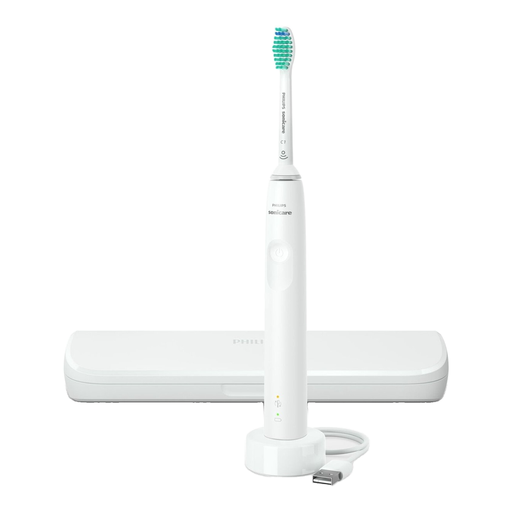
Why it suits this profile: This model offers a straightforward introduction with a timer, pressure sensor, USB charging station and travel case. You get the key features without a complex app or numerous settings.
The focus is not on a long list of modes, but on practical control while brushing. Battery life is stated as up to 14 days; check the current package contents for the included accessories.
Smartimer, QuadPacer, built-in pressure sensor, 31,000 movements per minute according to the product specifications, and USB charging station.
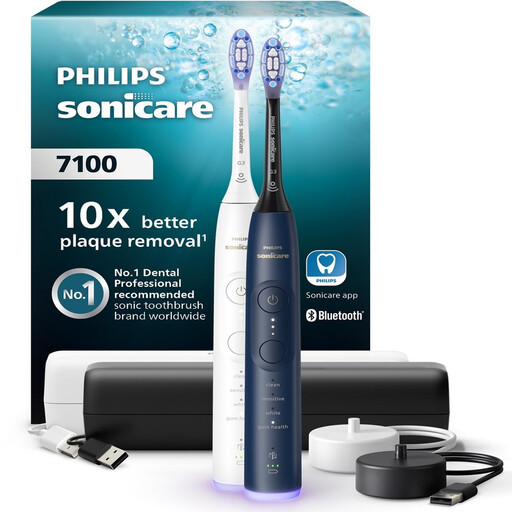
Why it suits this profile: This twin pack is aimed at households wanting two handles, multiple modes and a travel case. The app is relevant for users who appreciate guidance while brushing.
The features are clearly specified: pressure warning, timer, four modes and three intensities. The app is an optional extra, not essential for using the device.
Two handles, four brushing modes, three speeds, pressure sensor, app compatibility and premium travel case according to the product details.
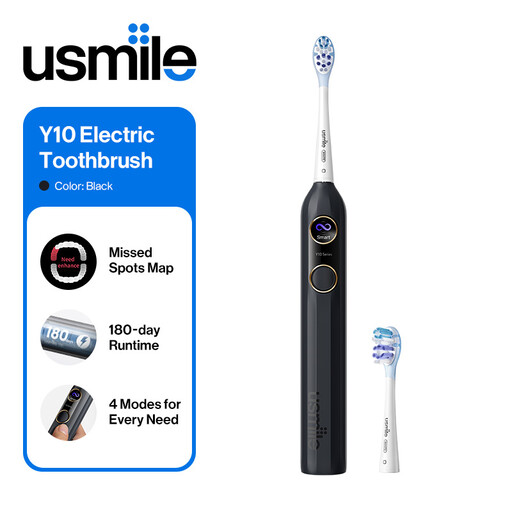
Why it suits this profile: The Y10 is designed for users who value visual feedback, plenty of settings and long battery life. According to the product information, one charge lasts up to 180 days.
The smart screen combines timer and pressure feedback, so the additional features are visible directly while brushing. The USB-C port must be dry before charging.
Four modes, pressure control, smart screen, IPX7 rating and stated battery life of up to 180 days.
The purchase price is only part of the overall cost. Check the following before buying:
We have put together a complete, up-to-date list of products that fully meet these strict selection criteria and the applicable European safety regulations.
Battery life varies considerably from one model to another. The stated figures in the product specifications range from around 14 days for some Philips and Oral-B models to up to 60 days for certain Laifen models and up to 180 days for the usmile Y10. Actual battery life depends on frequency of use, brushing mode and battery condition.
If so, choose a model with a gentle mode and preferably a pressure sensor. Start at a low intensity and do not press the brush hard against your teeth. If irritation, pain or bleeding persists, it is advisable to consult a dentist. A device cannot replace a professional assessment.
No. With normal use, charge the handle when the battery is nearly empty. Allow a USB-C connection to dry completely first and follow the manufacturer’s instructions. Ideally, keep the handle upright in a dry, well-ventilated place and do not store the brush head damp in a closed travel case for long periods.
