
Vandaag of morgen in huis

Kwaliteit gegarandeerd

Welkomstaanbiedingen ontgrendelen: GRATIS bezorging | Tot 80% korting | Gratis 30 dagen JoyPlus-proefperiode
Download de app
An electric toothbrush can make your brushing routine more straightforward, but the differences between models are significant. Some devices only have a timer, while others offer a pressure sensor, multiple modes, an app and a travel case. More features don't automatically mean a model will suit your daily use.
Pay particular attention to three common pitfalls:
A sonic toothbrush moves the bristles back and forth quickly. Philips, for example, states 31,000 or 62,000 brush strokes per minute for various Sonicare models. A rotating model, like many Oral-B models, uses a round brush head with rotating, vibrating and pulsating movements.
These figures can't be directly compared between brands. The number of movements, for instance, says nothing about the noise, the grip or how comfortable a brush head feels. If you have sensitive gums, it's worth looking at:
If you have persistent pain, irritation or bleeding gums, ask your dentist for advice. A toothbrush doesn't replace a professional assessment.
An electric toothbrush with a timer usually gives a signal after two minutes. Some models divide that time into 30-second intervals, so you pay attention to different parts of your mouth. That's a verifiable feature and, for many users, more practical than a simple on/off button.
A pressure sensor can work with light, vibration or automatic reduction of intensity. Check the product information to see exactly what the device does. With the Oral-B iO 5, the sensor uses light and vibration to indicate whether you're brushing too hard, too softly or with the right pressure, according to the product specifications. The Philips Sonicare 3100 states that the device can automatically reduce vibrations when too much pressure is detected.
A rechargeable toothbrush is handy for daily use, but pay attention to the stated battery life and the charging method. A model with a charging station is suitable for a fixed spot in the bathroom. USB charging can be more practical when travelling, as long as the connection stays dry while charging.
Also calculate the cost of replacement brush heads. An attractive purchase price can work out less favourably if special brush heads are expensive or hard to find. Replace the brush head according to the manufacturer's instructions, or sooner if the bristles are visibly worn.
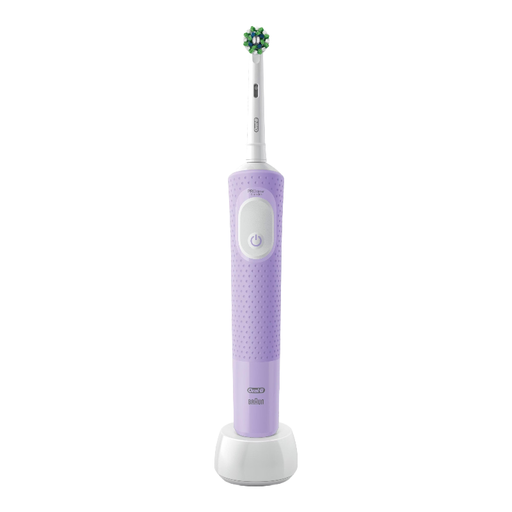
Why this fits the profile: This model focuses on the basics: a rechargeable battery, Sensitive programme, timer and charging station. That makes it suitable for adults who want to switch to electric brushing without an app or extensive settings.
The key features are clearly stated. You're not paying for Bluetooth or lots of brushing modes you might not use.
Sensitive programme, built-in timer, charge level indicator and included charging station.
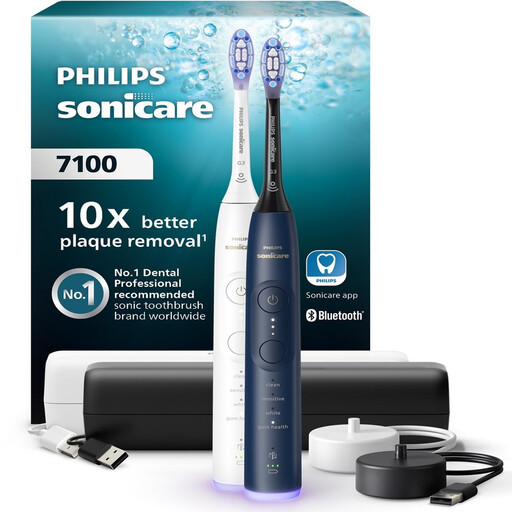
Why this fits the profile: The duo pack includes two handles, two brush heads and a premium travel case. According to Philips, this model features four brushing modes, three intensities, a pressure sensor and connection to the Sonicare app.
The set clearly states which accessories and settings are included. That makes it clear what you're getting for two users.
Two handles, four modes, three intensities, pressure sensor, app support and travel case.
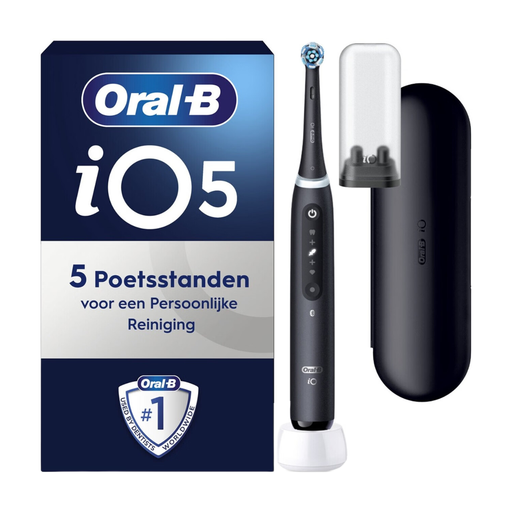
Why this fits the profile: The Oral-B iO 5 is designed for users who want guidance while brushing. According to Oral-B, the model has five modes, a pressure sensor, a timer and connection to the Oral-B app.
The pressure isn't just mentioned in the manual: the product specifications list light and vibration feedback for brushing pressure.
Five brushing modes, round iO brush head, pressure sensor, timer and app support.
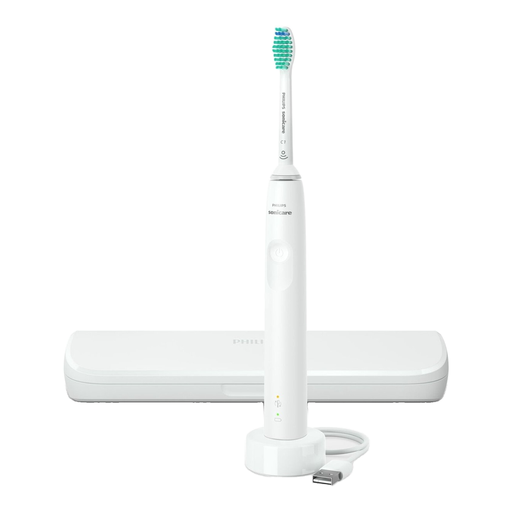
Why this fits the profile: Philips states a battery life of up to 14 days for this model, a compact USB charging solution and a travel case. That suits commuting, holidays and people who don't want to charge every day.
The battery life, USB charger and timer are concretely included in the product information. Do check in advance which plug or adapter suits your travel destination.
Up to 14 days of use according to Philips, pressure sensor, Smartimer, QuadPacer and compact USB charging capability.
We've put together a full, up-to-date list of products that fully meet these strict selection criteria and comply with current European safety regulations.
The lifespan depends on the battery, charging station, water exposure and maintenance. Rinse the brush head after use, keep the charging connector dry and replace the brush head when the bristles are worn. The statutory guarantee in the EU is usually at least two years; check the terms with the product.
Choose a model with a Sensitive mode, low intensity and preferably a pressure sensor. A toothbrush for sensitive gums should be used gently: let the brush do the work and don't press extra hard. If problems persist, it's wise to consult your dentist.
The power consumption of a rechargeable toothbrush is generally limited, but it varies by model and charging behaviour. More important for the total cost of use are the replacement brush heads and any extra accessories. So don't just check the purchase price, but also the availability and price of suitable brush heads.
