
Vandaag of morgen in huis

Kwaliteit gegarandeerd

Welkomstaanbiedingen ontgrendelen: GRATIS bezorging | Tot 80% korting | Gratis 30 dagen JoyPlus-proefperiode
Download de app
An electric toothbrush can help you brush for longer and more evenly, but a higher price doesn’t automatically mean you’ll use all the features. Marketing often focuses on thousands of movements per minute, smart apps and claims about whiter teeth. For a good buy, the most important things to consider are brushing technique, pressure control, the timer, battery life and the cost of replacement brush heads.
A sonic toothbrush with lots of vibrations may sound impressive, but the number of movements per minute doesn’t tell you everything about how easy it is to use. Brushing technique, brush head shape and the way you move the brush along the gumline are just as important.
A rotating electric toothbrush works differently from a sonic model. Round brush heads usually rotate, pulse or oscillate around each tooth. A sonic toothbrush mainly uses rapid vibrations across a wider brush head. The right choice therefore depends on your preferences and brushing habits, not just a technical figure.
An electric toothbrush with an app can give you feedback on brushing time or areas you may have missed. This is useful if you like checking statistics and following guidance. If you stop opening the app after a week, you may be paying for a feature that adds little value.
Also check which features are available without a smartphone. Many models have a timer, multiple intensity levels and a pressure warning built into the handle.
The handle is a one-off purchase; brush heads are an ongoing expense. Check which heads are compatible, how often the manufacturer recommends replacing them and whether they’re easy to find. Oral-B recommends replacing the heads on various iO models after about three months. For Laifen Wave models, a replacement interval of three to four months is given.
Also check what’s included in the box. A set with two handles, such as some duo versions, may be better value for a household than buying two separately.
An electric toothbrush with a pressure sensor warns you when you’re pressing too hard. This might be through a light, vibration or automatic reduction in speed. According to the product description, the Oral-B iO 2 uses a sensor with a light signal and reduces its speed when too much pressure is applied. Oral-B says the iO 5 indicates whether the pressure is too high, too low or just right.
Think of this as a helpful feature, not a guarantee of a particular result. If you have persistent sensitivity, pain or bleeding gums, it’s wiser to speak to a dentist than simply switch to a different brushing mode.
An electric toothbrush with a timer helps you stick to the recommended two-minute brushing time. Many models also signal every 30 seconds to remind you to move to another part of your mouth. This makes the timer useful even if you don’t use an app.
Check that the timer works on the handle and isn’t only available through a paired smartphone. The Oral-B iO 2, iO 3 and various Philips Sonicare models are listed as having a 30-second interval signal.
If you have sensitive gums, a gentle mode or adjustable intensity may help. An electric toothbrush with several brushing modes might offer options for everyday brushing, sensitive teeth or whitening. However, more modes are only useful if you know when you want to use them.
Also consider battery life and charging time. The Oral-B iO 5 is listed as having a lithium-ion battery with around 60 minutes of use and a charging time of about three hours. The Philips Sonicare 7100 is listed with a battery life of 84 minutes. Always check the latest product specifications before buying, especially if you’re looking for an electric toothbrush with a travel case.
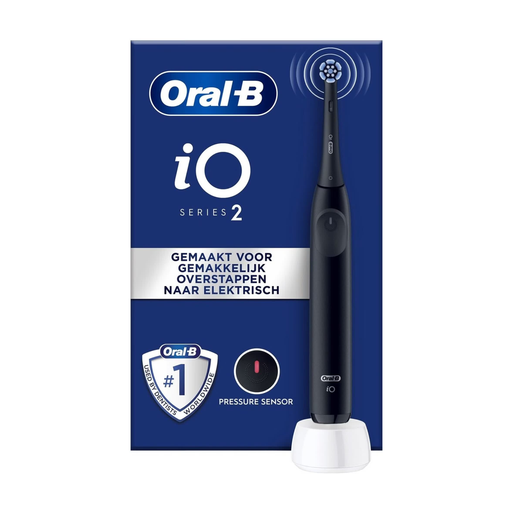
Why it suits this type of user: A straightforward model for anyone switching from manual brushing who mainly wants a timer, pressure warning and a few intensity levels.
The key basic features work on the handle, so you don’t need an app to use the two-minute timer.
3 intensity settings, pressure sensor, timer with signals every 30 seconds and an included charging station.

Why it suits this type of user: Designed for users who value detailed guidance, several brushing modes and a travel set.
Its smart features are linked to practical actions: zone detection, a timer, pressure feedback and battery information.
7 brushing modes, pressure sensor, interactive colour display, app support and a travel case with charging function, according to the product description.
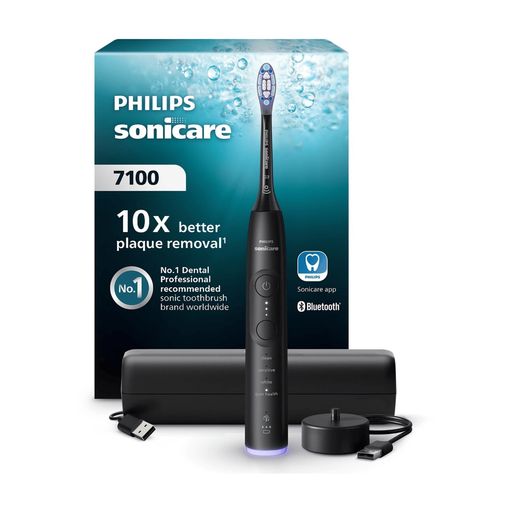
Why it suits this type of user: A good option for anyone looking to combine sonic technology, adjustable intensity and a travel case.
As well as the app, the toothbrush itself offers four modes and three intensity levels, so everyday use doesn’t depend on feedback from your smartphone.
62,000 movements per minute according to Philips, four brushing modes, three intensity levels, pressure sensor, BrushSync and a travel case.
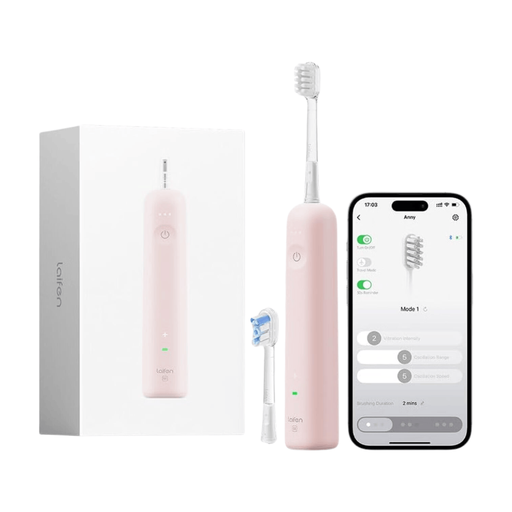
Why it suits this type of user: An interesting option for users looking for oscillating and sonic movements, app connectivity and water resistance.
The box includes two brush heads and, according to the product listing, the model is IP68 water-resistant; do check which accessories are currently included.
Combines oscillation and vibration, with app support, two brush heads and a design for adults.
We’ve put together a full, up-to-date list of products that meet these strict selection criteria and the applicable European safety regulations.
Its lifespan depends on the battery, charging station, water resistance and how often you use it. Replace the brush head according to the product information, often after about three months. Stop using the handle if it’s damaged, gets unusually hot or has a damaged charging cable. The statutory guarantee in the EU is generally at least two years, and you may have additional rights.
Not necessarily. A sonic toothbrush, such as a Philips Sonicare electric toothbrush, uses rapid vibrations. A rotating model, such as various Oral-B iO models, uses a round head with rotating, pulsing and vibrating movements. Choose based on comfort, pressure control, replacement brush heads and the way you prefer to brush.
As well as the purchase price, you’ll mainly pay for replacement brush heads. Work out the cost using the manufacturer’s recommended replacement interval and the number of brush heads needed per user. A model with a low upfront price could therefore cost more over time if compatible brush heads are expensive or hard to find.
