
Vandaag of morgen in huis

Kwaliteit gegarandeerd

Welkomstaanbiedingen ontgrendelen: GRATIS bezorging | Tot 80% korting | Gratis 30 dagen JoyPlus-proefperiode
Download de app
An electric toothbrush can be a handy addition to your daily oral care routine, but not every model suits every user. A long list of brushing modes, a flashy display or a high battery capacity doesn't tell you much about everyday ease of use. If you only pay attention to marketing claims, you could end up with a device that's difficult to clean, needs charging too often, or doesn't have compatible replacement brush heads.
In this guide, the Joybuy Product Recommendation Officer looks at verifiable specifications and practical points to consider. This way, you can compare a sonic electric toothbrush, a rechargeable toothbrush for home use, and a travel model in a level-headed manner.
Five or nine modes sound appealing, but most users end up sticking with just one or two settings. So also check whether the toothbrush has a timer, intensity control and a gentle mode. These features are often more practical than a large number of barely different programmes.
An electric toothbrush with a long battery life is handy for holidays, but also check how it charges. Does the charger fit your socket or USB adapter? Is a charging stand included? And can you easily find replacement brush heads? What's more, a high stated battery life according to the product specification often reflects ideal conditions. Intensity, brushing frequency and battery age can all affect the actual duration.
A rating like IPX7 or IPX8 tells you about protection against water under certain test conditions. It doesn't automatically mean the charger can be used underwater. Keep the charger away from water and follow the manual. A waterproof electric toothbrush should also be rinsed after use and allowed to dry completely.
A toothbrush with a timer usually signals after 30 seconds to move to another part of your mouth, and stops or warns you after two minutes. This helps you avoid brushing for too short a time. The Philips Sonicare Series 3100, for example, mentions a 2-minute Smartimer and a QuadPacer with 30-second intervals.
A timer doesn't replace good technique. Gently place the brush along the gum line and don't apply excessive pressure. If you have persistent sensitivity or any concerns, it's wise to seek advice from a dentist or dental hygienist.
A toothbrush with a pressure sensor can warn you when you're pressing too hard. With the Philips Sonicare 7100 Series, the product description states that the device signals excessive pressure. The Series 3100 also mentions that vibrations are automatically reduced when too much pressure is applied.
Also pay attention to the type of brush head. Soft bristles can be more comfortable for users who want to be gentle on their gums. Claims about improved gums or plaque reduction are brand claims; according to Philips' product description, these models are designed for that purpose. They are not a medical treatment.
For daily use, a rechargeable toothbrush with a clear battery indicator is practical. For travel, a compact charger, an electric toothbrush with a travel case and support for common voltage ranges are useful extras.
Also check:
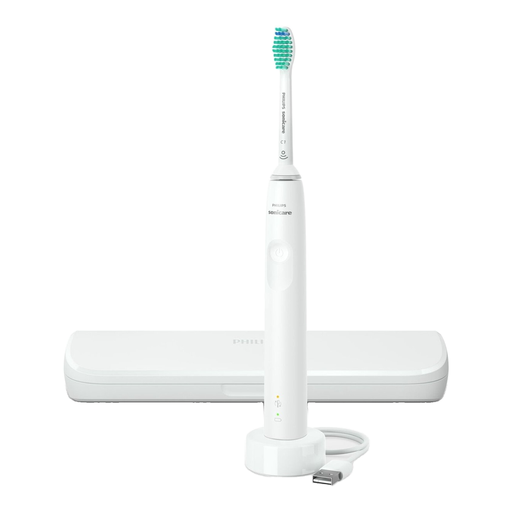
Why this fits the profile: This model combines a compact USB charging solution with a timer, pressure sensor and a stated battery life of up to 14 days according to the product specification. This makes it straightforward for anyone making the switch for the first time.
The key daily functions are clearly stated, without you having to rely solely on a large number of brushing modes. The product description also mentions a brush head replacement reminder.
31,000 brush strokes per minute according to the product specification, a 2-minute timer, pressure sensor and travel case.
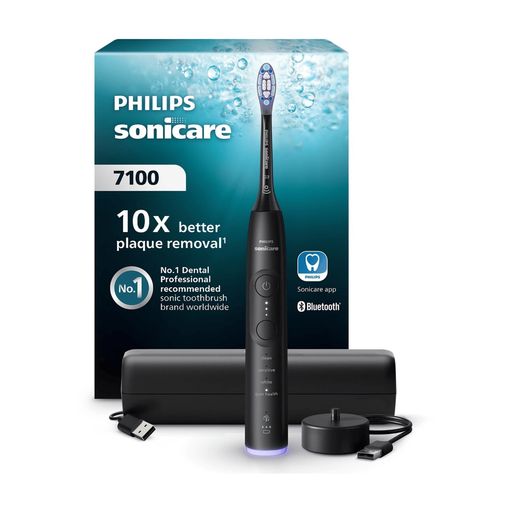
Why this fits the profile: Suitable for adults who value multiple settings, a pressure sensor and app guidance.
The product description specifies four brushing modes, three intensities and a warning for too much pressure. This allows you to base your choice on concrete features rather than just a marketing label.
62,000 brush strokes per minute according to Philips, four modes, three intensities, app connectivity and a travel function.
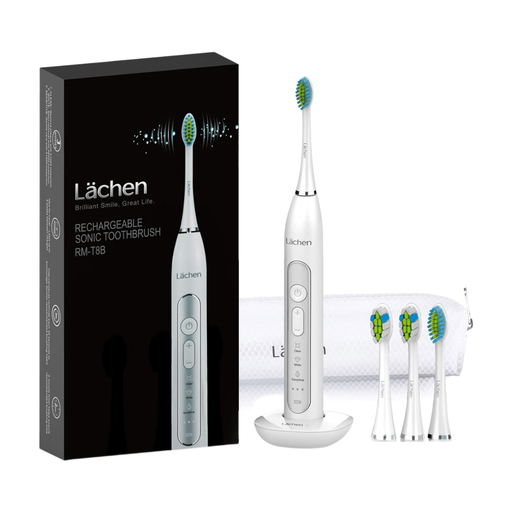
Why this fits the profile: A practical choice for users who want plenty of settings, water resistance and a generous stated battery life for both home and travel.
The product specification lists both IPX7 water resistance and a timer with 30-second intervals. However, do check beforehand whether the exclusively compatible Lachen brush heads are readily available for you.
Nine settings, three intensity levels, USB induction charger, storage pouch and a stated battery life of up to 60 days according to the product information.
We've put together a full, up-to-date list of products that fully meet these strict selection criteria and comply with current European safety regulations.
The lifespan depends on the battery, motor, charging habits and maintenance. Replace the brush head as per the instructions on the packaging, typically around three months or sooner if the bristles become frayed. Clean the handle and brush head regularly and let the parts dry.
A sonic electric toothbrush can help you maintain a consistent brushing time and even motion. However, the result also depends on your brushing technique, the brush head you use and how regularly you brush. Claims about plaque or gums should be read as brand claims, unless independent evidence is available.
In addition to the purchase price, you pay for electricity and replacement brush heads. Charging usually uses very little power; the ongoing costs are mainly for the brush heads. So check before you buy which heads fit, how often they need replacing and what a pack costs.
