
Vandaag of morgen in huis

Kwaliteit gegarandeerd

Welkomstaanbiedingen ontgrendelen: GRATIS bezorging | Tot 80% korting | Gratis 30 dagen JoyPlus-proefperiode
Download de app
An electric toothbrush can make your brushing routine easier, but not every model is right for every user. A low price tells you little about battery life, while a long list of brushing modes doesn’t automatically mean you’ll use the right one. Claims such as ‘professional cleaning’ or ‘whitening’ shouldn’t convince you without further checks, either.
As a Joybuy Product Recommendation Officer, I focus on specifications you can verify: battery life, timer, water resistance, brushing movements, intensity settings and included accessories. That way, you can compare models based on practical use rather than marketing language.
Five modes may sound appealing, but what matters most is whether you can actually adjust the intensity. If you have sensitive gums, a gentle setting may be more useful than extra-powerful vibrations. Also check whether the manufacturer supports its claims about what a mode does. A claim about whitening or gum care comes from the brand; don’t treat it as a guaranteed result.
A manufacturer may state battery life in days, minutes or brushing sessions. These figures aren’t always directly comparable. So check both the stated usage time and the charging method. A rechargeable toothbrush with USB-C is handy for travel, while a charging station takes up more space at home but may be easier to use.
Check the official IP rating. IPX7 means protection against temporary immersion under specified conditions. IPX8 refers to a higher level of protection, but the exact conditions are determined by the manufacturer. The rating doesn’t automatically mean the handle is suitable for being kept underwater for long periods. Dry the device, and don’t charge it while the connection is wet.
An electric toothbrush with a timer helps you brush for the recommended amount of time. Many models give an alert every 30 seconds to prompt you to move to a different section of your mouth, and stop after two minutes. This is especially useful if you tend to brush one side of your mouth for longer than the other.
A sonic electric toothbrush moves the bristles rapidly back and forth. A rotating electric toothbrush usually has a round brush head that rotates or oscillates. The two systems use different brushing movements. Above all, choose a model with a brush head that feels comfortable and replacement brush heads that are readily available.
For example, the Oral-B iO Series 2 has a round brush head, three intensity settings, a pressure sensor and an interval timer. According to Oral-B’s product information, the pressure sensor is designed to alert you when you’re brushing too hard. That’s a product specification, not a guarantee of a particular result for your gums.
An electric toothbrush with long battery life can be practical for everyday use. The BAIR CARE models below state a battery life of 90 to 220 days, while Philips gives the Sonicare 5300 a usage time of three weeks. For exceptionally long claims, check whether they’re based on theoretical use with specific settings.
For travellers, an electric toothbrush with a travel case, a compact charger and a water-resistant body matter more than a large number of settings. Also check what’s actually in the box: an extra handle, brush heads and a case can affect the overall value.
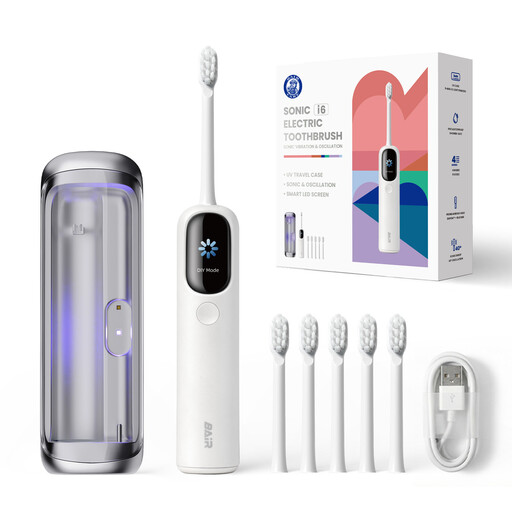
Why it suits this type of user: This model combines a rechargeable design with five brushing modes and a stated battery life of 100 days. It gives beginners useful core features without relying on an app.
As well as the modes, the product information lists a timer and an IPX8 rating. This means you can check important basics rather than relying on a marketing claim alone.
Five brushing modes, timer, rechargeable battery and IPX8 water resistance, according to the product listing.
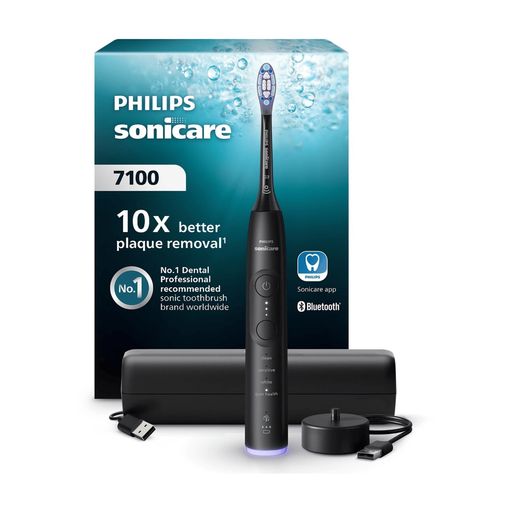
Why it suits this type of user: This sonic electric toothbrush for adults has four modes, three intensity settings, a pressure sensor and a travel case.
The product page clearly lists the brushing modes, intensity settings, timer and pressure sensor. According to Philips, the app helps you track the areas you’ve brushed; this is an additional feature, not an essential requirement.
62,000 movements per minute according to Philips, four modes, three intensity settings and a travel case.
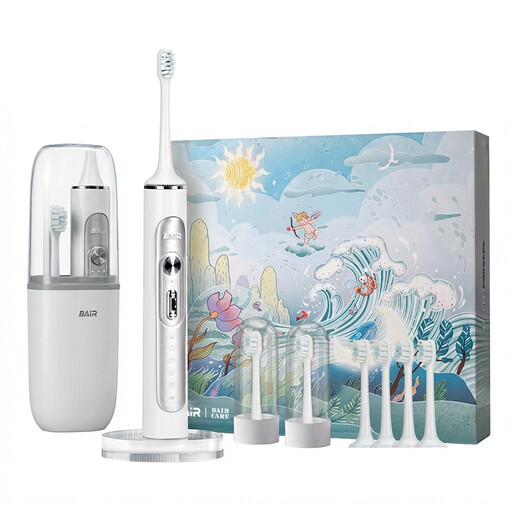
Why it suits this type of user: The combination of five modes, three intensity settings, a timer, a stated battery life of 180 days and a premium travel case makes it well suited to frequent use and travel.
The travel case and IPX7 rating make its suitability for travel easy to check. The battery claim is clearly stated, but actual battery life depends on the brushing mode and how you use it.
Stated battery life of 180 days, three intensity settings, a two-minute timer and an included travel case.
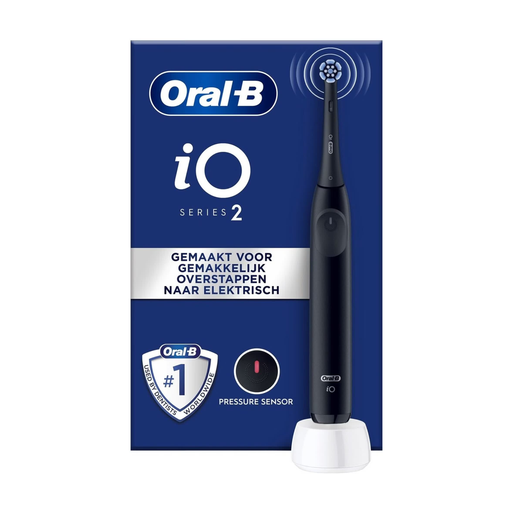
Why it suits this type of user: This rotating model has three intensity settings, an automatic pressure sensor and a timer with alerts every 30 seconds.
According to the product information, the pressure sensor gives a light signal and reduces the speed if you press too hard. This helps you avoid judging brushing pressure by feel alone.
Three quiet intensity settings, a round brush head, pressure sensor and a two-minute timer.
We’ve put together a complete, up-to-date list of products that meet these strict selection criteria and the applicable European safety requirements.
Its lifespan depends on the battery, charging habits, motor and availability of replacement brush heads. Replace the brush head according to the manufacturer’s instructions, usually after about three months or sooner if the bristles become misshapen. Stop using the toothbrush if the handle, charging cable or brush head is damaged.
It varies considerably by model. A compact rechargeable toothbrush may last for a few weeks, while some models have a much longer stated battery life. Charge the device according to the instructions and check that the charging port is dry. Long battery life is particularly handy if you travel often or don’t want a charging station on your bathroom sink.
As well as the purchase price, replacement brush heads are the main ongoing cost. So compare how many heads are included, which compatible heads are available and how often they need replacing. A model with lots of modes only makes financial sense if you’ll actually use those features.
