
Vandaag of morgen in huis

Kwaliteit gegarandeerd

Welkomstaanbiedingen ontgrendelen: GRATIS bezorging | Tot 80% korting | Gratis 30 dagen JoyPlus-proefperiode
Download de app
An electric toothbrush can be useful if you find it difficult to brush every area for the same amount of time. However, you may sometimes be paying mainly for features you rarely use. A smart app does not automatically make a device suitable for your family, and long battery life says nothing about the availability of replacement brush heads.
As a Joybuy Product Recommendation Officer, I filter product information according to verifiable features. This helps you see which specifications matter and which purchasing pitfalls you can easily avoid.
Brands regularly quote percentages for plaque removal, whiter teeth or healthier gums. Such figures do not automatically apply to every user. When a product includes a claim of this kind, it refers to information from the product description or, where stated, according to the brand's own research. Your brushing technique, brush head, toothpaste and brushing time also play a part.
So start by looking at features you can verify: a timer, a pressure sensor, the number of brushing modes, the battery and the accessories included.
An electric toothbrush is a recurring purchase. According to the product information supplied, brush heads often need to be replaced approximately every three months, or sooner if the bristles are worn. Check the following before buying:
A low purchase price can become less attractive if suitable brush heads are difficult to find.
Bluetooth, a colour display and a brushing map may be interesting, but only if you actually use them. For many people, an electric toothbrush with a pressure sensor and an electric toothbrush with a timer are more important than extensive app features.
Also watch out for contradictory or unclear information. For example, ‘long battery life’ can mean something different from one model to another. Always check whether the stated time refers to days, minutes of use or a specific usage frequency.
A pressure sensor warns you when you are pressing too hard. According to the product description, the Oral-B iO2 Calm Pink gives a red signal and reduces its speed when too much pressure is applied. On the Oral-B iO 5N, the sensor indicates whether the pressure is too high, too low or appropriate.
This is particularly relevant if you are used to scrubbing firmly or are looking for an electric toothbrush for sensitive gums. A pressure sensor is not a substitute for dental advice. If irritation or bleeding persists, it is advisable to consult a dentist.
A timer helps prevent you from brushing for too short a time. Many models give a signal every 30 seconds to tell you to move to another zone. The Philips Sonicare HX3651/11 has a SmarTimer and QuadPacer; the Oral-B iO2 also uses signals for each brushing zone.
The recommended brushing time varies according to the product information: Oral-B and Philips models generally specify two minutes, while some SAKYPRORAL models have a three-minute timer. Choose the setting that matches the instructions and the user's routine.
A rechargeable electric toothbrush means you do not need loose batteries. Check the stated usage time, charging time and type of charger. If you travel regularly, an electric toothbrush with a travel case and a USB or charging function can be practical.
The Oral-B iO Series 2 Calm Pink comes with a compact travel case. According to the product information, the Philips Sonicare DiamondClean 9000 has a premium travel case that can also be used for charging. The SAKYPRORAL G5S models state a battery life of up to 150 days and include a travel case; this is a product specification provided by the seller and is not a guarantee for every usage situation.
A rotating toothbrush uses a round brush head with rotating and pulsating movements. A sonic toothbrush works with rapid vibrations. Neither technology is automatically suitable for everyone. Pay particular attention to:
An Oral-B iO toothbrush uses a round head and magnetic micro-vibrations. A Philips Sonicare electric toothbrush works sonically and offers several modes on certain models.
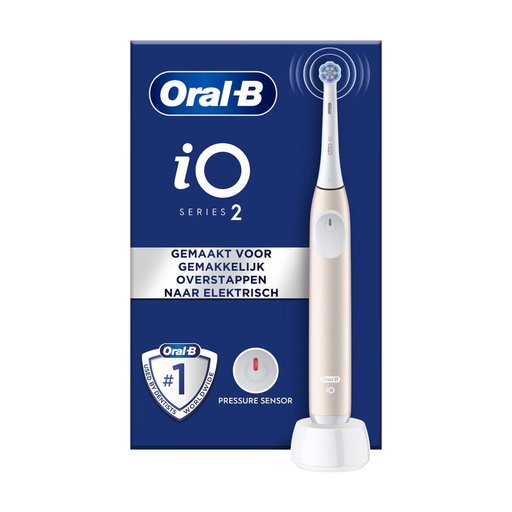
Why it suits this profile: Simple one-button operation, three intensity levels and a timer make this model easy to use for anyone switching from manual brushing.
You are not paying for an app or display, but you do get an automatic pressure sensor and signals every 30 seconds.
Three gentle intensity levels, rechargeable battery, timer and at least two years' statutory warranty according to the product information.
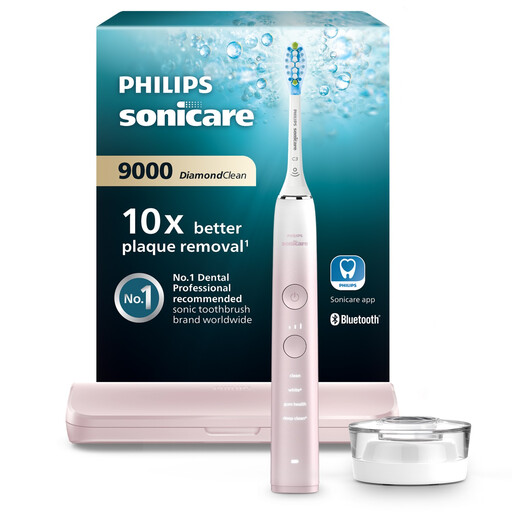
Why it suits this profile: Suitable for adults who want to combine multiple brushing modes, Bluetooth guidance and a rechargeable travel case.
The product information clearly lists four modes, a pressure sensor, a timer and a travel case, so you can link the extra cost to specific features.
Four brushing modes, Bluetooth, pressure feedback, a two-minute timer and a premium rechargeable travel case.
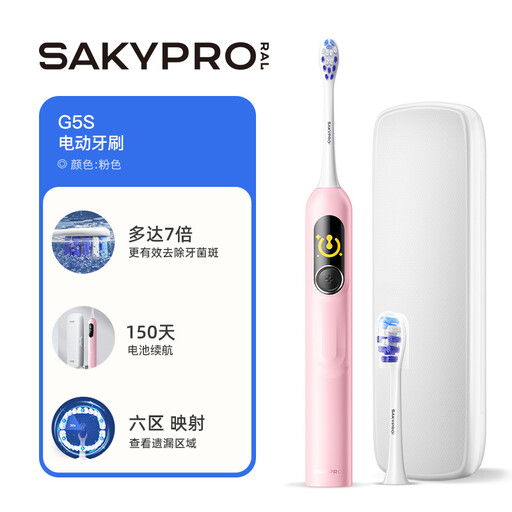
Why it suits this profile: Useful for families, teenagers and travellers looking for a pink electric toothbrush with a display, brushing map and long stated battery life.
The included travel case means you do not need to buy travel accessories separately. However, check its suitability for each family member's age beforehand.
LED display, real-time brushing map, three-minute timer, sonic operation and up to 150 days' battery life according to the product specification.
For children, an adult model is not always suitable. An electric children's toothbrush usually has a smaller handle, a more compact brush head and a gentler mode. According to the product information, the Oral-B Vitality Pro Frozen is intended for children aged three and over, under supervision. The Philips Sonicare For Kids HX6322/04 is a Bluetooth model with two brush-head sizes. Always check the age limit, keep small parts out of reach of young children and do not leave children unsupervised while brushing.
We have put together a complete, up-to-date list of products that fully meet these strict selection criteria and the applicable European safety regulations.
The handle and built-in battery do not have a fixed lifespan that is the same for every model. According to the product information for many of the models mentioned, the brush head should generally be replaced every three months. Look out for wear, charging problems, damage and unusual heat build-up. Do not use a damaged device or cable.
In addition to the purchase price, you pay for replacement brush heads and potentially a new charging accessory. Calculate the cost based on the number of users, the recommended replacement frequency and the price of compatible heads. A twin pack can be practical for two adults, while a children's model needs its own brush heads.
That depends on the individual and the mode selected. A sonic toothbrush with a soft or sensitive setting may feel comfortable, but product claims about comfort are not personal medical advice. Use light pressure and contact a dentist if sensitivity persists.
