
Grout and localised stains
You mainly want to scrub grout, edges or individual tiles, rather than clean the whole floor every time. Bosch says the UniversalBrush is suitable for tiles and grout; Kärcher describes a stone roller for a specific model.


For grout, edges and localised grime, a compact electric detail brush is a good fit. For regular wet cleaning of a flat tiled floor, an electric mop offers a different approach, while a vacuum mop makes more sense if you often need to deal with both crumbs and wet spills. A steam mop may be suitable for baked-on dirt on a sealed floor that can be steam-cleaned, but it won't pick up crumbs. Also consider how easy it is to manoeuvre around furniture and maintain, and check the CE mark and instructions for the specific model.
You mainly want to scrub grout, edges or individual tiles, rather than clean the whole floor every time. Bosch says the UniversalBrush is suitable for tiles and grout; Kärcher describes a stone roller for a specific model.
You want to wet-clean a small floor area and are considering how easily the appliance manoeuvres around furniture and how much maintenance it needs after use. Philips says the OneUp XV3101/01 is suitable for smooth tiles.
You want to deal with dry dirt and wet mess in the same cleaning session. Rowenta describes the X-Clean 2 as an appliance that vacuums and mops; floor cleaners still need their components maintained.
Choose this if: grout, edges and individual dirty tiles are your main concern.
Bear in mind: a small brush is no efficient substitute for mopping the whole floor.
Choose this if: you mainly want to wet-clean a flat tiled floor regularly.
Bear in mind: Philips specifies smooth tiles for the OneUp XV3101/01; that doesn't automatically mean it's suitable for deep grout lines or textured tiles.
Choose this if: crumbs and wet spills often occur together.
Bear in mind: the Consumers' Association points out that floor cleaners can be difficult to manoeuvre around furniture, and their tanks, rollers and filters need maintenance.
Choose this if: baked-on dirt is the problem and your sealed floor is suitable for steam.
Bear in mind: a steam cleaner doesn't vacuum up crumbs or hair, according to the Consumers' Association.
The right option mainly depends on your top priority: scrubbing specific areas, mopping a flat floor, tackling dry and wet dirt together, or removing baked-on stains.
| What to consider | What should you check? | Who is this most relevant to? |
|---|---|---|
| Grout and localised dirt | Check the brush shape, included attachments and whether the manufacturer says it can be used on tiles and grout. | If I mainly want to tackle grout and edges, I don't expect a small brush to clean the whole floor quickly. Around 33% of consumers prioritise scrubbing specific areas. |
| Regular mopping | Check which type of tiled surface the appliance is designed for and how to clean the pad and tanks after use. | I mainly want to wet-clean a flat tiled floor regularly, without intensive grout cleaning as the main task. Around 25% of consumers prioritise this type of floor care. |
| Dry and wet dirt together | Check whether the model vacuums up dry dirt and how to empty and clean the dirty-water tank, roller and filter. | If there are often both crumbs and wet spills, I want to deal with them in the same session. Around 25% of consumers prioritise this combination. |
| Baked-on stains | Check that your tiles and grout are suitable for steam, and follow the manufacturer's cleaning and descaling instructions. | I mainly want to tackle baked-on or greasy dirt and can remove loose dirt beforehand. Around 17% of consumers have this as their primary cleaning need. |
A brush for grout and individual tiles is a different solution from an appliance designed to clean floors in strips.
Choose a detail brush for localised dirt; for regular floor care, compare an electric mop or floor cleaner.
Cleaning a larger area with a small brush takes extra time.
According to the Consumers' Association, the dirty-water tank, roller and filter need to be emptied, rinsed and dried regularly. A self-cleaning function doesn't eliminate all maintenance.
Before buying, check how to remove and clean the tank and roller, and whether the filter is easy to access.
According to Kärcher, the FC 2-4 stone roller is designed for the FC 2-4 and not for other Floor Cleaner models.
Compare the full model numbers of the appliance and accessory before choosing a combination.
A steam cleaner doesn't pick up crumbs or hair, according to the Consumers' Association.
Sweep or vacuum loose dirt first, or choose a vacuum mop if dry and wet mess often occur together.
Otherwise, you'll still need a separate sweeping or vacuuming session to remove loose dirt.
The UniversalBrush is a compact, cordless detail brush for grout, edges and individual tiles.
The OneUp XV3101/01 is an electric mop designed for regular care of smooth tiles.
The X-Clean 2 GZ2271E0 is a vacuum mop for tackling dry dirt and wet spills together.
The SC 1 Upright offers a steam-cleaning option for sealed hard floors; the FC 2-4 has a separate stone roller for ceramics and grout.
The SpinWave + Vac Pet Pro combines rotating mop pads with dry dirt pick-up, which may be useful if you have hair or crumbs to deal with.
This selection includes steam cleaners for floors and grout, an electric detail brush and a vacuum mop floor cleaner. Check the CE mark and instructions for the specific model; according to the Dutch government, electronic appliances placed on the EU market must carry a CE mark.
 No image available
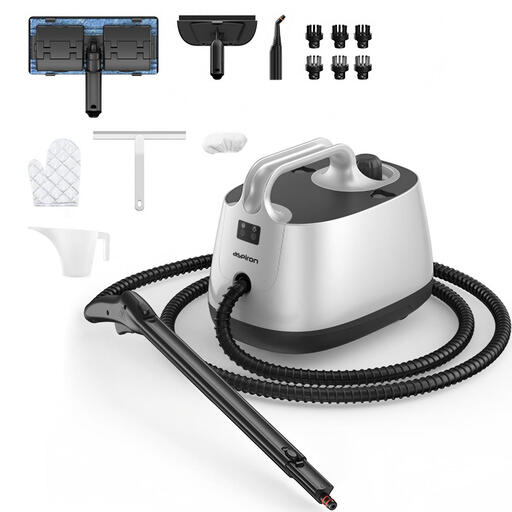
A steam cleaner to consider if you mainly want to tackle baked-on dirt on a floor that's suitable for steam; it won't pick up crumbs.
The product name lists 4 Bar, 145°C, a 1.5 L tank and 21 accessories.
 No image available
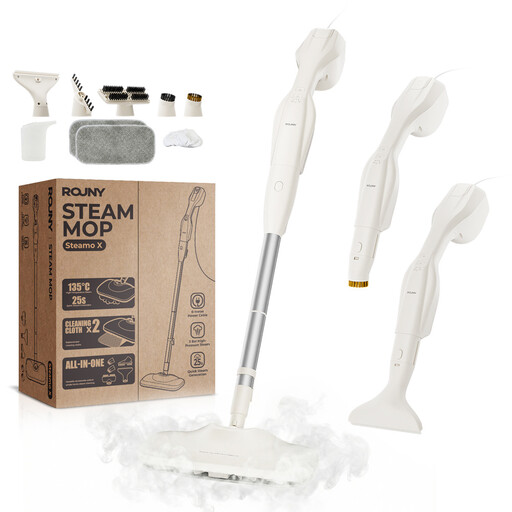
The mop and handheld steam cleaner combination may suit you if you want to clean floors and other specified household surfaces with steam.
The product name lists 1200 W, 3 Bar, a 25-second heat-up time, a 6 m cord and five attachments. Use water only unless the instructions expressly allow other liquids; the steam outlet and hot parts can cause burns.
 No image available
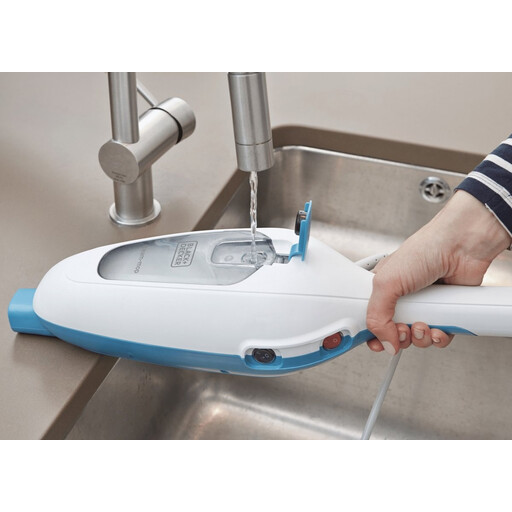
This steam mop may be suitable for cleaning sealed hard floors if the instructions also confirm that your tiled floor is suitable.
The product information lists a 0.38 L tank and up to 11 minutes of steam use. The stated application is limited to sealed hard floors.
 No image available
An electric detail brush may suit you if you mainly want to tackle localised dirt on tiles or in hard-to-reach spots.
The product information lists three speeds, an LCD screen and seven brush heads. Do not submerge the main unit; the stated IPX6 rating doesn't change this warning.
 No image available
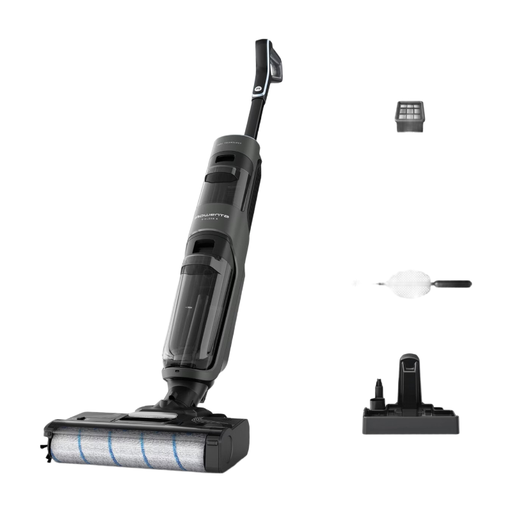
A vacuum mop floor cleaner to consider if you want to tackle dry dirt and wet mess together.
The product information lists an integrated side brush for edges and corners and a self-cleaning function. According to the description, this model is designed for sealed hard floors, not carpets, rugs or unfinished wood. The Consumers' Association points out that floor cleaners need regular maintenance of their tanks, rollers and filters; self-cleaning doesn't eliminate that need entirely.
Not without checking that the model is suitable. Philips specifies smooth tiles for the OneUp XV3101/01. Test it in an inconspicuous area and follow the guidance for your floor.
Yes. According to the Consumers' Association, the dirty-water tank, roller and filter need to be emptied, rinsed and dried regularly; self-cleaning doesn't take care of all that work.
No. According to the Consumers' Association, a steam cleaner doesn't vacuum up crumbs or hair, so sweep or vacuum loose dirt first.
No. Kärcher says this stone roller fits the FC 2-4 only, so check the full model numbers of both the appliance and accessory.
Check the CE mark and instructions for the specific model. The Dutch government says electronic appliances placed on the EU market must carry a CE mark; the mark itself says nothing about cleaning performance.