
Vandaag of morgen in huis

Kwaliteit gegarandeerd

Welkomstaanbiedingen ontgrendelen: GRATIS bezorging | Tot 80% korting | Gratis 30 dagen JoyPlus-proefperiode
Download de app
An electric table grill is ideal for preparing a quick meal in the kitchen, on the balcony or on the patio. You do not need charcoal, a gas bottle or lengthy preparation. However, table grills vary considerably in size, temperature control, cleaning and versatility. As a result, a cheap purchase may prove less practical than expected.
The main pitfalls are usually not related to the wattage shown on the box, but to details such as a cooking surface that is too small, parts that are difficult to remove or unclear suitability for indoor use.
Higher wattage does not automatically mean more cooking space or a more even result. A 2,300-watt model may heat up quickly, but if the grilling surface is small, you will still need to cook in several batches. Always check the surface area in cm², or the length and width of the grill plate.
A non-stick grill makes it easier to remove food, but grease, marinade and baked-on residue still need to be cleaned away. Check whether the plate and drip tray are removable. Not every removable plate is dishwasher-safe; for some models, the product information recommends washing by hand.
Also, do not use metal forks or spatulas on a coated plate. Silicone, wooden or plastic kitchen utensils can help minimise damage.
A grill for indoor and outdoor use must be placed on a stable, heat-resistant surface. Outdoors, the appliance must be protected from rain and moisture. Indoors, good ventilation and sufficient distance from curtains, kitchen cupboards and other flammable materials are important. An electric barbecue generally produces less smoke than charcoal, but grease and moisture can still cause vapour and splashes.
The right size depends on the number of diners and the type of dishes you want to prepare:
Bear in mind that the stated capacity may sometimes be based on burgers or small portions. Less space is available for large cuts of meat.
A grill with an adjustable thermostat gives you more control than an appliance with only an on/off setting. Meat, fish, vegetables, eggs and pancakes do not all require the same temperature. Five heat settings are practical for everyday use, while continuous adjustment offers even greater flexibility.
The wattage mainly indicates the available heating power. The models in the range vary from 1,500 to 3,000 watts. Check that your socket and any extension lead are suitable for the required power. Use an earthed socket and always follow the instructions.
A smooth plate works well for fish, eggs and vegetables. A ridged plate creates grill marks and allows grease to drain away more easily. Some appliances combine both surfaces. A plancha grill or teppanyaki grill usually has a wide, flat plate, while a contact grill often heats from both the top and bottom at the same time.
Also check:
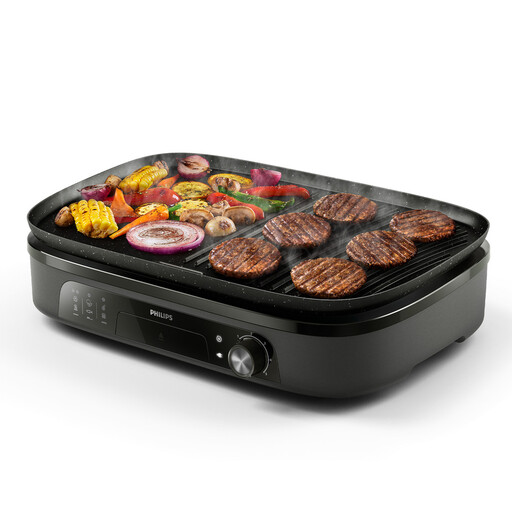
Why it suits this profile: A straightforward table barbecue for families looking for a wide grill plate and simple operation without a contact-grill mechanism.
The product specifications state a surface area of 1,250 cm², five temperature settings, a removable drip tray and removable plates.
2,400 watts, smooth and ridged sides, removable plates and, according to the product information, dishwasher-safe parts.
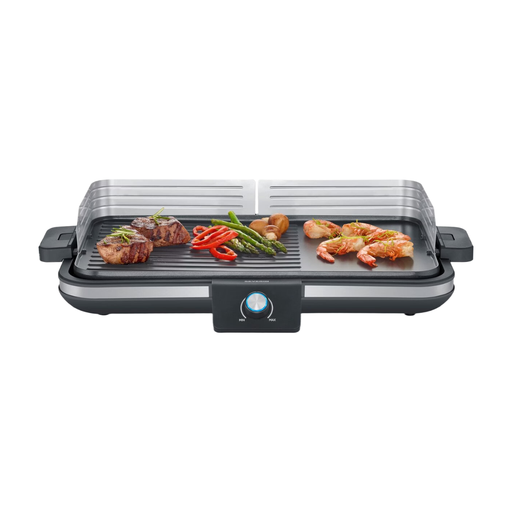
Why it suits this profile: Ideal for anyone who wants to prepare different ingredients at the same time and values comprehensive temperature control.
The combination of a ridged and smooth surface means you do not need a different grill for every ingredient.
2,300 watts, 1,500 cm² cooking surface, temperature up to 230 °C, removable splash guard and grease collection tray.
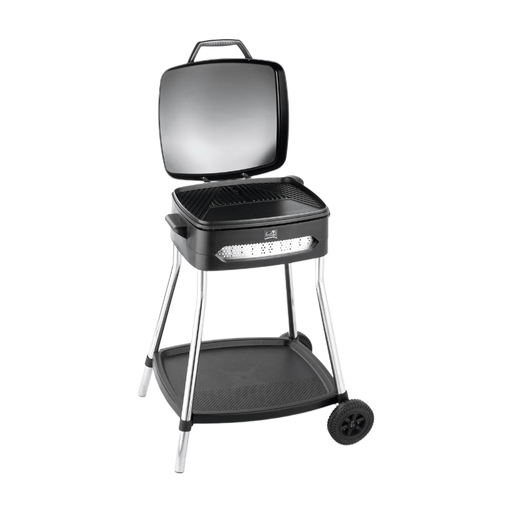
Why it suits this profile: A practical choice for anyone who wants to use an electric barbecue on a stand and also place the grill plate on a table indoors.
The plate is removable and, according to the product specifications, dishwasher-safe; the thermostat can be adjusted continuously.
2,000 watts, 40 × 36 cm grilling surface, hinged lid, stand with wheels and use for 2 to 6 people.
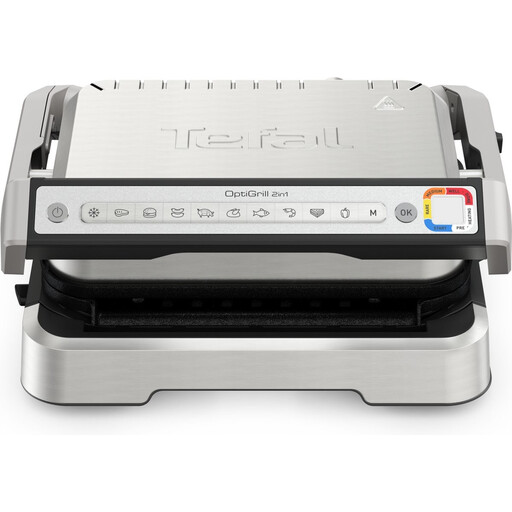
Why it suits this profile: Ideal for users who want to prepare paninis and other dishes as well as grilled food, using automatic programmes.
The plates are removable and dishwasher-safe. The appliance opens to 180 degrees, so it can also be used as a flat table barbecue.
2,100 watts, four temperature settings, nine automatic programmes and a contact grill that opens completely flat.
We have put together a complete, up-to-date list of products that fully meet these strict selection criteria and the applicable European safety regulations.
Place the grill on a flat, heat-resistant surface and keep the surrounding area clear. Allow the appliance to preheat according to the instructions. Do not touch the plates, lid or drip tray while they are hot. Unplug the appliance after use and allow everything to cool completely before removing any parts.
An electric grill should never be left operating unattended. Keep children and pets at a safe distance, and when using the appliance outdoors, make sure it stays dry.
This depends on the product specifications. An indoor grill is designed for use inside the home, but good ventilation is still essential. Models intended for outdoor use may only be used indoors if the manufacturer expressly states that this is permitted. Never place the grill directly beneath kitchen cupboards or next to flammable materials.
Consumption depends on the wattage and how long the appliance is used. A 2,000-watt appliance theoretically uses 2 kWh when heating continuously at maximum power for one hour. In practice, the thermostat often cycles on and off, so actual consumption may be lower. Calculate your energy costs by multiplying consumption in kWh by your electricity tariff.
Its lifespan is affected by how often it is used, how it is cleaned and the condition of the coating. Do not allow a grill to overheat while empty, do not use metal utensils and store the appliance in a dry place. Before buying, also check whether replacement grill plates, drip trays or other parts are available.
