
Vandaag of morgen in huis

Kwaliteit gegarandeerd

Welkomstaanbiedingen ontgrendelen: GRATIS bezorging | Tot 80% korting | Gratis 30 dagen JoyPlus-proefperiode
Download de app
An electric table grill is handy for cooking burgers, vegetables, fish and sandwiches, or for a small barbecue without charcoal or gas. But the wrong choice can quickly disappoint. A compact model may not have enough room for a family, while a large grill can be awkward to keep on the worktop. Terms such as “smokeless”, “healthy grilling” and “automatic” can also sound more meaningful than they really are.
This buying guide helps you compare contact grills, indoor grills, electric barbecues, tabletop barbecues and plancha grills based on verifiable features.
A wide grill plate may look appealing, but remember to check the overall width, depth and height too. A model might be suitable for cooking lots of burgers, for example, but too large for a standard kitchen worktop or balcony. Leave enough clear space around the appliance, as instructed in the manual.
Also check the difference between the stated grilling surface and the usable space. A table grill with a lid, handles or a front-mounted drip tray takes up more room than the dimensions of the plate alone might suggest.
A smokeless grill may be designed to reduce smoke and odours, according to the manufacturer, but that doesn’t mean it will produce no smoke in all conditions. Fat, marinades and excessively high temperatures can still cause smoke. So use an indoor grill under an effective extractor fan or in a well-ventilated room.
Claims such as “87% less smoke” are claims made by the brand, not a general guarantee for every cooking session. Results depend on factors such as the food, the amount of fat and the temperature.
A grill with automatic programmes can make cooking easier. However, it’s still important to follow the instructions and check your food carefully. Sensors may take the thickness and number of pieces into account, but ingredients vary in shape, starting temperature and composition.
Power is measured in watts. Models ranging from around 1,500 to 2,300 watts are common. A higher wattage can help the grill heat up more quickly, but it doesn’t tell you how evenly the heat is distributed.
Continuous temperature control gives you more flexibility when cooking fish, vegetables and meat, for example. Fixed settings are simpler to use, but less flexible. Check the maximum temperature too. Several models in this selection reach 230 °C.
Choose a closed contact grill if you mainly want to cook panini, toasted sandwiches, burgers and cuts of meat. A model with a lid that opens to 180 degrees can also be used as a flat grill plate or plancha grill.
An open tabletop barbecue is more practical for grilling together at the table. If you choose one, look at:
Removable grill plates make cleaning easier. Check specifically whether both the plates and the drip tray are dishwasher-safe. Some models only allow the drip tray to go in the dishwasher.
Don’t use metal spatulas on a non-stick coating unless the manufacturer specifically says you can. Never immerse the electrical base unit, plug or cable in water. A product with a ceramic or other non-stick coating can be convenient to use, but always check the care instructions.
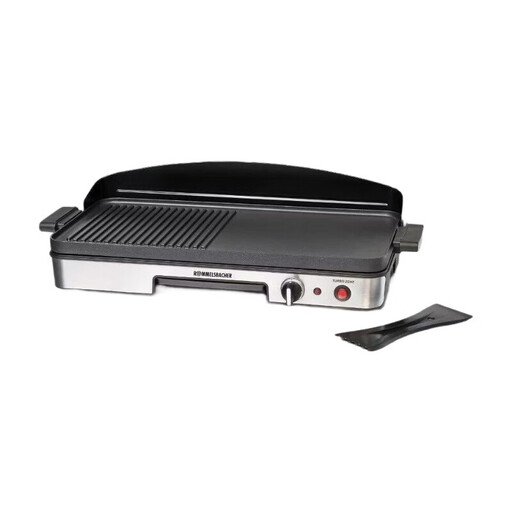
Why it suits this type of user: This model is relatively straightforward to use, with continuous temperature control and two grilling surfaces. The cooking surface has a diameter of 40 cm, while the appliance is 58 cm wide. It’s a good fit for anyone who wants to grill at home or outdoors without complicated programmes.
The ridged and flat Teppanyaki sides mean you’re not limited to just one type of cooking. The integrated grease channel and removable drip tray also help keep loose parts off the worktop.
Two grilling surfaces, continuous temperature control, a turbo grilling zone and space for up to six burgers, according to the product specifications.
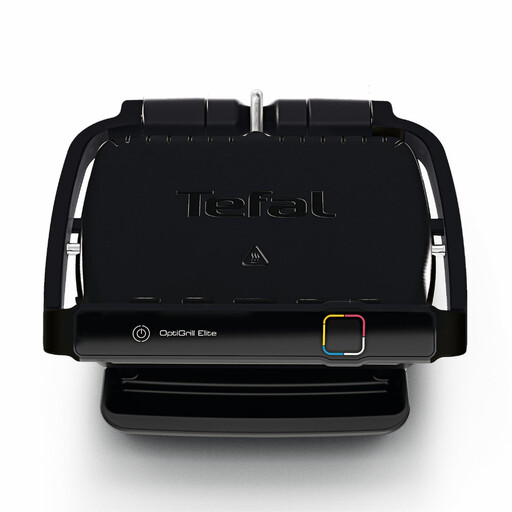
Why it suits this type of user: If you often cook meat, fish, vegetables and sandwiches, this contact grill gives you access to 12 automatic programmes. The product specifications list a power output of 2,000 watts and a grilling surface measuring 30 x 20 cm.
An indicator and sound signal show how far cooking has progressed. This gives you more guidance than a general temperature dial alone, although you should still check the food as instructed in the manual.
12 automatic programmes, a sensor that detects the thickness and number of pieces, plus dishwasher-safe plates and drip tray.
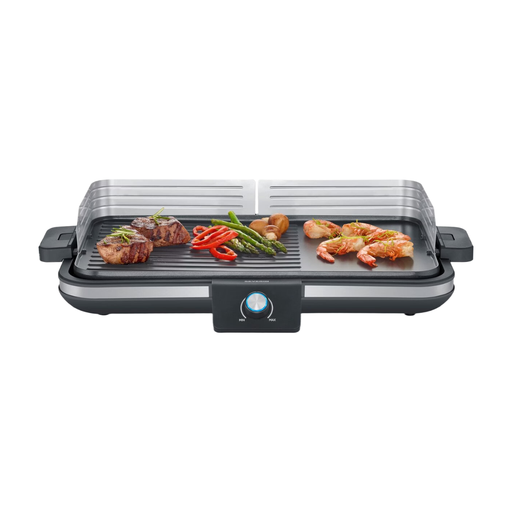
Why it suits this type of user: This plancha grill is designed for larger portions, making it suitable for a meal shared by several people. The stated cooking surface is 1.500 cm² and its power output is 2.300 watts.
The combination of a smooth and ridged surface means you don’t need a different grill for every ingredient. The drip tray and removable grill plate also make maintenance easier to manage.
2.300 watts, continuous temperature control up to 230 °C, a ceramic coating and a removable splash guard, according to the product description.
Place the grill on a flat, stable and heat-resistant surface. Keep curtains, paper, tea towels and other flammable materials well away. Use an earthed socket suitable for the appliance’s power rating. Don’t leave the grill unattended, and wait until the plates and drip tray have cooled completely before removing them.
If you’re using an electric barbecue on a balcony or in the garden, protect it from damp and rain. An appliance designed for indoor and outdoor use isn’t automatically waterproof. Check the manual before using it outside.
We’ve put together a complete, up-to-date list of products that meet these strict selection criteria and the applicable European safety regulations.
That depends on the model and the manufacturer’s instructions. A contact grill or indoor grill is generally designed for use in the kitchen, but good ventilation is still important. Don’t use an outdoor model indoors without checking first.
Consumption depends on the power rating and how long you use it. A 2,000-watt grill running at full power for half an hour would theoretically use 1 kWh. In practice, the thermostat switches off regularly, so actual consumption may vary.
Its lifespan depends on how you use, store and maintain it. Let the grill cool down, use suitable utensils and avoid abrasive cleaning products. Also check whether replacement plates or parts are available. Many products sold in the EU come with a minimum two-year legal guarantee; additional manufacturer terms may vary.
