
Batch baker
You want to make rice cakes in separate batches or across several tiers. So look at the available space, whether you can top up the water, and how much effort each batch involves.


When choosing a steamer for rice cakes, first check the usable internal dimensions of the steaming tier and the shape your recipe calls for: a capacity in litres won’t tell you whether the shape will fit. Multiple tiers and the ability to top up the water may make it easier to steam batches one after another, but they don’t confirm that your mould will fit. Before buying, also check for the CE marking on the specific appliance.
You want to make rice cakes in separate batches or across several tiers. So look at the available space, whether you can top up the water, and how much effort each batch involves.
Your recipe calls for a mould or cloth. In particular, check that it fits in a steaming tier without blocking the steam flow.
You make portions to eat later, so as well as a suitable steamer, you’ll need enough containers and fridge space.
Choose this if: you want to steam several portions separately and your mould fits in the usable space in a tier. Tefal describes the VC502D as having three tiers, while the manufacturer of the Russell Hobbs 19270-56 lists three baskets.
Bear in mind: the number of tiers and the total capacity don’t tell you whether your mould will fit or if steam will reach every tier evenly.
Choose this if: a compact layout and independently controlled zones matter more to you than steaming large portions at once. WMF describes the KITCHENminis as having two zones, each with a capacity of 2.15 litres.
Bear in mind: the capacity of each zone doesn’t confirm that a large rice cake mould will fit, so you may need to steam in several batches.
When making batches of rice cakes, the size of your mould, the number of batches, storage and cleaning are the main factors that determine which features matter.
| What to consider | What should you check? | Who should pay particular attention? |
|---|---|---|
| Space for successive batches | Check the usable internal dimensions of each tier and how to top up the water while steaming. | If I’m making several batches one after another, I want to spend less time stopping to rearrange things or top up the water. Around 33% of consumers prioritise having enough space to prepare batches smoothly. |
| Mould and steam flow | Compare the internal dimensions with your own mould and follow the instructions for using moulds or cloths. | My recipe calls for a particular mould, so I want to know whether it will fit without blocking the steam path. Around 27% of consumers prioritise finding a mould that fits. |
| Cooling and storage | Set aside containers and fridge space for the portions you want to eat later; a keep-warm function isn’t a storage plan. | If I’m cooking ahead, I want to be able to cool and store the portions properly after steaming. Around 20% of consumers put storing food for later at the top of their list. |
| Cleaning and storage | Check which parts are dishwasher-safe and measure the space you have for the appliance and its separate parts. | After steaming, I want to know how many parts I’ll need to wash and where I can store them. Around 20% of consumers prioritise maintenance and storage space over the number of portions they can steam at once. |
An appliance can have a large capacity without the base of a steaming tier being wide or high enough for your mould. For example, a published baekseolgi recipe by Maangchi uses a 20 cm cake tin. That’s a recipe-specific size, not a universal requirement.
Measure your own mould and check the usable internal dimensions and maximum permitted height of each tier.
A setting for rice or pulses isn’t necessarily suited to every rice cake mould or cooking method.
Follow the specific recipe and the appliance instructions, and check that the rice cakes are cooked through before making a whole batch.
Keeping food warm isn’t a substitute for cooling portions quickly and storing them in the fridge. The Voedingscentrum warns of the risks of rice dishes that aren’t kept cold enough for too long.
Before steaming, get containers and fridge space ready for the portions you want to eat later. Follow the Voedingscentrum’s storage advice for rice dishes.
These examples describe features of the product ranges mentioned. A brand being listed here doesn’t confirm that a model is available at Joybuy.
Tefal describes the VC502D as having three stainless-steel tiers and the option to top up the water while it’s in use.
The manufacturer describes the Cook@Home 19270-56 as having three baskets with a combined capacity of 9 litres.
WMF describes the KITCHENminis 0415090011 as having two independently controlled zones, each with a capacity of 2.15 litres.
The Braun FS 3000 is described as a steamer with separate drip trays beneath the steaming baskets.
These product picks are for electric steaming and batch cooking. For rice cakes, always check the mould dimensions and the cooking method your recipe calls for.
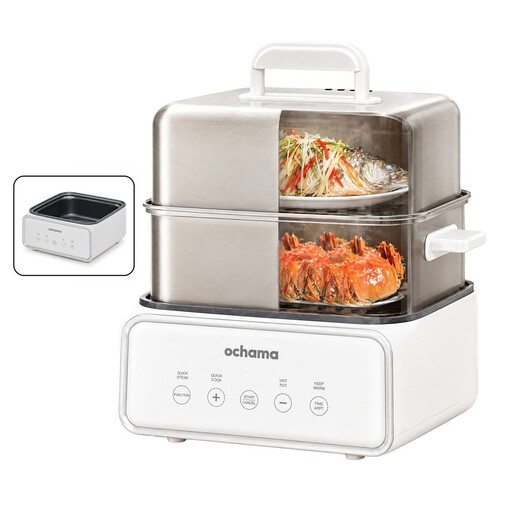 Image unavailable
Two tiers and the listed capacity may be useful for steaming several portions. Check that your recipe’s mould fits in the usable space.
The product name lists 1500 W, two tiers and 12 l.
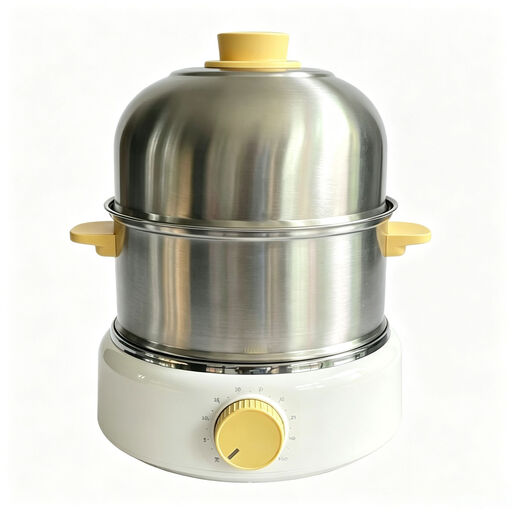 Image unavailable
This egg cooker also lists a steaming function. Don’t assume your rice cake mould will fit without checking the dimensions.
The product name lists 400 W and two tiers for up to 18 eggs.
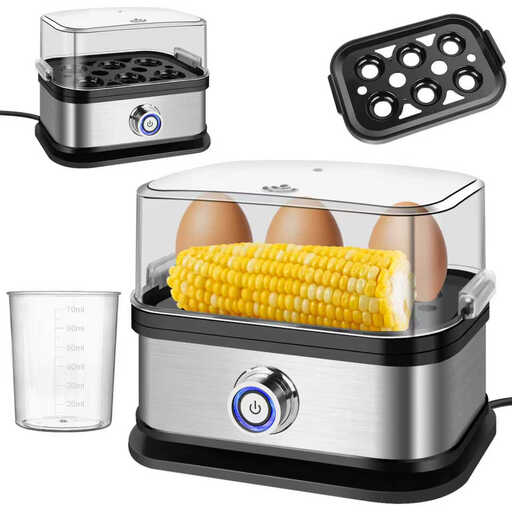 Image unavailable
The product name mentions a steaming function, but doesn’t give dimensions for a rice cake mould. Check the usable space for your recipe.
The name lists 350 W and a capacity of 6 eggs.
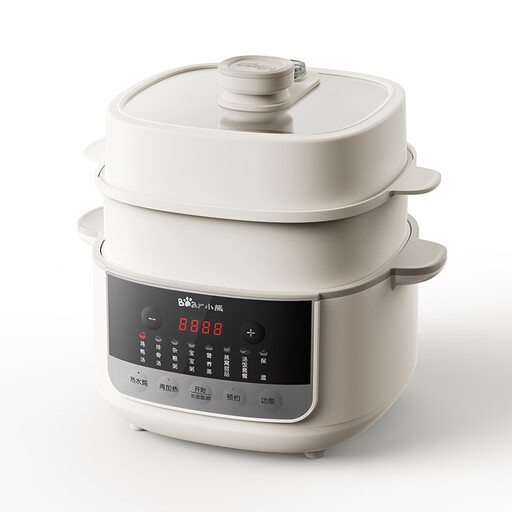 Image unavailable
The product name mentions a steaming basket and glass lid. Check the basket’s dimensions before choosing it for your rice cake mould.
The name lists model DDZ-J25G2.
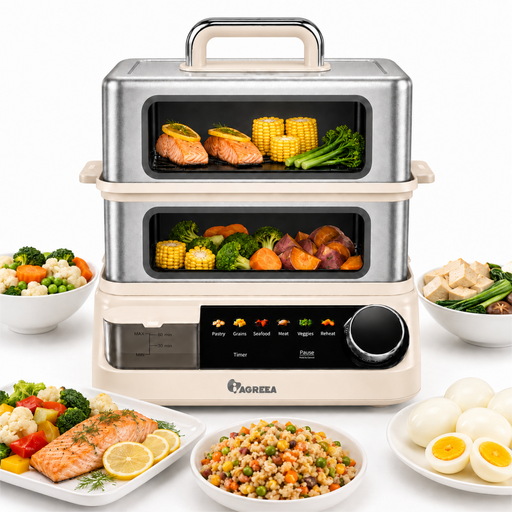 Image unavailable
Two tiers can be useful when steaming several portions. Before use, check that your recipe’s mould fits in the available space.
The product name lists 14 l, 2000 W, two tiers, six programmes and a timer.
Not without checking your recipe and the bowl’s dimensions. For example, a published baekseolgi recipe by Maangchi uses a damp cloth and a cake tin on a steaming rack. The 1-litre rice bowl listed by Russell Hobbs doesn’t confirm that this method will fit.
Cool leftovers quickly, then cover and put them in the fridge or freezer within 2 hours. Ideally, set your fridge to 4 °C. The Voedingscentrum recommends keeping cooked rice for 2 days in the fridge or 3 months in the freezer. Don’t automatically apply these time limits to every rice cake recipe if it contains other ingredients.
For a consumer purchase in the Netherlands, the seller is responsible for the statutory guarantee. ACM ConsuWijzer explains that the remedy depends on what you could reasonably expect from the product. A stated manufacturer’s guarantee doesn’t replace your statutory rights.
According to the Dutch government, electrical appliances placed on the market in the EU must bear a CE marking. Check the marking on the specific appliance; a general reference to a model doesn’t confirm that a particular offer has been checked.
It varies by model and component. For the VC502D, Tefal lists the stainless-steel baskets, rice bowl, drip tray and lid as dishwasher-safe. Don’t assume the same applies to other models or the electrical base without checking.