
Workshop hosts preparing several portions
You want to divide pieces of corn on the cob between baskets or workshop sessions. The usable space in each basket matters more than the total capacity alone.


When steaming pieces of corn on the cob, choose an electric steamer based first and foremost on the usable space in each basket or cooking zone: the total capacity in litres doesn’t tell you how many pieces will fit side by side. Multiple baskets make it easier to divide portions or cook other ingredients; for consecutive workshop sessions, you’ll also want to consider the water level, whether you can top up the water and how easy the appliance is to clean.
You want to divide pieces of corn on the cob between baskets or workshop sessions. The usable space in each basket matters more than the total capacity alone.
You want to be able to check the timer and water level while hosting, and know whether you can top up the water while the appliance is in use.
After the workshop, you want to clean the parts as instructed and store the appliance in the space you have available.
Choose this layout if: you want to divide pieces of corn between several baskets or cook other ingredients at the same time. Tefal describes the VC2048 as having three baskets; Russell Hobbs lists three baskets for the Cook@Home 19270-56.
Keep in mind: the total capacity and number of baskets don’t tell you how many pieces of your chosen size will fit in each basket. Check the internal dimensions and permitted load.
Choose this layout if: you want to cook two ingredients separately. WMF describes the KITCHENminis 0415090011 as having two zones, each with a capacity of 2.15 litres.
Keep in mind: check whether your pieces of corn will fit in each zone. WMF’s stated 40-minute keep-warm function doesn’t in itself confirm that the holding temperature is suitable for food being served.
Choose this approach if: you’re preparing small quantities, already have a suitable pan and don’t want another electrical appliance. The Netherlands Nutrition Centre explains that steaming over boiling water in a steamer basket or heatproof colander is one option.
Keep in mind: you’ll need to use a hob and keep an eye on the water and cooking yourself.
| Buying concern | What to look for | Who is this important for? |
|---|---|---|
| Usable space per session | Check the internal dimensions, basket height, permitted load and how many pieces of your chosen size will fit side by side. | If I want to cook several pieces per session, I’d rather check the space in each basket than just the total capacity in litres. Around 36% of consumers are mainly concerned with how portions can be divided between sessions. |
| Water and timing | Check the timer, automatic shut-off, water-level indicator and whether the instructions allow you to top up the water while the appliance is in use. | When running back-to-back sessions, I want to be able to keep an eye on the appliance without losing track of the cooking. Around 29% of consumers mainly prioritise controls and water management during these sessions. |
| Cleaning after use | Check the instructions for each part to see whether it can go in the dishwasher, needs to be washed by hand or may need descaling. | If I use the appliance repeatedly for workshops, I want to know how to clean the separate parts after each session. Around 21% of consumers mainly look for easy cleaning. |
| Worktop and storage space | Measure the space available both during use and in your cupboard, allowing for the baskets you’ll need. | With limited space, I want to know in advance where the appliance will sit during the workshop and how I’ll store it afterwards. Around 14% of consumers are mainly concerned with worktop and storage space. |
The stated 9-litre capacity of the Russell Hobbs Cook@Home 19270-56 is the combined capacity of its three baskets. It doesn’t tell you how many pieces of corn on the cob in your chosen size will fit in each basket.
Measure a typical piece and check the internal dimensions and layout before deciding how many portions you can prepare per session.
If all the pieces don’t fit at once, you may need to steam another batch.
A timer or keep-warm function won’t automatically check whether food is cooked through or at the right temperature. For the commercial situations it describes, the Dutch Food and Consumer Product Safety Authority (NVWA) sets requirements for hygienic and safe working practices and temperature control.
Follow the instructions and check that the food is cooked through. Where the applicable food safety rules require temperature checks, use a suitable thermometer.
A dishwasher-safe claim for certain parts of the Tefal VC502D doesn’t automatically apply to every part of that model, or to other steamers.
Read the cleaning instructions for the exact model you choose and check them for each part.
If some parts need to be washed by hand, allow extra time for cleaning after each session.
Tefal describes the VC2048 as having three baskets, a timer and the option to top up the water while it’s in use. For the VC502D, the brand lists digital programmes and dishwasher-safe parts.
The manufacturer describes the Cook@Home 19270-56 as having three baskets with a combined capacity of 9 litres, a timer, a water-level indicator and two filling openings.
WMF describes the KITCHENminis 0415090011 as having two independently controlled zones, each with a capacity of 2.15 litres, and a 40-minute keep-warm function.
Braun describes the FS 3000 as having an automatic timer and baskets that nest inside one another.
This selection includes steamers and appliances with a steaming function. Before buying, check whether the basket or steaming tray is suitable for the size of your pieces of corn on the cob.
 No image available
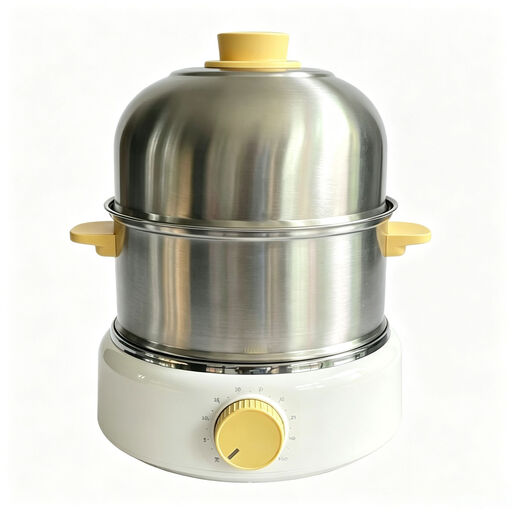
The steaming function and two tiers may be useful if you’re cooking vegetables in several batches; first check that the steaming basket and tiers are suitable for your pieces of corn on the cob.
400 W; two tiers for 18 eggs; timer; steaming basket; automatic shut-off and dishwasher-safe removable parts according to the product information.
 No image available
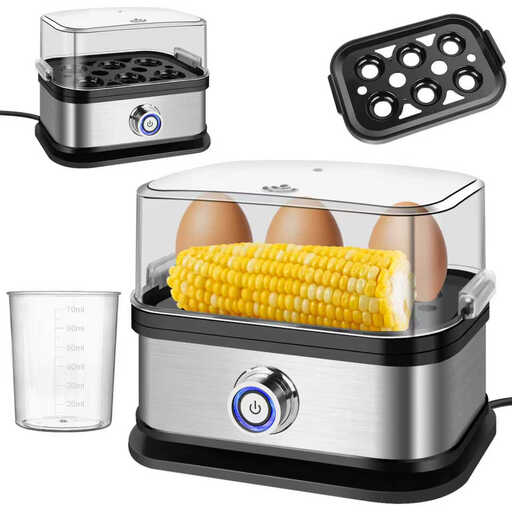
The product information says it can steam vegetables; compare the available steaming space with the size of your pieces of corn before choosing this appliance for a workshop.
350 W; capacity for six eggs; two-tier design; timer and automatic shut-off according to the product information.
 No image available
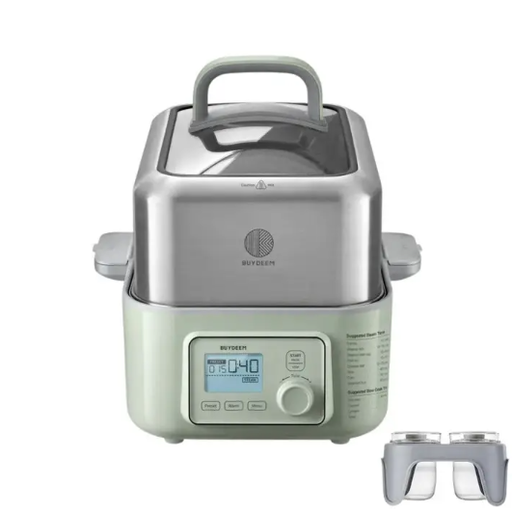
The product information mentions steaming vegetables; check the tray dimensions and instructions to see whether this model suits your workshop and pieces of corn on the cob.
5 L; stainless steel steaming tray; glass lid. The product information also lists a ceramic plate and removable parts.
 No image available
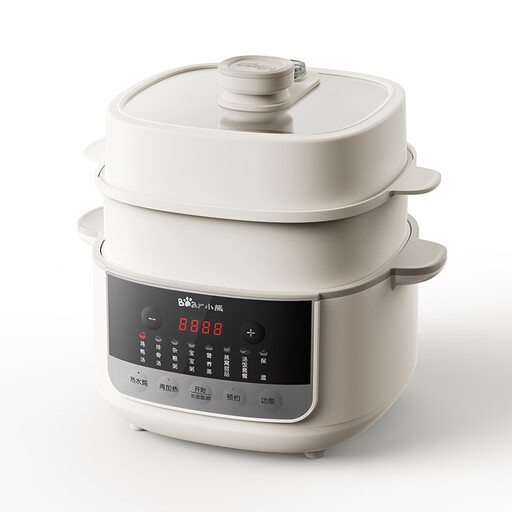
The product information lists a steaming basket for vegetables and other foods. Check that the basket is large enough for your pieces of corn on the cob, and follow the instructions for using the different parts.
2.5-litre main pot; four 0.4-litre small pots; glass lid; 10 touch-control menus according to the product information.
 No image available
According to the product information, the two trays provide space for cooking on multiple levels. Check the tray dimensions and permitted load before deciding how many pieces of corn on the cob will fit per session.
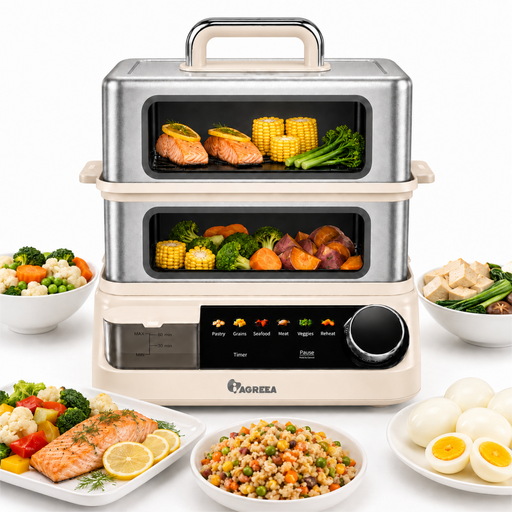
14 L; 2000 W; two 300 × 230 mm stainless steel trays; 2.5-litre external water tank; six programmes and a timer according to the product information.
Follow the instructions for the steamer you’ve chosen and check that the pieces are cooked through. The Netherlands Nutrition Centre advises following the appliance instructions when using an electric steamer.
That depends on how the workshop is run and whether food is sold or supplied as part of a business. The Dutch Food and Consumer Product Safety Authority (NVWA) requires registration for businesses that sell or supply food directly to consumers, and sets out rules for hygienic and safe food preparation in a commercial setting. A private workshop doesn’t automatically fall within that definition just because it’s called a workshop.
Don’t rely solely on the presence or duration of a keep-warm function. For the commercial situation it describes, the NVWA specifies a temperature of at least 60 °C for unpackaged perishable food in a hot holding cabinet or bain-marie, and recommends checking the temperature with a digital probe thermometer. Check that your practices and appliance meet the requirements that apply to you.
If a product is faulty, the seller must provide a solution. According to the Dutch government, there is no fixed statutory warranty period in the Netherlands; any manufacturer’s warranty or paid-for extension doesn’t replace your statutory rights.
No. According to the European Commission, the manufacturer uses the CE mark to declare that the product complies with the applicable EU product rules; the mark isn’t an independent quality label. Materials that come into contact with food are also covered by separate EU rules.