
Meal preppers with blocks of cheese
If you want to slice a block of hard cheese into portions regularly, check the stated suitability for cheese, the feed space and the adjustable slicing thickness.


If you regularly slice hard cheese into portions, start with a model whose manufacturer lists cheese as a suitable use, then check the blade, thickness setting, food holder and cleaning instructions. A fixed machine may suit frequent use if you have the worktop and storage space for it. A folding model takes up less room when stored, but the specifications alone won’t tell you how evenly it will slice your cheese.
If you want to slice a block of hard cheese into portions regularly, check the stated suitability for cheese, the feed space and the adjustable slicing thickness.
If you slice several portions in a row, look for a food holder and stable feet, and always operate the machine according to the instructions.
If you want to put the machine away after use, weigh up a folding model against a fixed version and check its dimensions both in use and when stored.
First, check whether the manufacturer lists hard cheese as a suitable use, and which blade is intended for it. Then compare the space available for your block of cheese, the controls and the cleaning requirements with how often you plan to slice several portions in a row.
| What to consider | What to look for | Who should pay particular attention? |
|---|---|---|
| Cheese and slice thickness | Check which blade is intended for hard cheese, what thickness settings are available and whether your block of cheese will fit in the stated feed space. | If I want to slice a block of cheese into slices of a chosen thickness, I need to know whether the blade and feed space are suitable. Around 33% of consumers give cheese suitability and slice thickness top priority. |
| Safe feeding | Check for a food holder and stable feet, and read the operating instructions for repeated slicing. | When I’m preparing several portions in a row, I want to be able to guide the food without bringing my fingers near the blade. Around 25% of consumers prioritise safe batch slicing. |
| Cleaning and storage | Check whether the blade is removable and follow the cleaning instructions for your model. Make sure the amount of pre-sliced cheese is in line with the storage advice. | If I want to clean the machine after several rounds of slicing and store the cheese slices, I pay attention to cleaning and storage. Around 25% of consumers consider this their main concern when buying. |
| Storage space | Compare a folding design with a fixed machine and check the dimensions both in use and when stored. | If I have limited cupboard space, I want to weigh up whether a folding model will fit my kitchen better than a fixed version. Around 17% of consumers give storage top priority. |
The Joybuy product title for the Clatronic MA 3585 states 500 W, while Clatronic lists 150 W. The product page also gives 150 W in the specifications.
Compare the full model number with the manufacturer’s information. Don’t assume a higher stated wattage means the appliance is suitable for hard cheese.
ritter describes its smooth blade as being mainly for soft foods, and its serrated blade for hard and soft foods.
Check which blade is included with each model and what the manufacturer says it is intended for. You’ll need to change and clean any extra blade.
For the ritter E 16, ritter gives the rating ‘KB 5 min.’; this does not mean it can be used indefinitely.
Check the manual for the exact model for details of operating times and breaks if you want to slice a lot of cheese in one go.
Voedingscentrum recommends keeping cheese slices in the fridge for four days.
Prepare only as much sliced cheese as you’ll use within that storage period, and follow the storage advice for cheese.
The SKS100 is worth considering if you want to slice hard cheese as well as a range of other foods.
The DO521S has specifications worth comparing if you work with blocks of cheese.
Compare the AS 3912, AS 3915 and AS 3917 for storage, thickness range and included blade; they are different models.
The E 16 is a fixed metal model with a serrated blade and several switch settings.
The MA 3585 is a multi-purpose slicer that Clatronic lists as suitable for cheese.
The foldable SL 3080 is worth comparing if storage space is important.
These Joybuy products are electric slicers to compare for slice thickness, blade, use and storage space. Check whether the manufacturer lists hard cheese as a suitable use for the model you choose.
 No image available
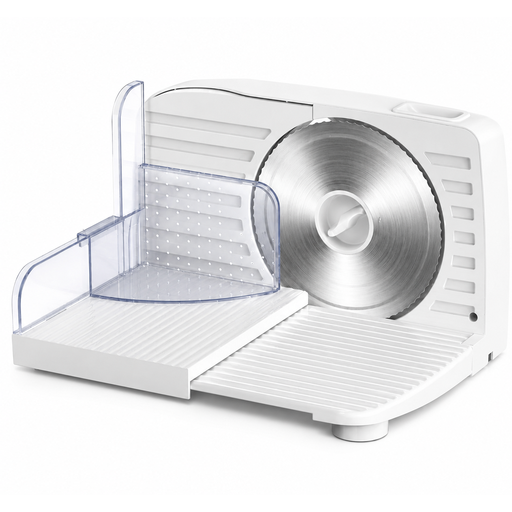
The adjustable thickness may be useful if you want to choose how thick your slices are; check which blade is intended for hard cheese.
The product name lists a setting from 0 to 15 mm, two blades and 250 W.
 No image available
The product description mentions a smooth cutting disc for cheese. Check which blade is supplied with this version and whether it’s suitable for the hard cheese you want to slice.
The description lists an adjustable slicing thickness of up to 23 mm and a removable carriage.
 No image available
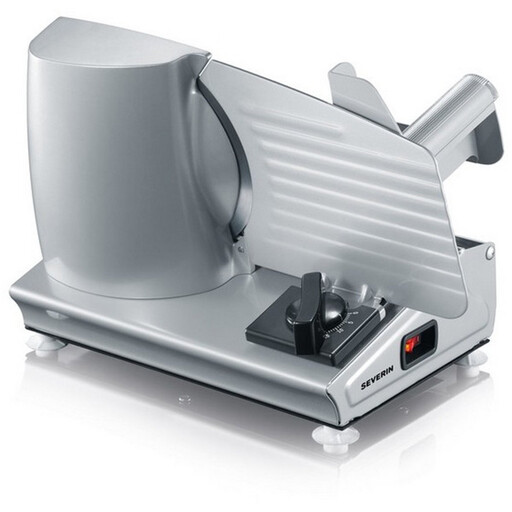
Cheese is listed as one of the foods it can slice. Check which blade is intended for hard cheese and follow the instructions for changing and cleaning it.
The product name lists an adjustable thickness of 0 to 15 mm and two blades. The product description mentions finger protection.
 No image available
The product description mentions cheese and a foldable design. For hard cheese, check that this exact version is intended for that use and which blade is included.
The product name lists a slicing thickness of 0 to 15 mm, a Ø 17 cm blade and 100 W.
 No image available
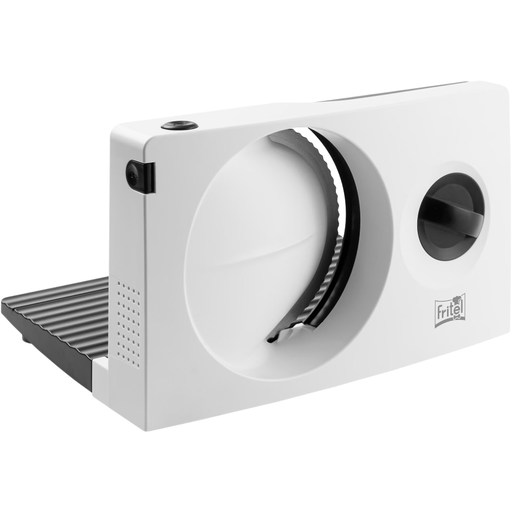
This model is described as a bread slicer. Before buying, check whether the manufacturer lists hard cheese as a suitable use; an adjustable thickness setting doesn’t prove that it is.
The product name lists a slicing thickness of 0 to 15 mm, a Ø 17 cm blade, 100 W and a foldable design.
Choose according to the use the manufacturer recommends for the exact blade. Graef lists harder cheese as suitable for the serrated blade on the SKS100; ritter describes its serrated blade as suitable for hard and soft foods, and its smooth blade as mainly for soft foods. This information doesn’t automatically apply to every blade from every brand.
Check the manual for the exact model before removing a carriage or blade. The manual for the Graef Classic C20EU/C90EU says to unplug the appliance before dismantling and cleaning it. For other models, check their own manuals and handle any removable blade with care.
Voedingscentrum recommends keeping cheese in a sealed container in the fridge and gives four days as the storage time for cheese slices. Follow the instructions on the packaging too; this storage advice doesn’t indicate how well a slicer will perform.
CE marking is compulsory for electrical products covered by the relevant regulations. The NVWA explains that the rules apply to electrical products within the relevant voltage and product requirements. Check the details for the specific appliance; CE marking alone doesn’t prove its slicing performance.
Online purchases generally come with a statutory 14-day cooling-off period from delivery, although there are exceptions. ACM ConsuWijzer explains that the statutory guarantee is separate from any manufacturer’s warranty. If a product doesn’t meet what you could reasonably expect under normal use, contact the seller.