
Fan of thinly sliced roast beef
You want to choose the thickness yourself. Compare the blades supplied, the thickness control and the food holder; a stated suitability is not an independent performance test.


For thin slices of roast beef, a slicer with a suitable smooth blade, adjustable cutting thickness and easy-to-clean parts is a sensible choice. If you also slice bread or other foods, compare the blades supplied; a larger machine may suit bigger joints, but it takes up more space and requires more cleaning. Manufacturer specifications describe the design, not independently measured slicing performance.
You want to choose the thickness yourself. Compare the blades supplied, the thickness control and the food holder; a stated suitability is not an independent performance test.
You want one appliance for more than just meat. Check which blades are actually included and which parts can be removed.
You’re looking for a machine for occasional slicing. Compare its dimensions with the space available and the size of the meat you want to slice.
Suitable if: thin slices of roast beef are important, but you also want to slice bread. According to the manufacturer, Fritel supplies both blades with the SL 3855 Twin; Severin describes the AS 3915 as having a ham blade and a serrated blade.
Keep in mind: check the blades included with the exact version. According to Fritel, the SL 3855 Twin does not have a separate safety switch.
Suitable if: you also want to slice other foods and need to consider the space available. Fritel describes the SL 3710 as having one removable universal blade; Ritter lists a serrated blade for the E 16.
Keep in mind: these versions are not shown as including a smooth blade. Check that the carriage travel is suitable for your joint of meat.
Suitable if: you regularly slice larger joints and have enough worktop and storage space. Hendi states that the Profi Line 220 has a maximum cutting diameter of 150 mm.
Keep in mind: according to Hendi, the machine weighs 13,10 kg net; the manufacturer says the standard blade is not suitable for cheese.
| What to consider | What should you check? | Who is this important for? |
|---|---|---|
| Thin, adjustable slices | Check which blade is included, the adjustable cutting thickness and whether there is a food holder. | If I mainly want thin slices, I want to be able to choose a blade and thickness to suit how I use the machine. Around 36% of consumers prioritise how their roast beef is sliced. |
| Safe handling and cleaning | Check the food holder, finger guard, non-slip feet and instructions for removing the blade. | When I want to clean parts that have been in contact with meat thoroughly after slicing, I also consider safe handling. Around 29% of consumers make this their top priority. |
| Slicing more than meat | Compare which blades are included and which foods the manufacturer recommends for each blade. | If I also want to use the machine for bread or other foods, I want to know which blade is intended for them. Around 21% of consumers prioritise versatility. |
| Space and size | Measure the space available and compare it with the machine’s dimensions and stated cutting capacity. | If I have limited worktop and storage space, the machine needs to fit there and accommodate the joint of meat. Around 14% of consumers prioritise the space available. |
Versions differ: Fritel describes the SL 3855 Twin as having two blades and the SL 3710 as having one universal blade, while Ritter lists a serrated blade for the E 16.
Check the full model number and what’s included in the box, rather than relying on a product photo or brand name alone.
A smooth blade may not be included with another version or may be available separately; check before ordering.
According to Hendi, the Profi Line 220 weighs 13,10 kg net. The manufacturer also states that cheese cannot be sliced with the standard blade.
Choose a larger machine only if your needs and the size of your meat justify the extra space. Check which foods are suitable for the blade supplied.
Voedingscentrum provides separate storage advice for raw roast beef and roast beef sold as sliced cold meat. Raw and cooked food should also be kept separate.
Store the roast beef according to the relevant advice and clean any parts that have been in contact with raw meat before using them with cooked food.
The SL 3855 Twin and SL 3710 are two different versions to compare if you’re considering blade choice and adjustable cutting thickness.
The AS 3915 is a food slicer to consider if you want to slice roast beef and other foods.
The E 16 is a domestic food slicer whose stated dimensions and carriage travel are useful points of comparison.
The SKS100 is a more compact food slicer supplied with a serrated blade fitted as standard.
The Profi Line 220 is a larger slicer designed for meat products, worth comparing if you regularly slice larger joints.
This selection includes electric meat slicers and food slicers for roast beef and other foods. Check the blade and cutting thickness specified for each version.
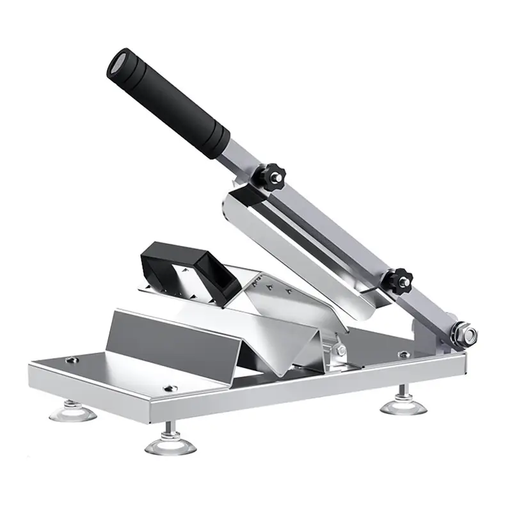 No image available
The product description lists roast beef as a use for this meat slicer.
The description specifies a stainless steel blade.
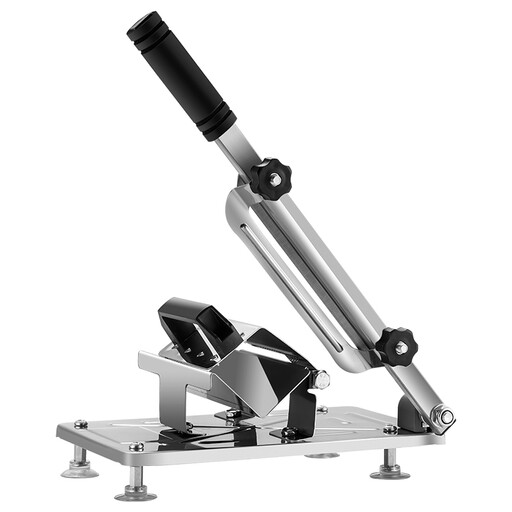 No image available
The product name describes this version as a meat slicer with an extended length.
 No image available
The product description lists a smooth blade for meat and a serrated blade for bread.
The description specifies adjustable speeds, a cutting travel of 24 cm and a cutting thickness of up to 23 mm.
 No image available
The product description lists a serrated blade and a removable carriage.
The stated cutting thickness goes up to 20 mm and the cutting travel is 18 cm.
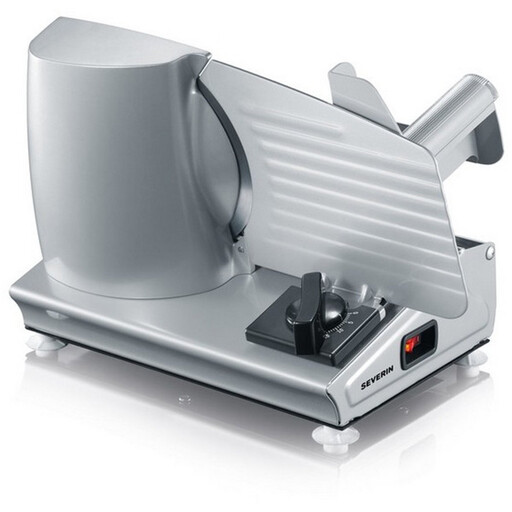 No image available
This food slicer is described as having a smooth blade for meat and a serrated blade for bread.
The description specifies an adjustable cutting thickness of 0 to 15 mm, finger protection and a tilting carriage.
Yes, but keep raw and cooked food separate. Clean any parts that have been in contact with raw meat before using them with cooked food; follow your machine’s manual when removing parts.
Distinguish between raw roast beef and roast beef sold as sliced cold meat, and follow the date and storage instructions on the packaging. Voedingscentrum advises keeping opened raw roast beef in the fridge for 2 days and gives the same advice for opened sliced roast beef; store sliced cold meat in the coldest part of the fridge at 4 °C. Slicing it yourself does not extend its shelf life.
Voedingscentrum advises against eating partially cooked roast beef during pregnancy. According to Voedingscentrum, you can eat roast beef if you cook it thoroughly.
Yes. The Dutch Government states that electrical appliances sold in the EU must have a CE mark. Check the mark and product information for the machine on offer; a brand name or product listing alone tells you nothing about this.
No. According to ACM ConsuWijzer, your statutory rights exist alongside any warranty from the manufacturer or seller. What you can reasonably expect from a product under normal use is what matters; ACM ConsuWijzer does not specify a fixed statutory warranty period for these slicers.