What should you look for when choosing?
Start with the blade that suits your main task, then consider whether extra blades, cleaning and storage fit the way you’ll use the machine at home.
| What to consider |
What should you check? |
Who should pay particular attention? |
| Thin slices of roast beef |
Check whether a smooth blade is included and whether you can adjust the slicing thickness. Assess the exact model and configuration. |
If I mainly want to slice cooked roast beef into thin, even slices, I’ll prioritise the right type of blade; around 36% of consumers say fine slicing is their main reason for buying. |
| Roast beef and bread |
Check that both the smooth and serrated blades are actually included with the model. Bear in mind that you’ll need to change, clean and store them. |
If I want to slice bread as well as roast beef, I’ll check whether both types of blade are included; around 29% of consumers say versatility is their top buying priority. |
| Safe and hygienic use |
Follow the instructions for the carriage and food holder, unplug the machine before cleaning, and keep cooked food separate from raw meat. |
If I want to slice and clean carefully when preparing to serve, I’ll consider safe use and hygiene; around 21% of consumers say this is their main reason for buying. |
| Worktop space and storage |
Compare the product dimensions with your worktop and storage space. Check the specified operating time too; Ritter gives the E 16 a 5-minute operating cycle. |
If I have limited worktop or storage space, I’ll want to know in advance where the appliance will fit; around 14% of consumers say space and storage are their top buying priority. |
Joybuy products for roast beef and home use
These Joybuy products are home-use slicers, with slicing roast beef as their main task and options for meat or bread depending on the model.
 No image available
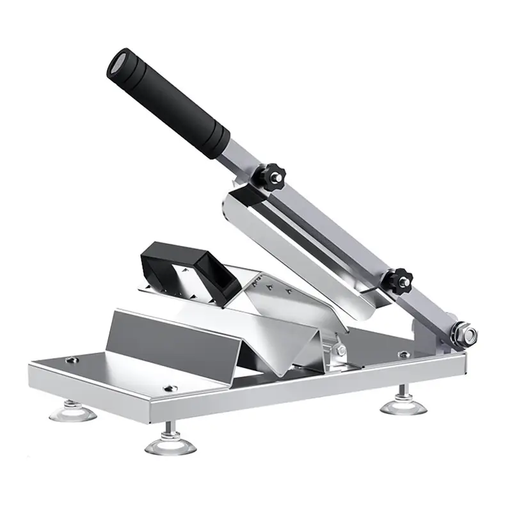
BJ 304 Stainless SS304 Meat Slicer
The product description lists roast beef as one use for this slicer.
The product name specifies SS304.
View at Joybuy
 No image available
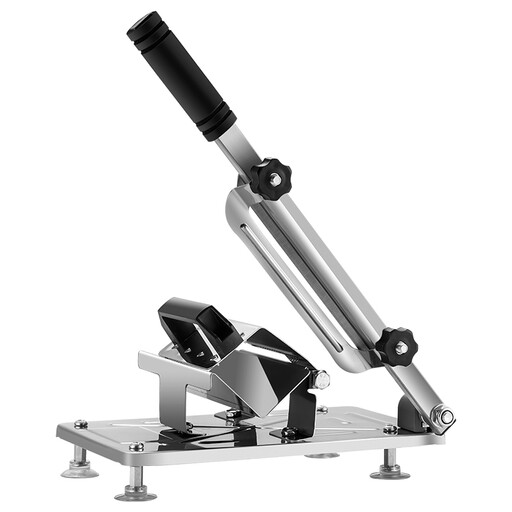
Maxcook Stainless Steel Meat Slicer - Extended Length
The product description lists slicing meat as a use and describes a longer design for greater control when handling larger pieces.
The product name specifies stainless steel and an extended design.
View at Joybuy
 No image available
FRITEL SL 3710 slicer
This model is listed for slicing meat and bread and comes with a food holder; check that its adjustable slicing thickness suits the thickness of slice you want.
Slicing thickness: 0–20 mm. Blade: universal, Ø 19 cm. Power: 150 W. Carriage: angled, 15°. According to the product description, the maximum operating time is 10 minutes, followed by 30 minutes to cool down.
View at Joybuy
 No image available
FRITEL SL 3110 bread and meat slicer
This model is designed for bread and meat. Coolblue’s Dutch buying guide says a serrated blade is less suitable for delicately sliced meats.
Slicing thickness: 0–15 mm. Serrated blade: Ø 17 cm. Power: 100 W. The product name specifies a foldable design; the product description mentions a removable carriage and food holder.
View at Joybuy
Frequently asked questions
How should I store sliced roast beef safely until my friends arrive?
The Voedingscentrum advises storing cooked roast beef covered in the fridge at 4 °C and not leaving leftovers out of the fridge for more than 2 hours. For cooked roast beef, its storage guide recommends keeping it in the fridge for 2 days after opening; if the pack is unopened, follow the label too.
How do I use and clean a slicer carefully?
Follow the manual for your chosen model and use the carriage and food holder as instructed. The Severin AS 3915 manual says to unplug the machine before cleaning; also make sure raw meat does not come into contact with cooked food, as advised by the Voedingscentrum.
What can I do if my slicer develops a fault shortly after purchase?
In the Netherlands, statutory consumer rights may apply if a product does not perform as you could reasonably expect under normal use. ACM ConsuWijzer says the retailer must resolve the problem free of charge in accordance with the applicable terms; there is no fixed statutory warranty period of exactly two years for every appliance.
Can I return a slicer bought online?
For a standard online purchase, you generally have a statutory cooling-off period of up to 14 days after delivery, according to ACM ConsuWijzer. Exceptions and rules on unpacking and trying out the product may apply, so check these before using the appliance.
Do food sales rules apply if I serve roast beef to friends at home?
The NVWA says a food safety plan is compulsory for anyone who sells food several times a year; that business situation is not the same as serving roast beef to friends at home. Electrical appliances covered by specific EU product rules must comply with the relevant CE regulations; the European Commission explains that a CE mark is not an independent test certificate.


