
Cook with limited storage space
You want to slice hard cheese yourself, but clear your worktop after use. Compare the space needed while slicing with the machine’s dimensions when stored away. Severin and Graef describe folding models.


Start by considering how much space the machine needs while slicing and where you plan to store it. A folding model can be useful if you want to clear your worktop after use; a fixed, narrow slicer may be a better choice if it can have a permanent spot. Also check whether the manufacturer lists cheese as a suitable food and which blade comes with the exact model: the specifications don’t prove that it will slice every type of very hard cheese neatly.
You want to slice hard cheese yourself, but clear your worktop after use. Compare the space needed while slicing with the machine’s dimensions when stored away. Severin and Graef describe folding models.
You’re looking for adjustable slice thickness and want to check whether the manufacturer lists cheese as a suitable food and which blade comes with the exact version. Severin, Bomann and Graef provide information about uses and blade options.
You use the machine regularly and want to know whether the carriage and food-contact parts can be removed. Ritter describes a removable carriage; the Netherlands Nutrition Centre recommends clean equipment to help prevent cross-contamination.
Suitable if: you want to put the machine away after use. For the AS 3912, Severin describes a folding base plate; Graef gives a folded height of 8 cm for the MYtiny.
Keep in mind: a compact storage size doesn’t tell you how much room the carriage, cheese and your hands need while slicing. Also check whether the manufacturer lists cheese as suitable for the model you’re considering.
Suitable if: you can leave the machine on your worktop. Ritter lists a width of 20,5 cm and a removable carriage for the compact¹.
Keep in mind: according to Ritter, this model doesn’t fold away, so it needs a permanent spot. Its specified maximum continuous operating time is 5 minutes; this alone says nothing about how well it will slice your cheese.
Suitable if: the manufacturer specifically lists cheese as a suitable food, as it does for the Severin AS 3915 and Bomann MA 451 CB.
Keep in mind: the stated suitability for cheese is the manufacturer’s claim, not an independent test using every type of hard cheese. Measure the space you’ll need before choosing a model.
| What to consider | What should you check? | Who is this important to? |
|---|---|---|
| Working and storage space | Measure the space needed for the machine and carriage while in use; compare it with the model’s dimensions when folded and unfolded. | I want to clear my worktop after slicing and have limited storage space. Around 36% of consumers say space is their top priority. |
| Cheese and slice thickness | Check whether the manufacturer lists cheese as suitable, which blade is included and what thickness range can be selected. | I want to slice my hard cheese, so I’m checking the stated use and blade for this exact version. Around 29% of consumers prioritise how well it slices cheese. |
| Safe cleaning | Check the food pusher, safety controls and instructions for removing and cleaning parts. | I use the machine regularly and want to clean the food-contact parts thoroughly without handling the blade unsafely. Around 21% of consumers put safe use and cleaning first. |
| Parts and aftercare | Check which blades are included, whether a replacement blade fits the exact model and which retailer to contact. | I want to know in advance whether I’ll need a suitable blade for my uses and who to contact if something goes wrong. Around 14% of consumers prioritise purchase and aftercare. |
A folding machine takes up more space while slicing than its folded dimensions might suggest.
Measure both the storage space and the work area, leaving room for the carriage to move.
Blade type, the size of the cheese and the uses listed by the manufacturer vary from model to model. An adjustable thickness range in millimetres is not a test of slicing performance.
Check the description for the exact version, the blade included and the size of the cheese you want to slice.
ACM ConsuWijzer distinguishes between a manufacturer’s or seller’s warranty and your statutory rights against the seller.
Read the warranty terms and check which statutory rights apply before considering additional cover.
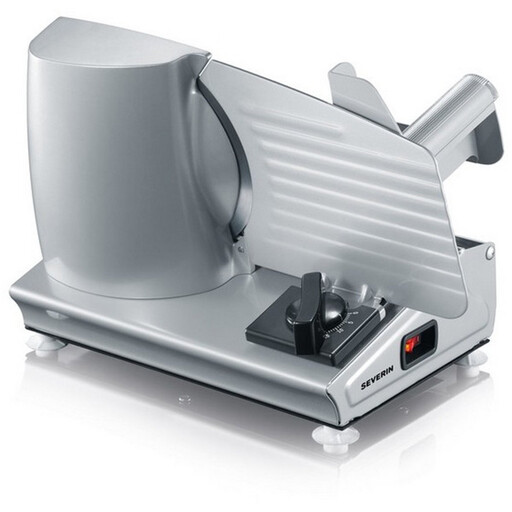
The AS 3912 is a folding option; the AS 3915 is another version with adjustable slice thickness.
According to Graef, the folding MYtiny is designed for small kitchens and compact storage.
The compact¹ is a narrow metal slicer designed to stay on your worktop.
DOMO specifically lists cheese as a suitable food for the folding DO1188S.
Bomann lists cheese as a suitable food for the metal MA 451 CB.
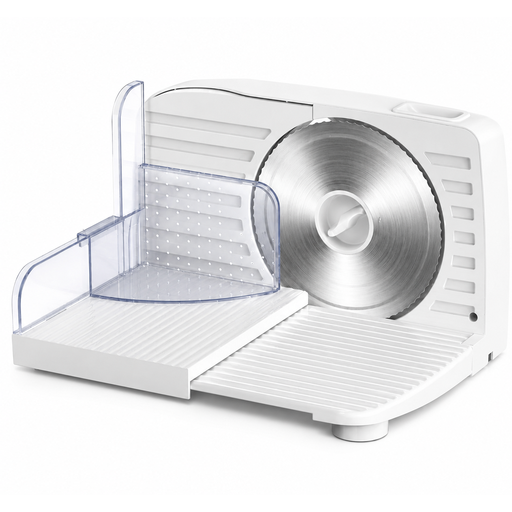
This selection includes electric slicers with adjustable slice thickness; one model is specifically described as suitable for cheese and another folds away.
 No image available
Adjustable slice thickness may be useful if you want to try different thicknesses; check whether the manufacturer lists your type of cheese as suitable for this model.
The product name lists 250 W, an adjustable thickness of 0–15 mm and 2 blades.
 No image available
Severin lists cheese as a suitable food for the AS 3915; the manufacturer specifies an adjustable slice thickness of 0 to 15 mm. This isn’t an independent test using every type of hard cheese.
The product name lists 2 blades, a finger guard and a stainless steel sliding plate.
 No image available
The folding design suits anyone who wants to put the machine away after use. Check that the model details and included parts are right for your cheese and how you plan to use it.
The product name lists a serrated blade, a slice thickness of 0–15 mm, a blade diameter of 17 cm and a power rating of 100 W.
Yes, electrical appliances must meet the applicable European requirements. According to Business.gov.nl, manufacturers apply the CE marking and draw up an EU Declaration of Conformity when their product complies. A CE marking is not an independent practical test using cheese.
Use clean utensils and keep raw products separate from food that you eat without heating. Clean the food-contact parts between uses according to your model’s instructions; the Netherlands Nutrition Centre also highlights the risk of contamination spreading via equipment and hands.
For cheese labelled 40+, the Netherlands Nutrition Centre recommends keeping sliced cheese in the fridge for 4 days. Store it in a sealed container and don’t assume this specific advice applies to every type of cheese.
If an item is faulty, contact the seller about your statutory rights; ACM ConsuWijzer distinguishes these from a manufacturer’s or seller’s warranty. For a standard online purchase, you generally have a 14-day cooling-off period after delivery, subject to the exceptions and conditions described by ACM ConsuWijzer.