
Workshop leader slicing hard cheese
You want to make consistent slices, so you’ll want to consider whether the slicer is suitable for your type of cheese, its adjustable thickness and how well it supports the cheese block.


Choose a slicer based on the size of the cheese block, the slice thickness you want and how many times you’ll be slicing. GRAEF specifically lists harder cheese as suitable for the S12002FL; FRITEL describes the SL 3855 Twin as suitable for large cheese blocks, but it takes up more space and isn’t dishwasher-safe. If you’re running a commercial workshop, also check the restrictions for the exact model: Ritter excludes commercial use of the serano⁷.
You want to make consistent slices, so you’ll want to consider whether the slicer is suitable for your type of cheese, its adjustable thickness and how well it supports the cheese block.
You’re working with larger blocks or slicing in several batches. The space available for the carriage, duty cycle and any restrictions on commercial use all matter.
You want to use the appliance safely and clean its parts easily between preparations, perhaps with the help of a food holder and removable parts.
Start with the cheese and your working pace, then compare the space, cleaning requirements and terms of use for the models that fit.
| What to consider | What should you check? | Who is this for? |
|---|---|---|
| Slice thickness and blade type | Check whether the manufacturer lists the exact model as suitable for hard cheese, which blade is included and what thickness range you can set. | If I want to cut hard cheese into useful slices, I start by checking the blade and thickness setting. Around 36% of consumers prefer this slicing result. |
| Block size and working pace | Compare the size of the cheese block with the carriage and check the manual for the duty cycle and permitted use. | When working with larger blocks or slicing in several batches, I want to know whether the work surface and operating time suit the session. Around 29% of consumers make capacity their main consideration. |
| Safe handling and cleaning | Look for features such as finger protection and a food holder, check that the appliance is stable, and follow the cleaning instructions for its parts. | When participants share a worktop, I want to handle the appliance safely and clean the food-contact parts according to the instructions. Around 21% of consumers prioritise safe use and cleaning. |
| Storage space | Check the dimensions when the appliance is in use and in storage, its weight, and whether a foldable model is suitable for the size of your cheese block. | For occasional workshops with limited worktop or cupboard space, compact storage is an important factor for me. Around 14% of consumers make space and occasional use their main priority. |
For a paid workshop, check that the instructions for the exact appliance allow for the intended use. A larger machine or a continuous-operation switch doesn’t, by itself, prove that unrestricted or commercial use is permitted.
Ritter specifies a maximum duty cycle of 10 minutes for the serano⁷ and excludes commercial use. A switch setting doesn’t change these terms.
Before buying, read the duty cycle and restrictions on use for the exact model. Bear these in mind if your workshop involves several rounds of slicing.
A limit on operating time may mean breaks in your slicing session; the model may also be unsuitable for the way you plan to use it.
FRITEL describes the SL 3855 Twin as suitable for large cheese blocks, but also states that it isn’t dishwasher-safe and doesn’t have a safety switch.
Compare the size of your cheese block with the available worktop space. Also check how the carriage and blades of the exact model should be cleaned.
A larger machine takes up more worktop space, and you may need to clean it by hand.
A different version may come with a different set of blades or have different terms of use. The information for the serano⁷ doesn’t automatically apply to a product with a similar name.
Before buying, compare the full model name, manufacturer, included blades and terms of use.
A different version may have different slicing capabilities or restrictions from the ones you expect.
GRAEF lists the S12002FL as suitable for harder cheese and supplies it with a serrated blade.
According to FRITEL, the SL 3855 Twin is designed for large cheese blocks, among other things, and comes with a smooth blade and a serrated blade.
According to Ritter, the serano⁷ is a domestic food slicer with adjustable blade speed.
According to Severin, the AS 3915 has a metal construction and a continuously adjustable slice thickness.
According to Emerio, the MS-125000.1 is foldable, making it worth considering if storage space matters to you.
These electric slicers have cheese listed as a suitable food in their product information. Check that each model is suitable for your type of cheese, block size and intended use.
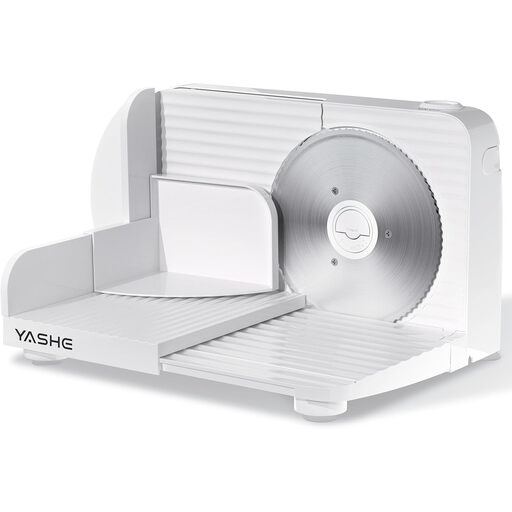 No image available
The product information lists cheese as a suitable food and describes a foldable design; check that the machine is suitable for the dimensions of your cheese block.
Adjustable slice thickness: 0–15 mm. Blade: 17 cm, stainless steel. Power: 180 W.
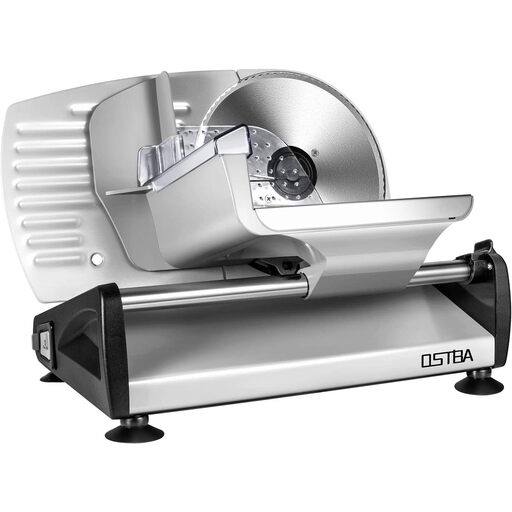 No image available
The product information lists cheese as a suitable food and mentions removable parts; check the cleaning instructions before using it on a shared worktop.
Blade: 19 cm. Adjustable slice thickness: 0–15 mm. Power: 150 W.
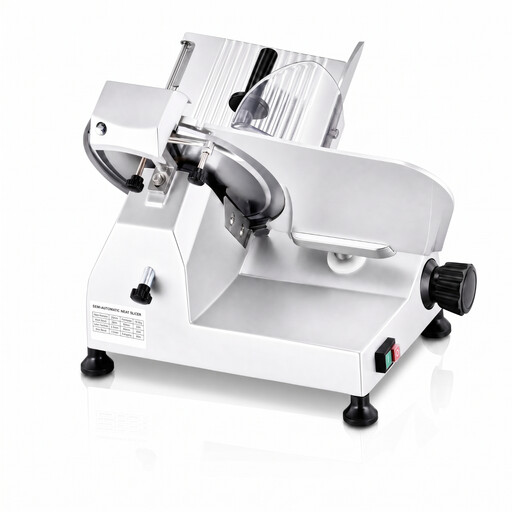 No image available
The product information lists hard cheese as a suitable food; compare the available slice thickness with the slices you want to make during your workshop.
Blade: 25,4 cm, carbon steel. Adjustable slice thickness: 0–12 mm. Power: 240 W.
 No image available
Before buying, check the exact model version, included blades and terms of use. The terms for the serano⁷ don’t automatically apply to a similar version.
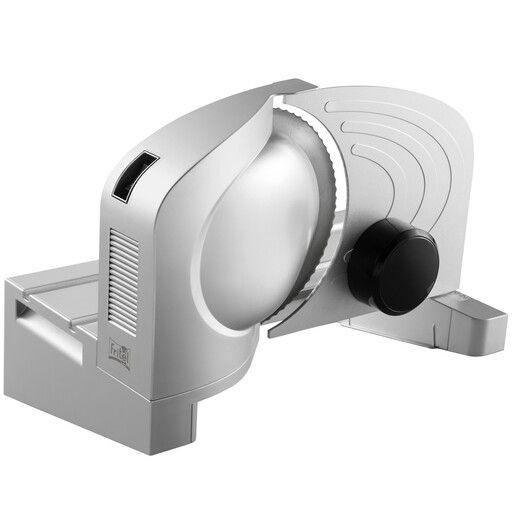 No image available
The product information lists cheese as a suitable food and mentions an adjustable slice thickness; check the permitted operating time for your workshop.
Adjustable slice thickness: 0–20 mm. Blade: 17 cm, serrated. Power: 160 W.
No. First check the terms of use for the exact model. Ritter excludes commercial use of the serano⁷; don’t assume that other domestic models are automatically suitable for your workshop.
Follow the cleaning instructions for the model and clean food-contact parts between preparations where necessary. For commercial food preparation, processing or sale, the NVWA advises working with an HACCP food safety plan or an applicable approved hygiene code. Removable parts aren’t automatically dishwasher-safe.
If you sell food to customers, the NVWA says you must follow its rules on allergen information; milk, including lactose, is one of the listed allergens. Consider the specific workshop format and the dishes you’re serving.
For an appliance placed on the market in the Netherlands, check the applicable product information and CE marking. The NVWA describes low-voltage rules for electrical equipment with a rated AC voltage of 50 V to 1000 V and a rated DC voltage of 75 V to 1500 V. CE marking alone doesn’t tell you whether a model is suitable for intensive workshop use.