
Fans of neatly sliced cheese
You want to serve guests slices cut to your chosen thickness, so you’re comparing the blade and thickness settings first.


For neat slices of hard cheese, a suitable blade combined with adjustable slicing thickness is a sensible place to start. FRITEL recommends a smooth blade for cheese, while GRAEF says the SKS110’s serrated blade is also suitable for harder cheeses. You should also check whether there’s enough room for your block of cheese, how easy the machine is to clean and what the information says about the exact model.
You want to serve guests slices cut to your chosen thickness, so you’re comparing the blade and thickness settings first.
You’re preparing several portions from a larger block and want to check that the block, carriage and food holder all work well together.
You want to operate the machine with control and clean it thoroughly, especially if it’s also used for other foods.
Start with the slice you want and the blade, then compare the space available for your block of cheese and how much cleaning is involved.
| What to consider | What should you check? | Who should take this into account? |
|---|---|---|
| Slice thickness and blade | Check which blade is included, the adjustable slicing thickness and the guidance for your type of cheese. A smooth blade has not been confirmed as the only suitable option for every model. | I want to choose the thickness of each slice for the gathering; around 33% of consumers prioritise evenly sliced cheese. |
| Block size and quantity | Compare the dimensions of your block with the blade and carriage. Check the food holder and the operating time specified in the manual too. | With a larger block, I want to know whether it will fit and whether I can cut the portions I need; around 27% of consumers prioritise block size and quantity. |
| Operation and cleaning | Check the switch, removable parts and cleaning instructions; unplug the machine before taking it apart. The NVWA states that electrical products must carry CE marking and that rules apply to materials that come into contact with food. | In a shared kitchen, I want to use the machine safely and clean it thoroughly; around 27% of consumers prioritise safe operation and cleaning. |
| Storage and extra costs | Measure the space where you plan to store the machine and check which parts are included. If buying a separate blade, check that it is compatible with your model. | If I only use the machine occasionally, I want to know how much space it takes up and what else I might need to spend; around 13% of consumers prioritise storage and extra costs. |
For the SL 3855 Twin, FRITEL recommends a smooth blade for cheese; GRAEF says the SKS110’s standard serrated blade is also suitable for harder cheeses. Recommendations therefore vary by model.
Check the manual and the blades supplied with the exact model. If buying a separate blade, check that the manufacturer explicitly confirms it is compatible.
A separate blade could be an unnecessary extra purchase if it doesn’t fit the machine.
The blade diameter alone won’t tell you whether your block of cheese will fit properly on the carriage or how much of it you can cut comfortably.
Measure the block and compare its dimensions with the carriage and its travel. Check the food holder and recommended operating time too.
ACM ConsuWijzer distinguishes between a commercial warranty and your statutory rights against the seller.
Check your statutory rights before deciding whether to pay for extra warranty cover. If something goes wrong, you can ask the seller what remedy is appropriate.
Extended warranty cover could be an unnecessary expense if you already have sufficient protection for your needs.
The SL 3855 Twin is worth considering if you want a smooth blade for cheese as well as a serrated blade included.
The SKS110 may be a good fit if you’re looking for a more compact machine with a serrated blade as standard.
The metal E 16 may suit anyone who values a removable carriage and the choice of short-pulse or continuous operation.
The AS 3915 is a metal food slicer worth looking at if an adjustable thickness of 0–15 mm is important to you.
These product picks are electric slicers you can compare for slicing cheese. For the Dutch market, also check the product information on CE marking and parts that come into contact with food; a general product listing on its own doesn’t confirm that a specific version meets every requirement.
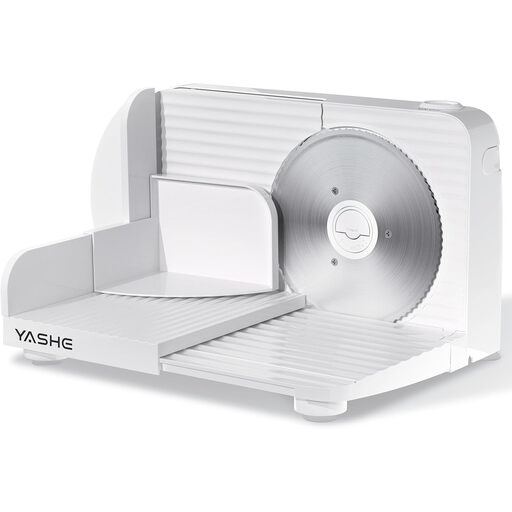 No image available
The foldable design may be a good option if you want to store the machine compactly after the gathering.
The product name lists 180 W, adjustable slicing thickness of 0–15 mm and a 17 cm stainless steel blade.
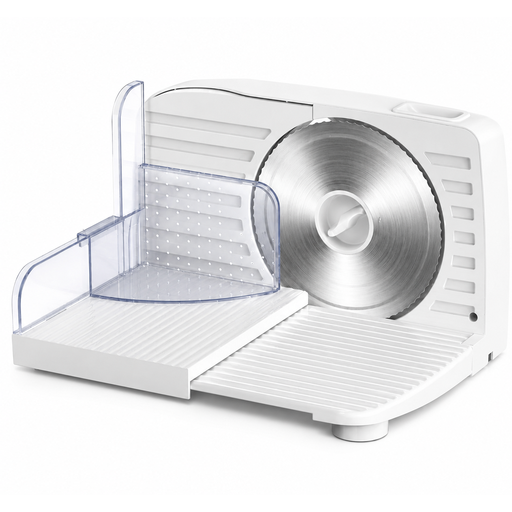 No image available
An option to compare if you’re looking for an electric slicer for a range of kitchen tasks.
The product name lists adjustable slicing thickness of 0–15 mm and two blades.
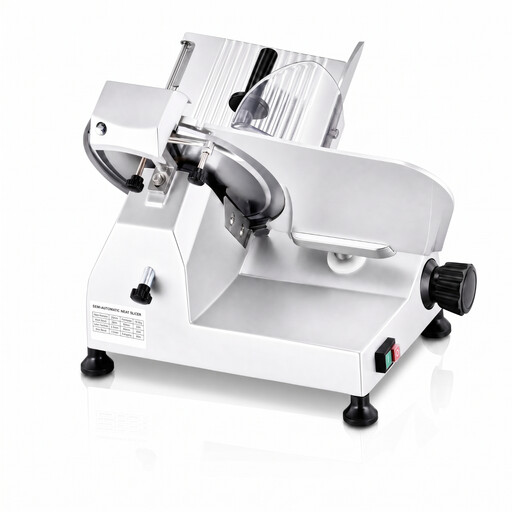 No image available
This version may be worth considering if you want to slice cheese and compare adjustable slice thickness.
The product name lists a 25,4 cm carbon steel blade and a slicing thickness setting of 0–12 mm.
 No image available
Consider this version if a metal construction and electronic speed control suit your needs.
The product name lists a metal construction and an angled design.
 No image available
A version with a removable carriage may be worth comparing if cleaning and storage are important to you.
The product name lists a removable carriage and a glass base plate.
No, it depends on the model and the manufacturer’s guidance. FRITEL recommends the SL 3855 Twin’s smooth blade for cheese, while GRAEF says the SKS110’s standard serrated blade is also suitable for harder cheeses. Check the manual and the blades supplied with the exact model.
Follow the instructions for taking apart and cleaning your chosen model, and unplug it before dismantling. The Netherlands Nutrition Centre recommends using different knives and equipment for raw and cooked food, or washing them thoroughly between uses.
The Netherlands Nutrition Centre recommends keeping cheese covered in the fridge and gives a storage life of four days for sliced cheese in the fridge. Check the packaging and the condition of the cheese too.
Not automatically. According to ACM ConsuWijzer, you have statutory rights against the seller in addition to any manufacturer’s or seller’s warranty. If a product is faulty despite being used normally, the seller is responsible for providing an appropriate remedy at no cost; statutory warranty in the Netherlands does not have a fixed standard period of two years.
According to the Netherlands Food and Consumer Product Safety Authority, electrical products must carry CE marking. Parts intended to come into contact with food must also meet requirements for food-contact materials. Check the information for the exact model; a webshop listing alone doesn’t prove that a particular appliance meets every applicable requirement.